Guitars Guitars Guitars
Steve Ekblad - Guitars
If you are an avid guitar player, a guitar collector, or just appreciate fine stringed instruments, you might find some you like on my page. These are a few of the many guitars which have passed through my hands.
He started out playing guitar on a five string banjo (what did he say)? Yes, a Kay 5-string with a jazz style DeArmond floating pick-up literally taped to the head was what first allowed him to power up his sound through a Sears Silvertone 1482 combo amp! His first electric guitar was an EKO fresh from Italy in 1965 that a vacationing family had purchased and brought back to sell. Perhaps this is where his tastes were first shaped!
Take a look at some of my favorites and tell me what you think! Touch any image for a closer look!
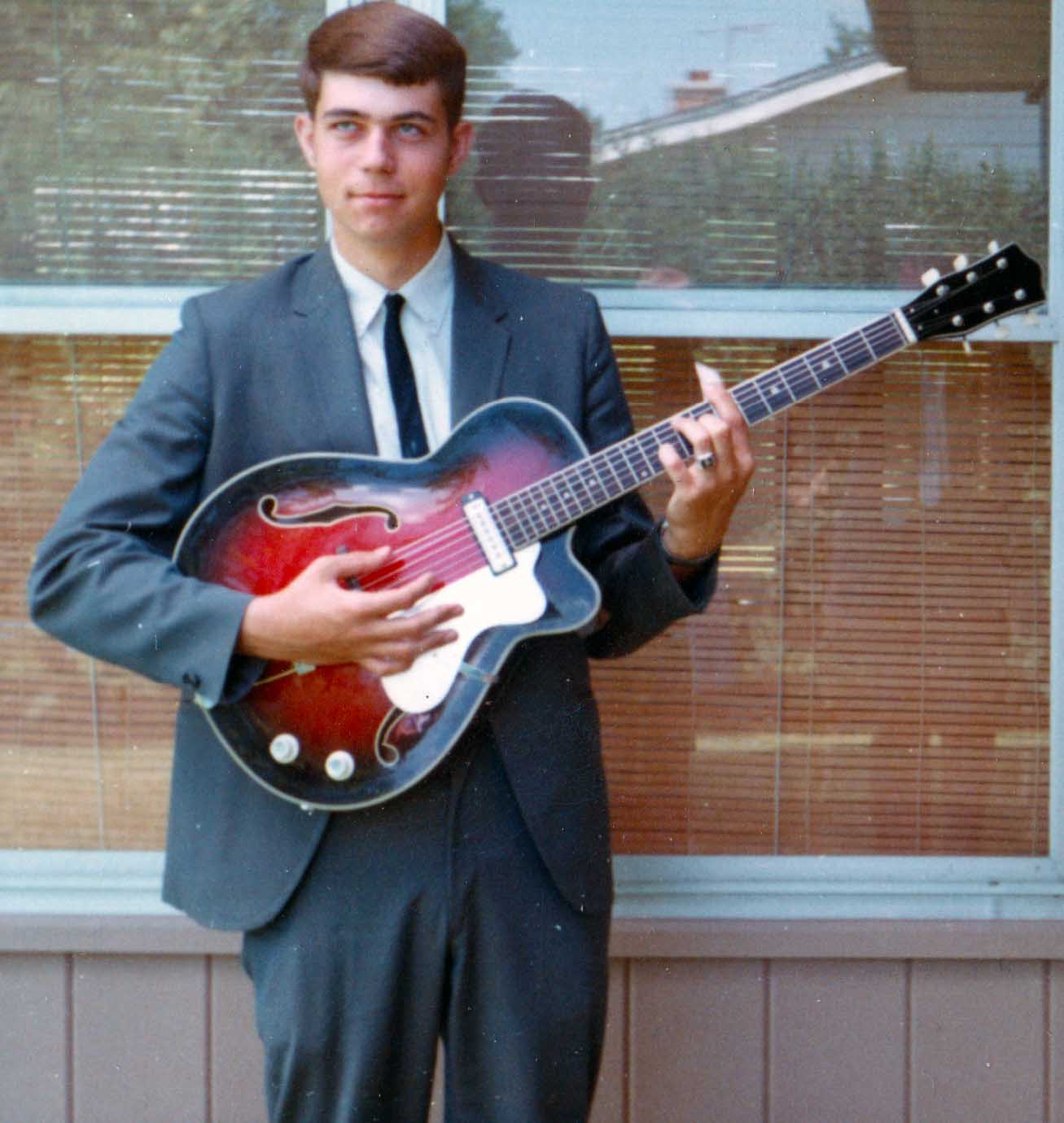
This is me with my first EKO electric Model 200 circa 1966. It's pickup was quite microphonic and it's construction and set up made it a little rough to play but it plugged in :).
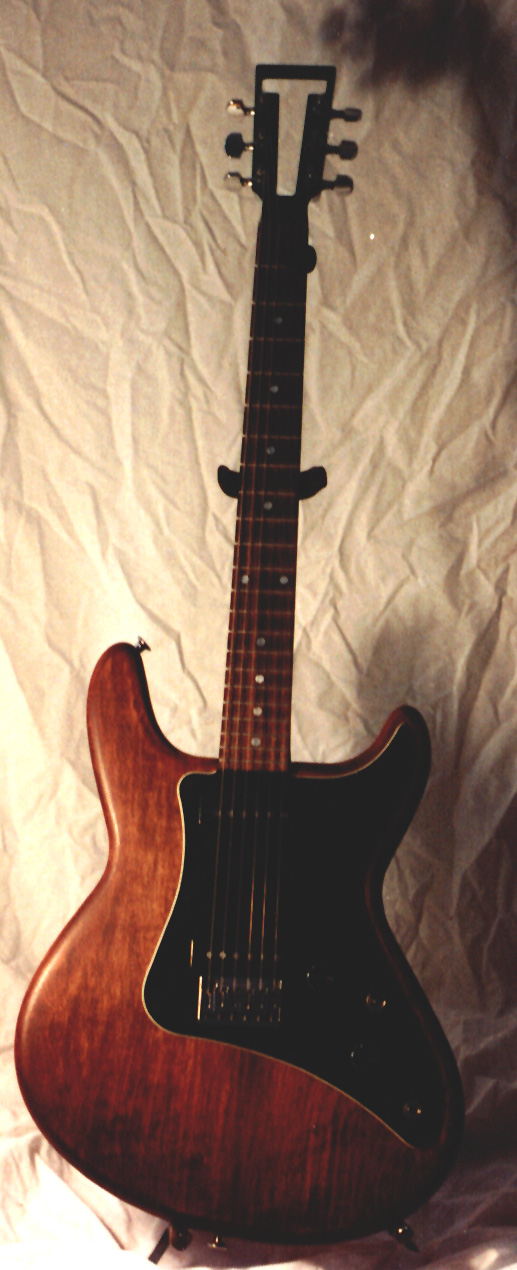
This is a Travis Bean Model 500. The pick-ups are single coil. The neck is aluminum and runs completely through the instrument. The neck is finished with Ebenol Black to make it feel a little less like metal.
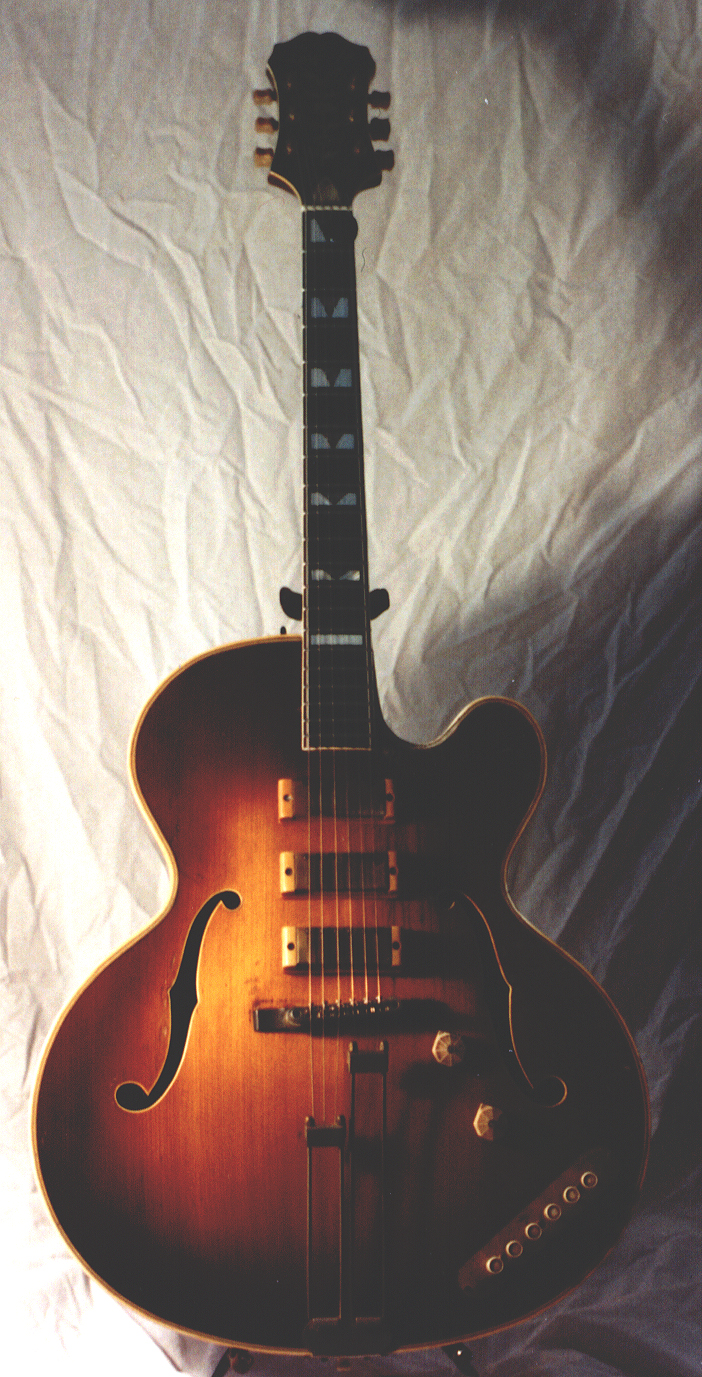
You are looking at a 1949 Epiphone Zephyr Emperor Regent. This is a big bodied instrument that was at one time, the top of the line. It features push-button pick-up combinations. I imagine there are very few of these in good condition. The pick-guards and other plastic looking parts on these are bakelite and simply self destruct with time.
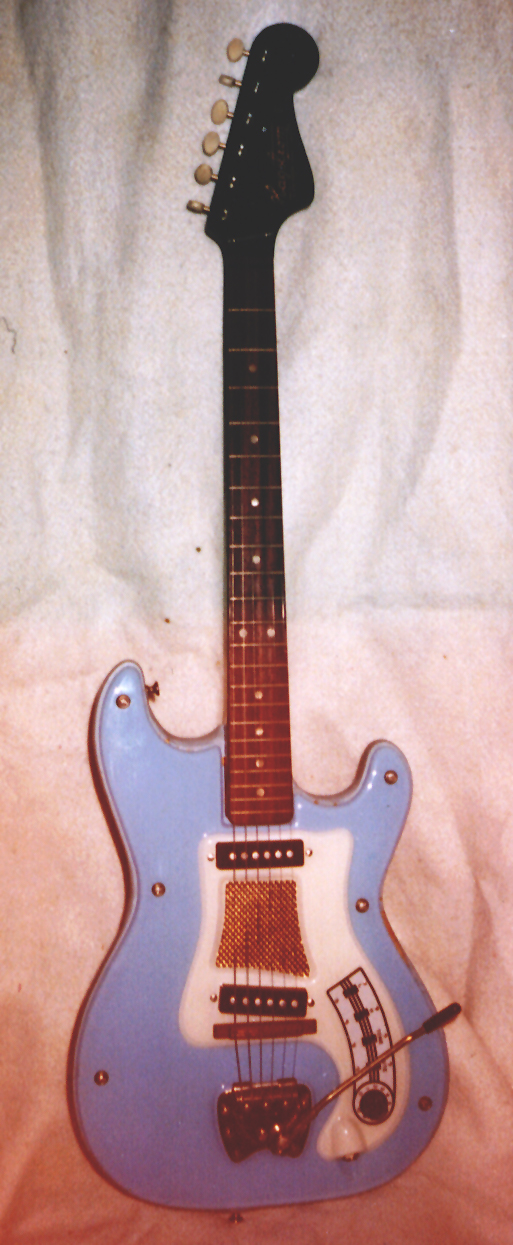
From the far north [Sweden] comes the invasion of the Hagstroms. This shiny blue plastic covered specimen from the mid-60's has a duller blue plastic cover for the back as well. It has a bright sound and a very thin neck. Pick-up control is by switched combinations.
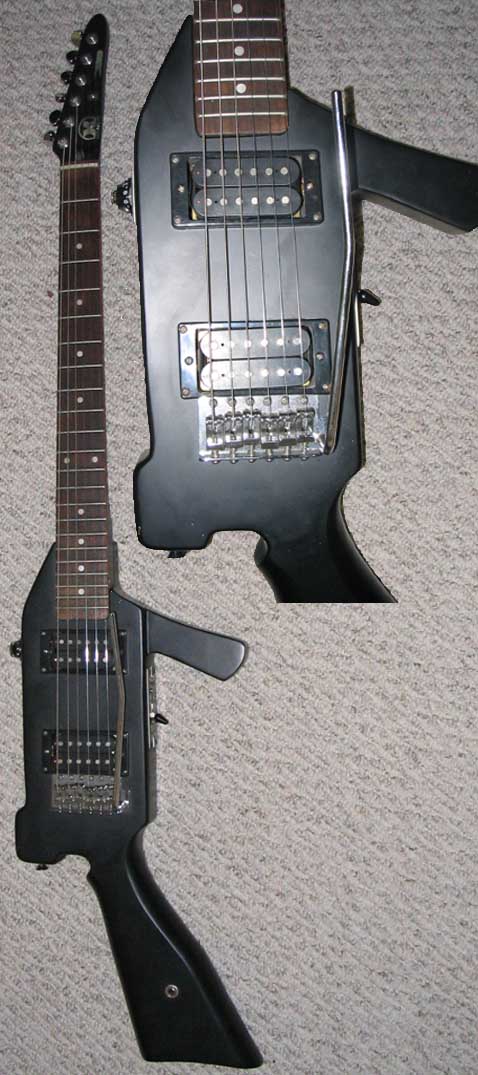
OK - stand back and drop the guitar! Yes, it's a rare Hondo M-16 Machine Gun guitar from around 1971. The pick-up selector is the gun trigger. This instrument was remarkably playable and had very good sounding electronics. It came with a form fitting gun-shaped case.
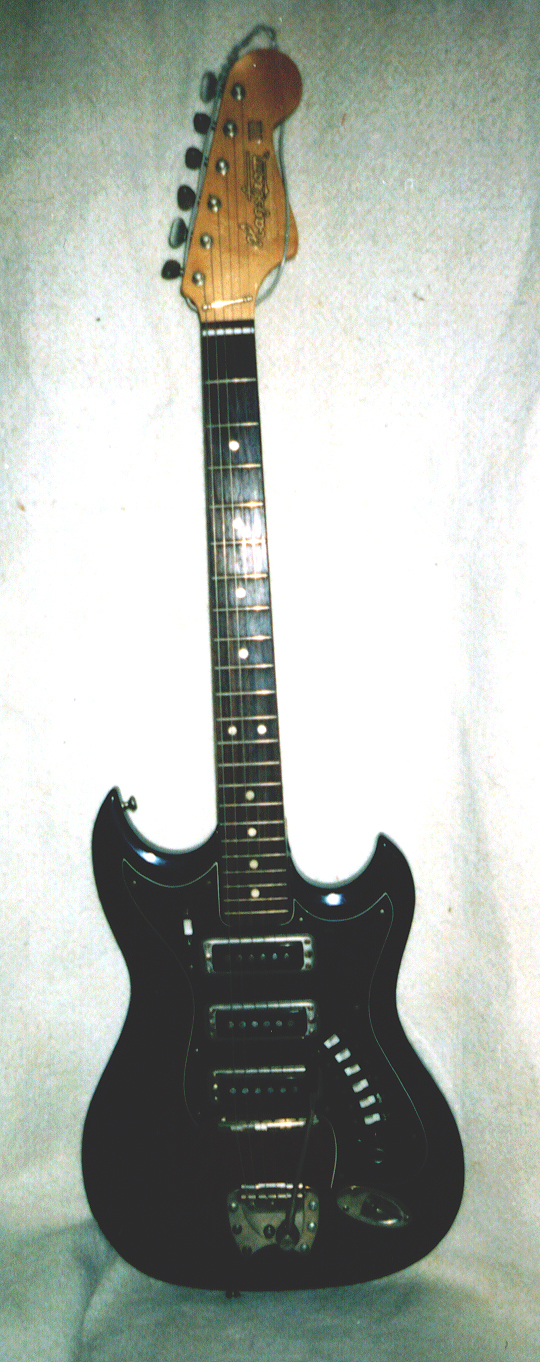
This is a mid 1960's Hagstrom III with a sunburst wood finish [what no plastic?] and a rapier thin neck. The addition of the third pick-up allows some interesting sounds. Move over Fullerton, Lars is king of the north.
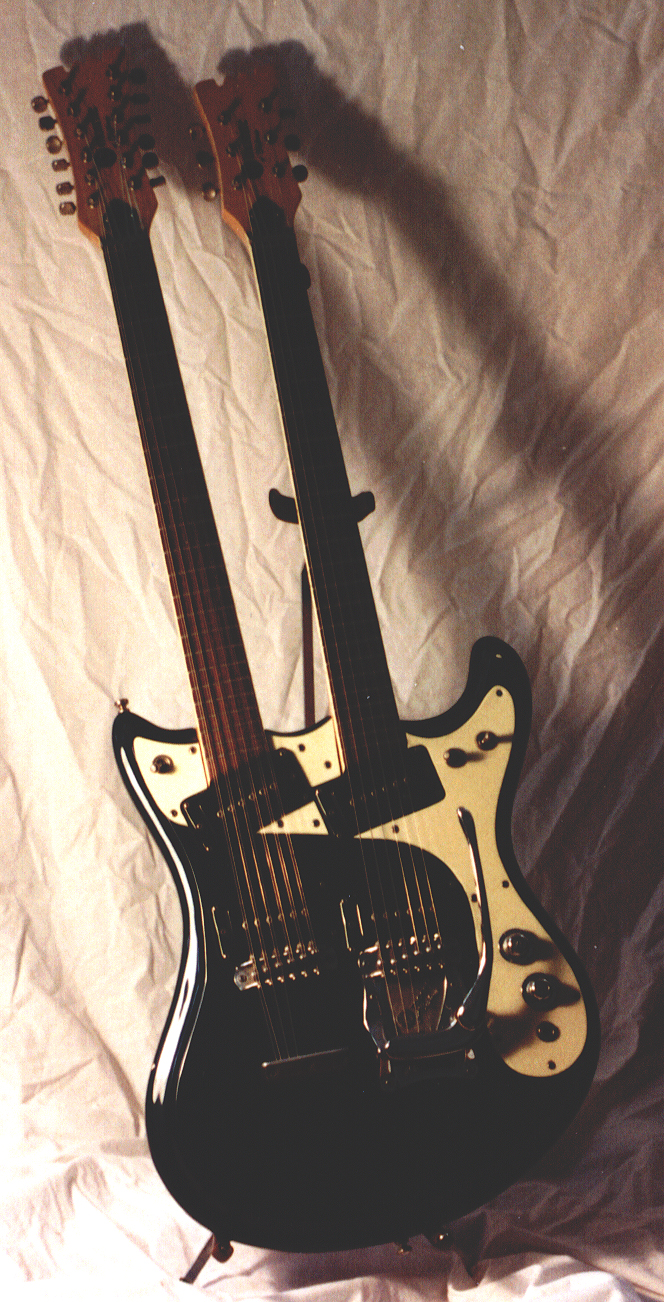
You are looking at a meatallic blue 1964 Mosrite Joe Maphis double neck 12 & 6 string guitar. What else can you say?
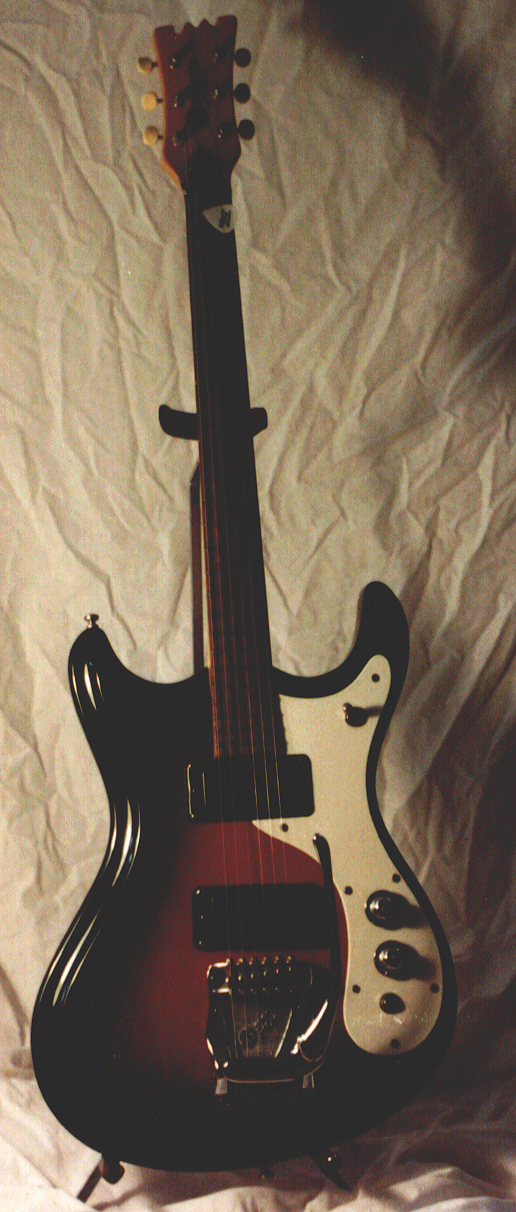
This one is a 1965 Mosrite Mark V model 101. It looks like the Ventures model but differs in that it has non-adjustable pole piece pickups and a slightly shorter scale.

This is a Mosrite Joe Maphis 12-string guitar. The top is carved and finished with a deep clear coat. This is one big guitar!
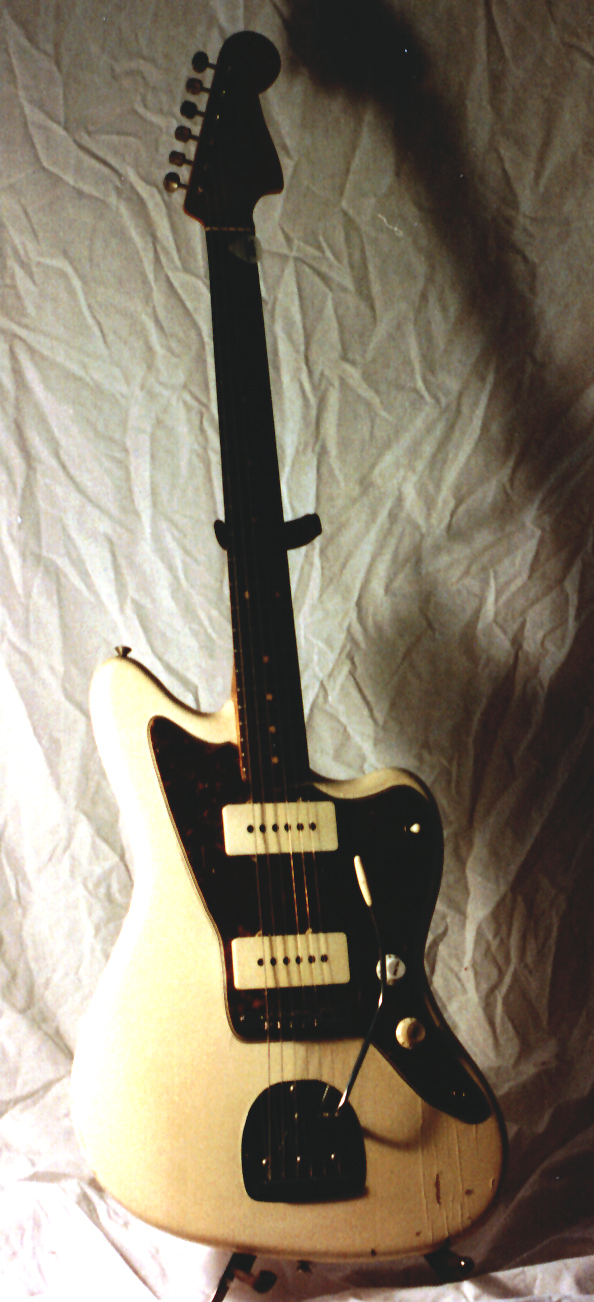
Surf's up! This is a 59 Jazzmaster. This Fender[tm] has a unique sound that no other instrument seems to be able to reproduce. It is one of the staple guitars of surf music artists. It has that tone!
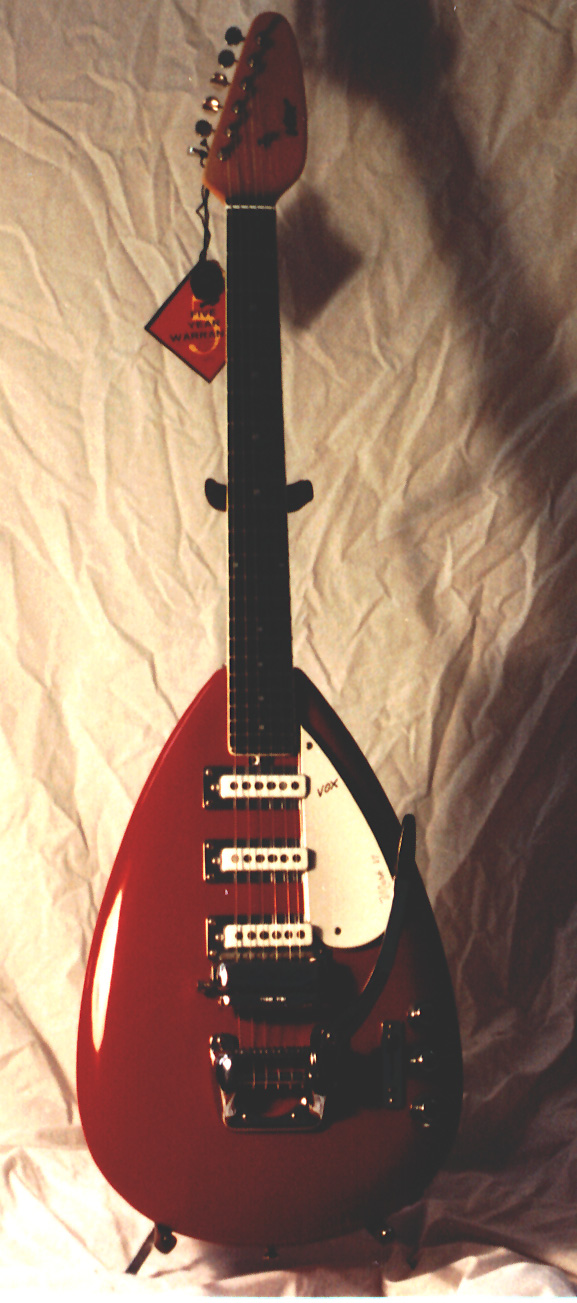
Here is a 1966 Vox Mark VI. It is just like the day it came from the factory with the original strings and tags. The case features a VOX guitar strap and tool kit inside. Dig that crazy red finish!

Look carefully at this one. It is a 1977 Bunker ProStar featuring a floating neck. The tuners are at the bottom of the guitar. The headstock is removable. It also has phase switching! Howard Leese of Heart swore by one of these for his electronic guitar days because he claimed it gave a more accurate trigger than other instruments allowed!

This is a 1980ish Alembic California Special with active pick-ups. The neck has oval inlays on the fretboard. Everything about this guitar screams tone! The brass bridge and bone nut combine with the ebony fretboard, a neck through design, the mahogany body faced with flamed maple let this guitar talk.

Here is a Gibson you don't see every day. It is a Firebird 12 and they made very few of these [276 over 2 years of production]. It has mini-bucker pick-ups and has a beautiful chime-like sound. Move over Mr. McGuinn!
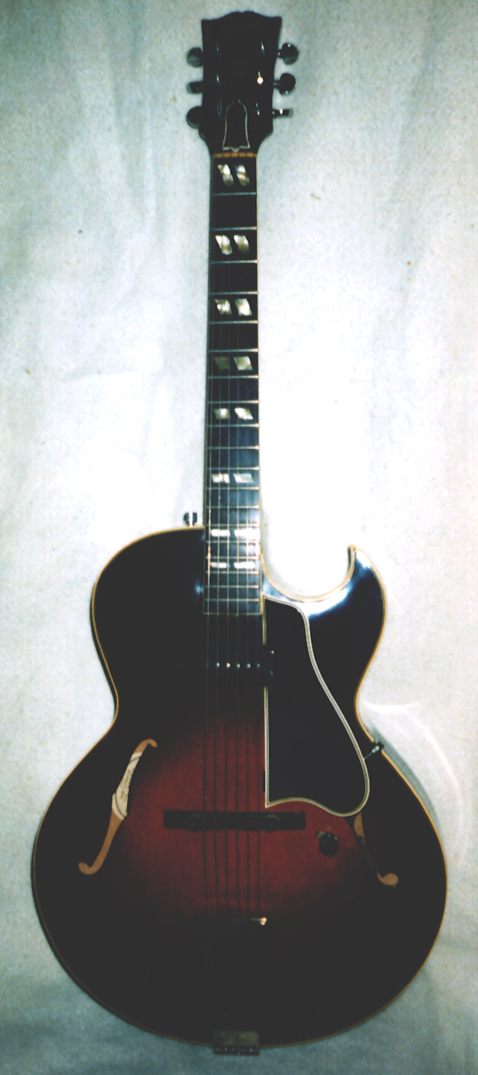
Here is a 1949 Gibson ES175. It has a smooth full tone. Note the small knobs. You really have to know where those things are when you are playing this one.

This is one of my favorites. It is a 1959 Danelectro 6-string short horn bass. They were called Tic-Tac basses back in the '50's. A string bass would supply the original bass line and the bass player would then double over the track with a Danelectro six string bass.
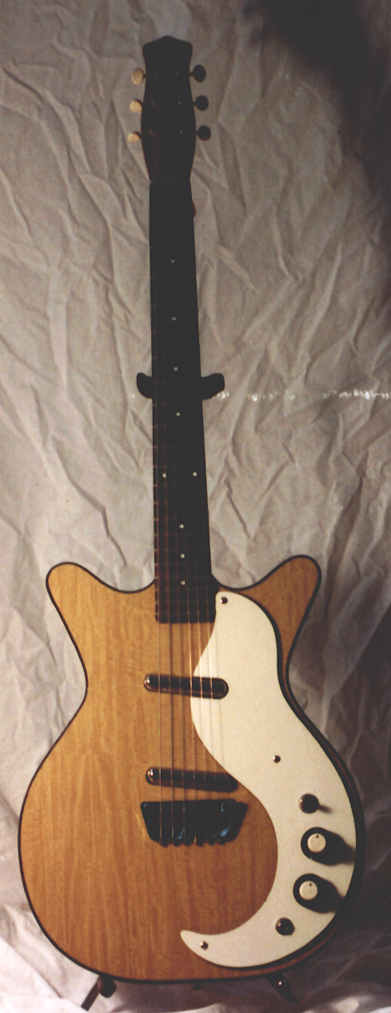
This is a late 50's 6-string Danelectro guitar. The Formica top is not only handsome, it is functional too. Pizza spills wipe right off (just kidding - keep that pizza away). I string this one with heavy gauge strings for a beefy sound!
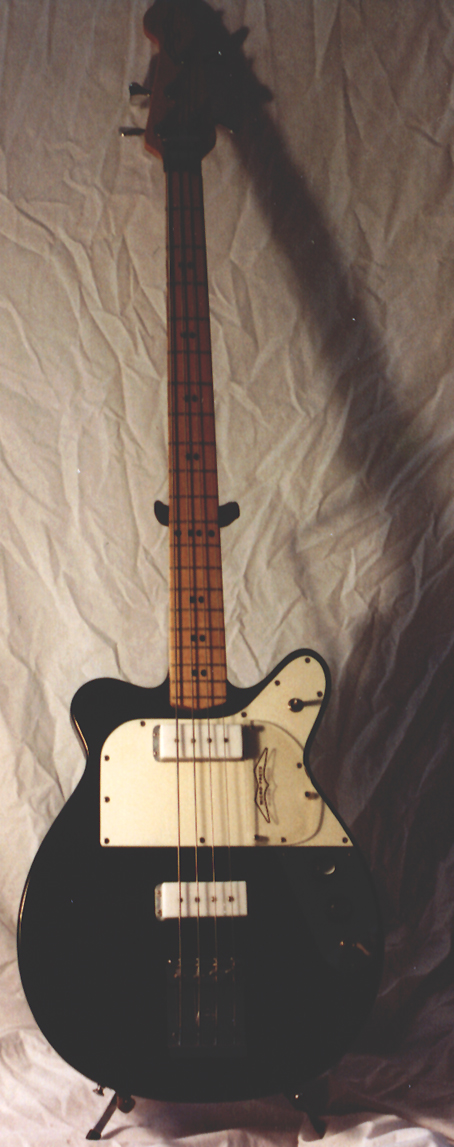
Here is a mid 60's MicroFrets Husky bass. The pick-ups were sourced from Hofner. The bass has incredible sustain. Everyone that tries it likes it!

How about a MicroFrets Spacetone? This hollow-body instrument features a rosewood handle on the vibrato arm. It also assures absolute intonation through the adjustable nut which boasts over 20 moving parts (A set-up nightmare)!
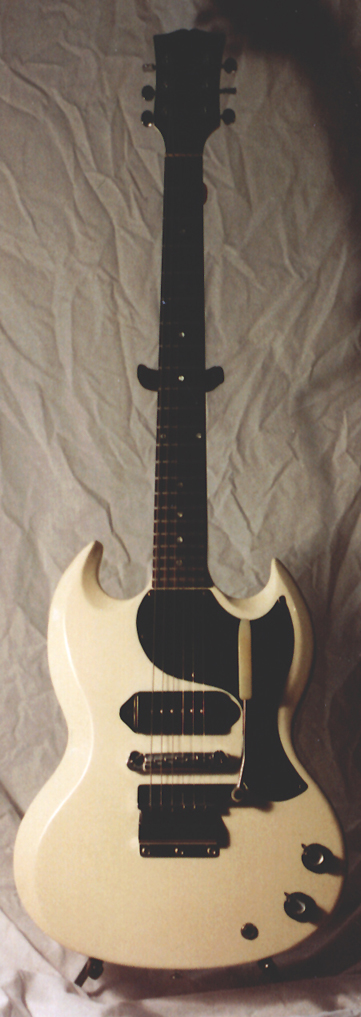
This 1968 SG jr screams! The Maestro Vibrato arm can be bypassed by stringing through the bridge if you are whammy impaired. The single P90 is hot and loud!
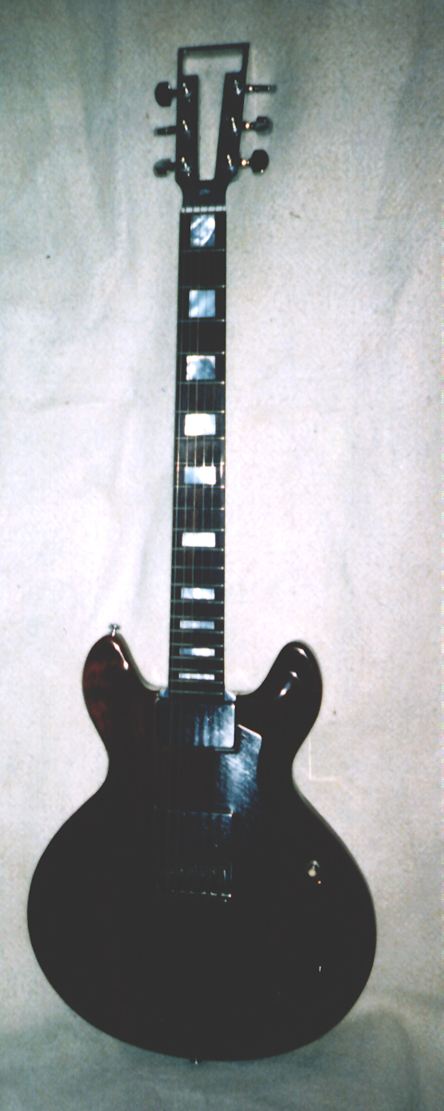
This is a Travis Bean 1000. It features great sounding hum-bucking pick-ups. The Koa wood body is fixed to the aluminum neck-through design.
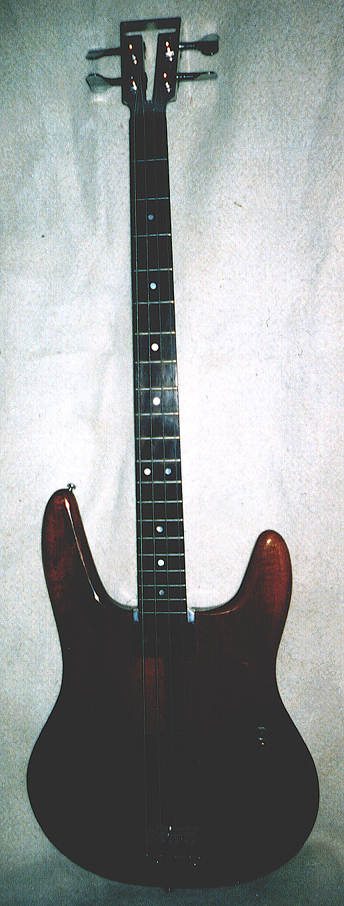
This is a Travis Bean bass. It sports an aluminum neck through design with a highly figured koa wood body. When you play this instrument, you feel the bass!
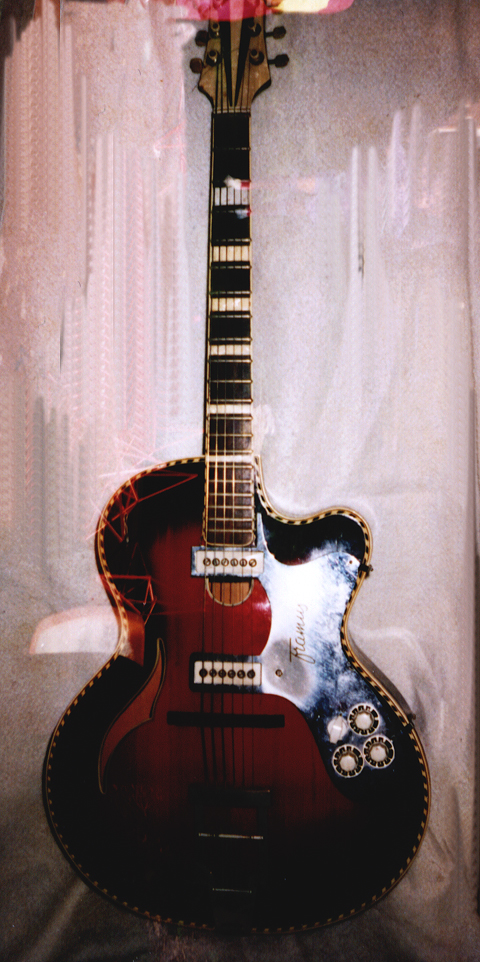
Not for the faint of heart, this is most likely a Klira creation equipped with a Framus [Schaller] pick-up. Cats-eye and oval sound-holes, floating pickups mounted on a metal pickguard with volume/tone controls to boot, and a full thickness body style make this guitar unlike any other I have seen. The binding and inlays alone will startle you, let alone the black to red sunburst contrasting with the zebra/checker-board binding! Thanks to Jack Marchal [French guitar enthusiast] for his information about this instrument.
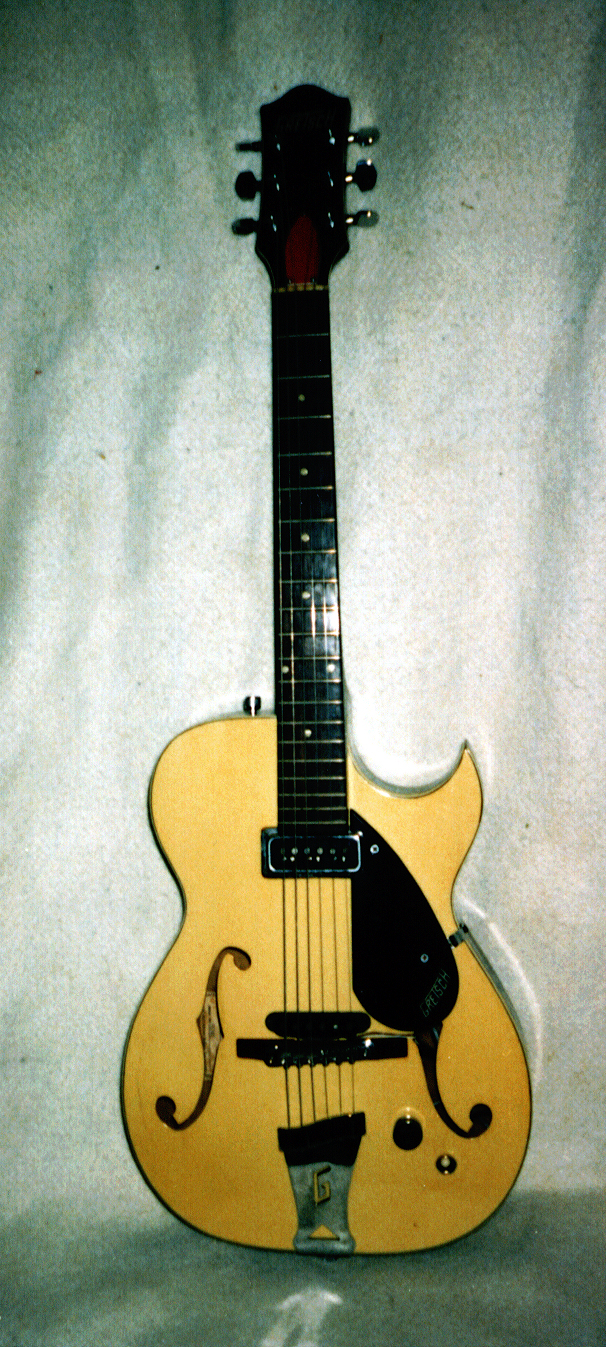
This is a 1957 Gretsch Rambler. This particular instrument was purchased from a girl who was a back up singer with ZZTop. The story goes that this one is to have been through the hands of the Reverend Billy himself. The back did have a huge ZZTop decal I have never seen before.... Hmmmmm.
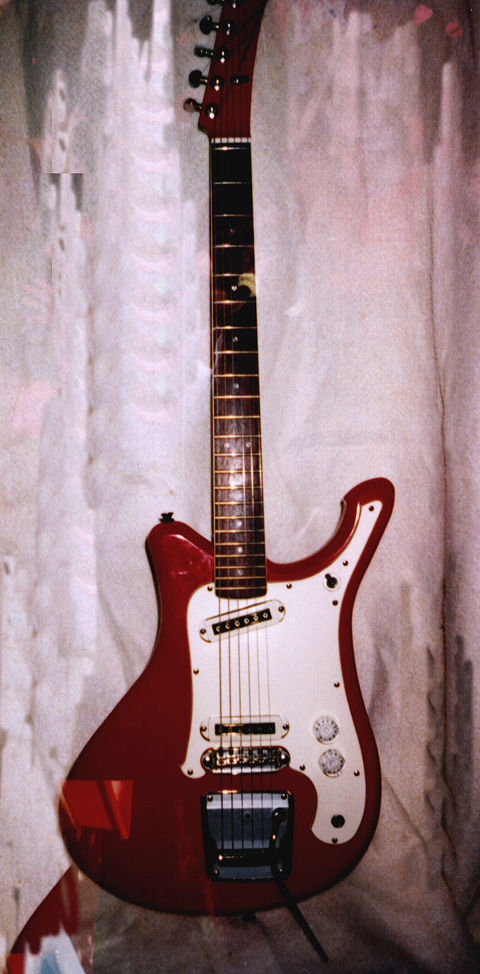
This Yamaha creation has a headstock that is so long I couldn't fit it into the photo. This 1962ish creation was very futuristic and the bold red finish is sure to grab one's attention. Single coil pickups combined with a unique whammy arrangement complete the look!

This Supro 60 is a 3/4 size wonder with a wooden 7-faceted case. It was designed with the student in mind but with a neck sturdy enough for rowing, it probably scared off a few beginners in its time.

These copper twins from Danelectro make for a handsome pair. These two 4-string basses are light, easy to play, and have the Dano-tone!
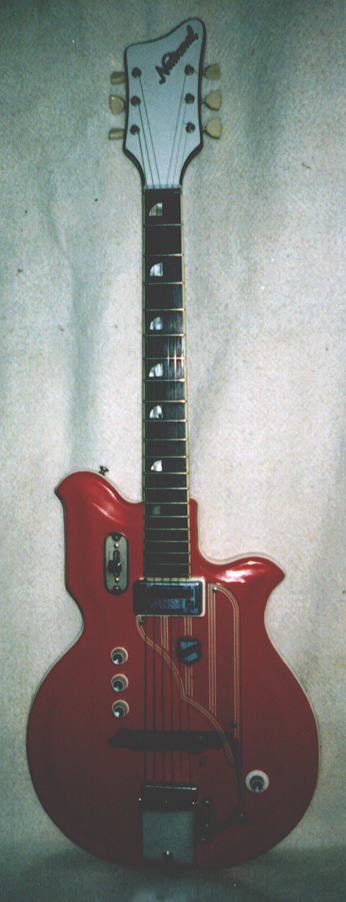
This National Newport is made from a plastic body. These were molded in two halves and then joined to form a resonant chambered guitar body. This one features a neck pick-up and a crystal pickup under the bridge. Arlen Roth and Bob Dylan liked the shape of these as they reminded them of the good-old USA!
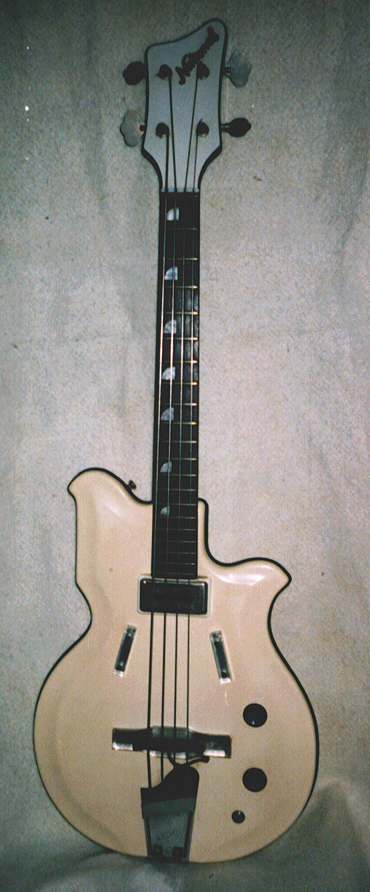
This is a National Newport 84 bass. It is light, playable, and National all of the way with it's crystal under the bridge pickup combined with the neck position pickup. Imagine how patriotic it would be to have bass, rhythm, and lead all playing on map-bodied wonders from National!
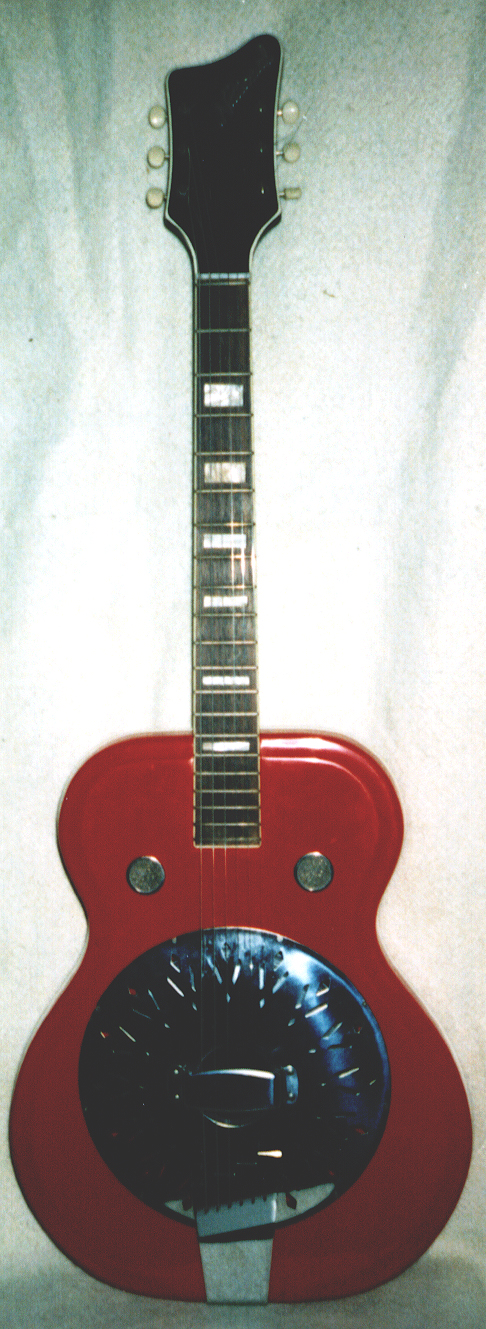
Ready for the hootenanny? This is a mid-60's National Bluegrass 88 resonator. It features a two piece red plastic body with a traditional National neck. It has a sound [not at all like the wood body models] that is rather muted and more mid-bass in tone. You would stand out in a crowd with this!

This is a National Westwood 77. It is very similar to the map bodied wonders above, but it is made out of wood! It features a set of magnetic pickups and a crystal pickup under the bridge. It has more sustain than the resoglass versions.
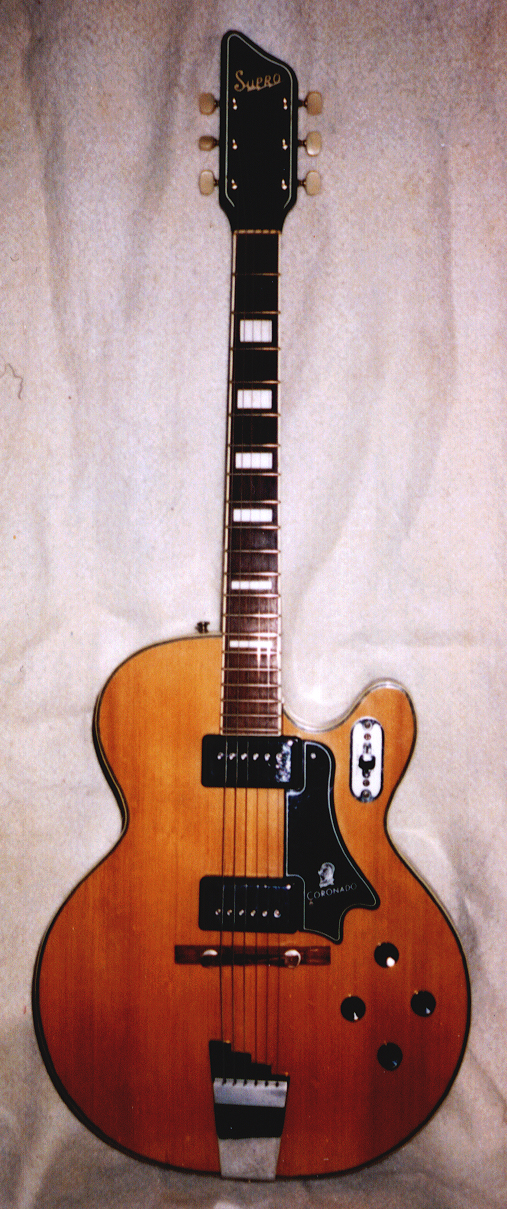
Ok, as long as we are talking National, how about this Supro Coronado from the late 50's? It probably came off the same production line but a little earlier. It's striking top is contrasted by it's plain black back.
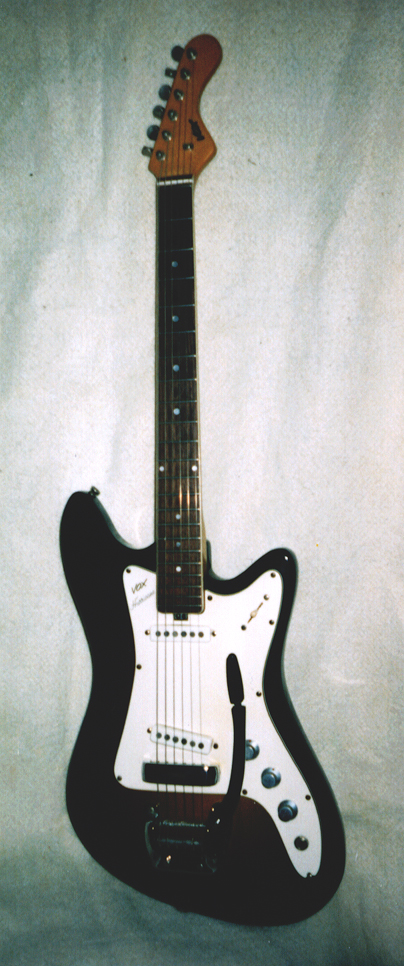
This is a Vox Tornado and it was inspired by the Strat and the Tele. It has a typical Vox sound but is lighter and devoid of the many features of others made during this time of the late 60's.
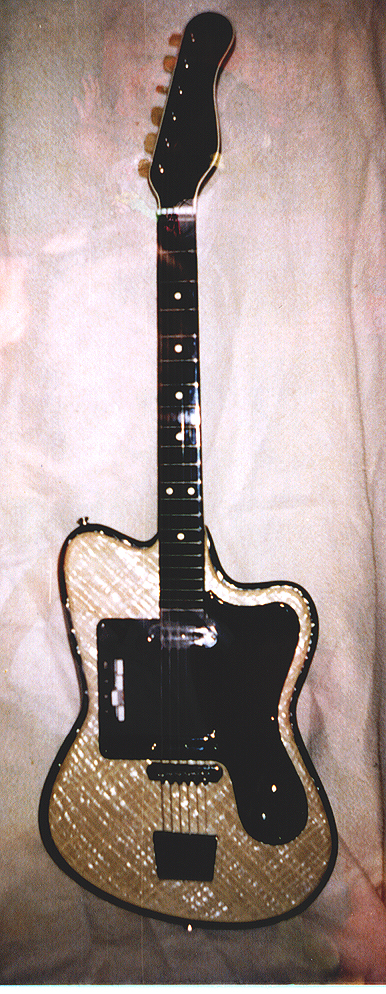
This Italian Tonemaster took the finish from 5 accordians to make! It is finished on all sides including the neck with the pearloid so popular in Italy at the time. This mid-60's instrument is a little difficult to play but makes up for it's lack of finesse in shear appearance!
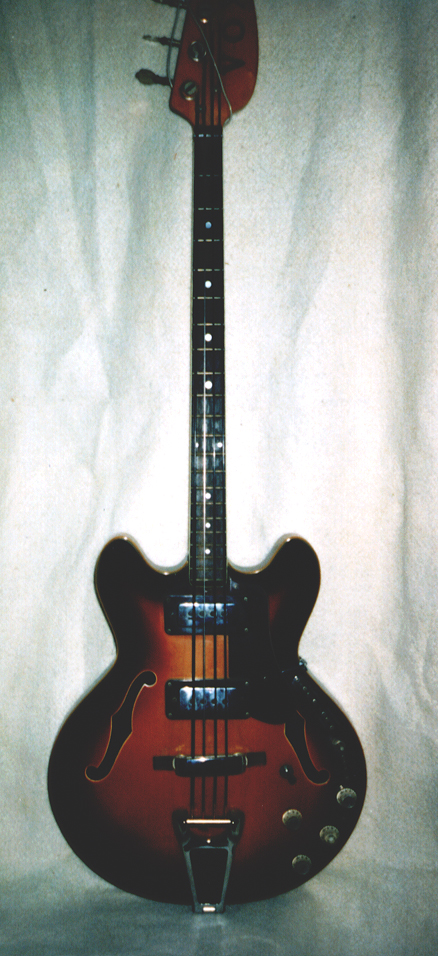
This is a Vox Apollo bass. It features a light weight hollow body and a built-in e-tuner and distortion generator. The headstock has the largest proportion to body ratio I have seen on any instrument [even though I cut off half of it in the photo]!
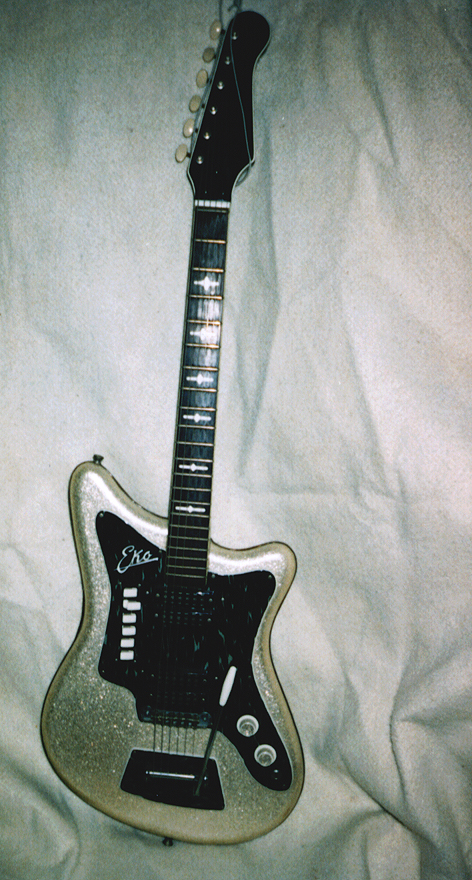
This is an EKO 4-pickup model with a wild glitter plastic shell! Push-button control helped the guitarist control the many pick-up combinations this one could provide.
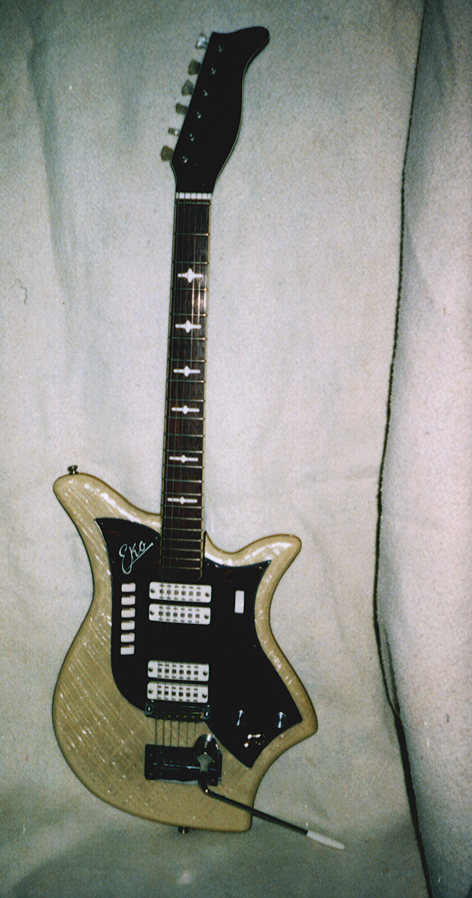
Here is another 4-pickup EKO but with a cut-out for player comfort. The extra long whammy handle made certain you could strum and pick near the neck and still wang the bar.
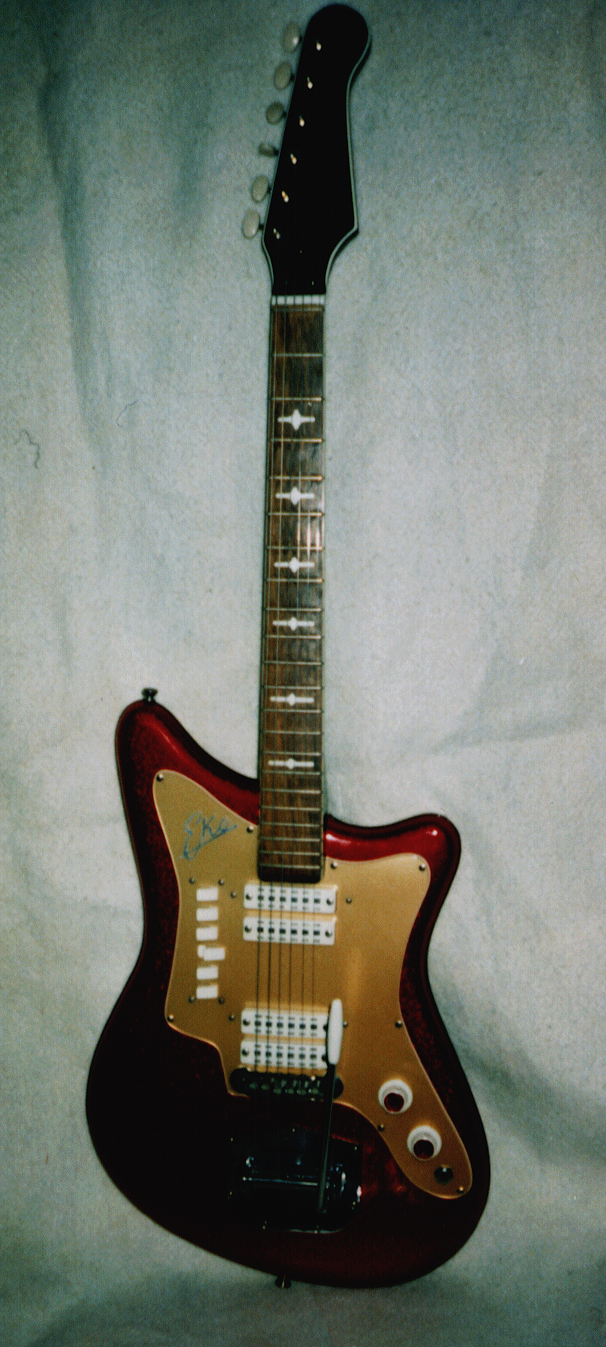
This is an EKO 4 pickup 6-string with a bright gold pick guard and sparkle red finish. You had to wear complementary colors to play this one on stage! Actually, these instruments sound quite good. The pickups are similar to the ones used in the Italian VOX [EKO manufactured them]. They are slightly microphonic.
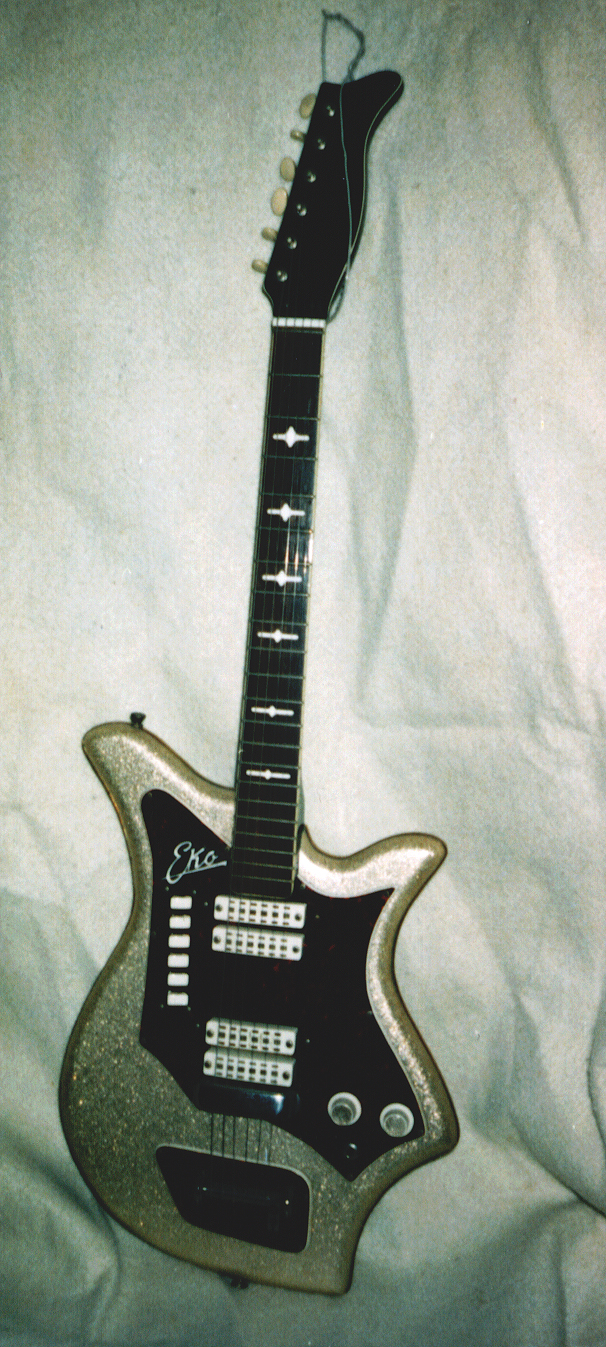
They say good things come in three's, well now we have four EKO's in a row! This one is finished in glitter white!

Les Paul and Gibson must having been training with weights when they designed this instrument. It has an XLR input to make certain that you didn't get any objectionable noise with your output!
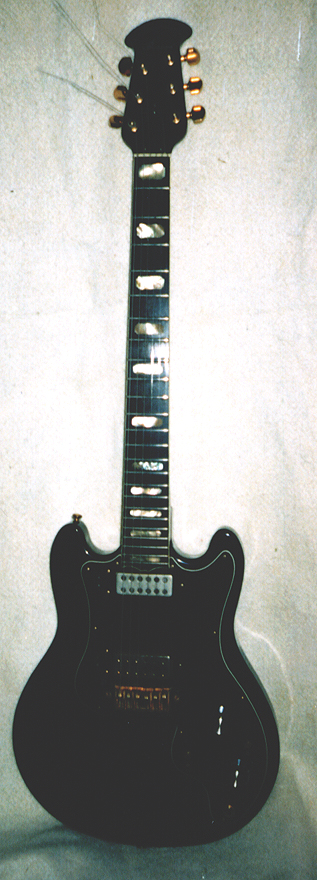
This Ovation Preacher features abalone inlays, gold trimmings, and active circuitry. This instrument screams with the best of them.
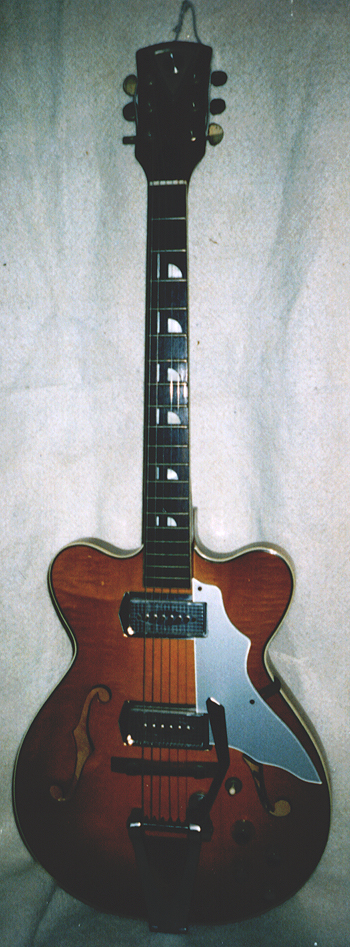
This is a Kay JazzII. It features a Kay/Bigsby whammy and a radical pick guard. The abalone inlays on the neck are often referred to as "shark fin" inlays. It's thinline body coupled with a very playable neck makes for hours of playtime!
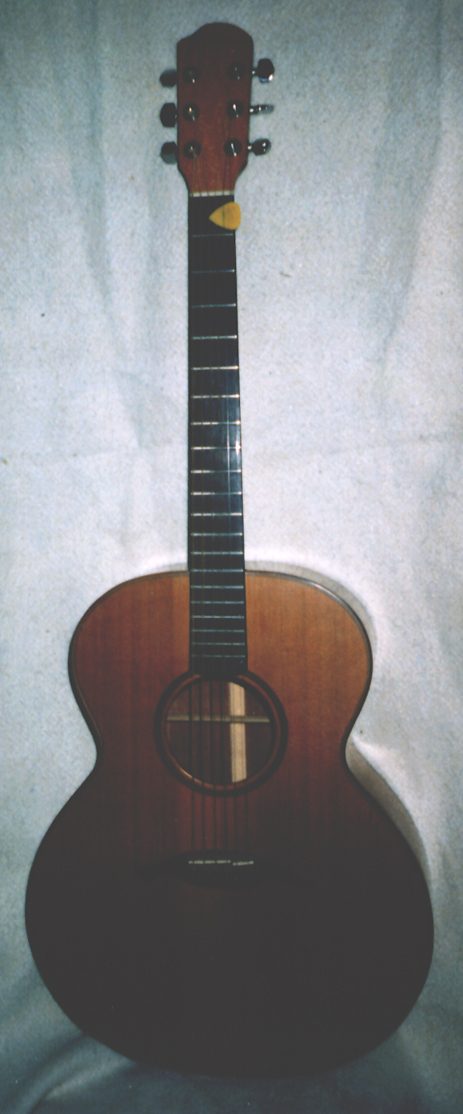
This is a one-off piece built by Guy Trameleuc, a French luthier who probably doesn't build more than 15 instruments a year. It sports a very mellow and rich sound reminicent of the old Harmony Sovereign but richer. Thanks to Jack Marchal [French guitar enthusiast] for his information about this instrument.

This is a VOX 12 string. Note the unique ability to use a vibrato arm and 12 strings at the same time. Wow, we could re-write the history of surf music with this 12-string machine!
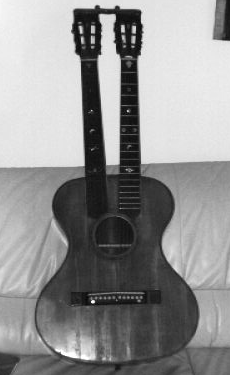
This is a Joseph Bohman double neck acoustic from the turn of the century. It is most unusual and includes a fretted neck as well as a neck set up for slide. It has hand carved inlays, an ebony fretboard, rosewood sides and back, a maple top, a bone nut, and a rosewood bridge with bone insert. The sound is full and unique. The neck set up for slide is tuned to an "E" chord. I have never seen one like it before. I would be interested in hearing from anyone who has! As soon as I get a chance, I will add a color picture of this one!
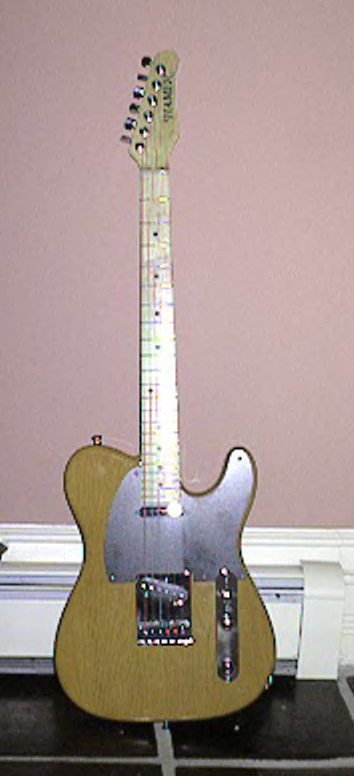
I know this page has been mostly older guitars but I recently added another you might like to see. Hamer makes a great Teletm style instrument that is called a T-51. It is a great player and has a beautiful butterscotch finish that shows the beauty of the ash wood it covers. The maple neck features spertzel locking tuners. It sings.
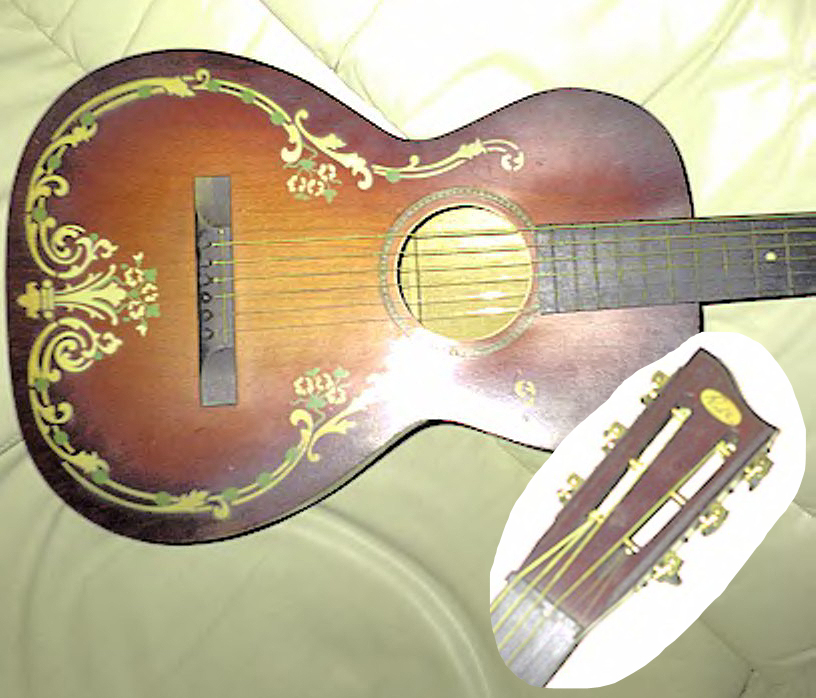
This is a recent addition. I needed another slide guitar and I was checking in with some shops. Ken Tobias of Tobias Music called me and said that he found me a beauty for a very reasonable price. What he put together was a Richter [of Chicago] flower stenciled guitar. It could never be restored as a standard player due to neck warping so he had converted it to slide. It was probably made in the late 40's to early 50's. It is fun and sounds great!
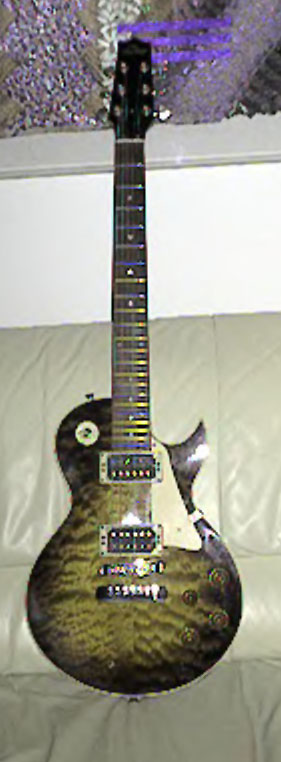
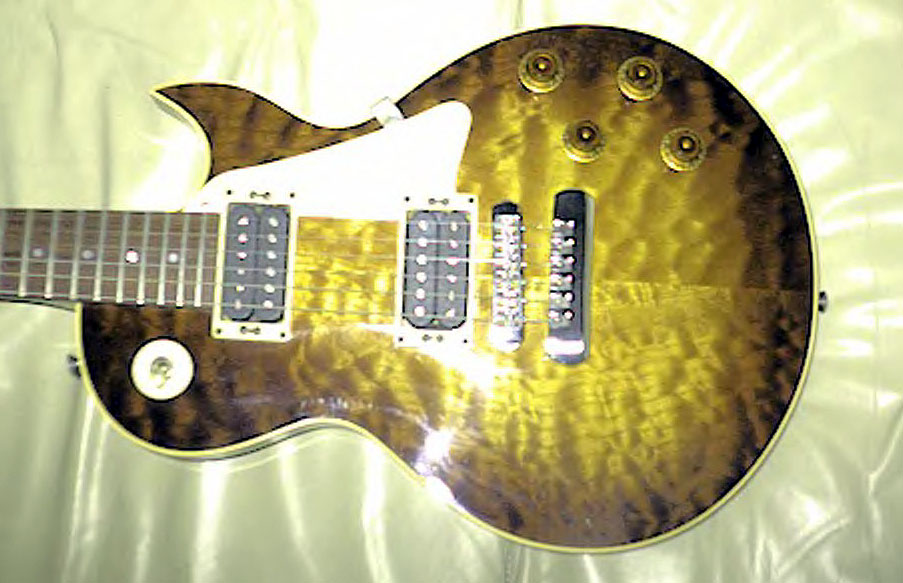
This is another more recent guitar. This is a Heritage CM140. If it looks sort of familiar, it is - sort of.... The craftsman that worked at Gibson's factory in Kalamazoo didn't all want to move when Gibson moved their facility. Some stayed behind and the Heritage guitar company was founded. They still do beautiful work - do you like the flamed curl?
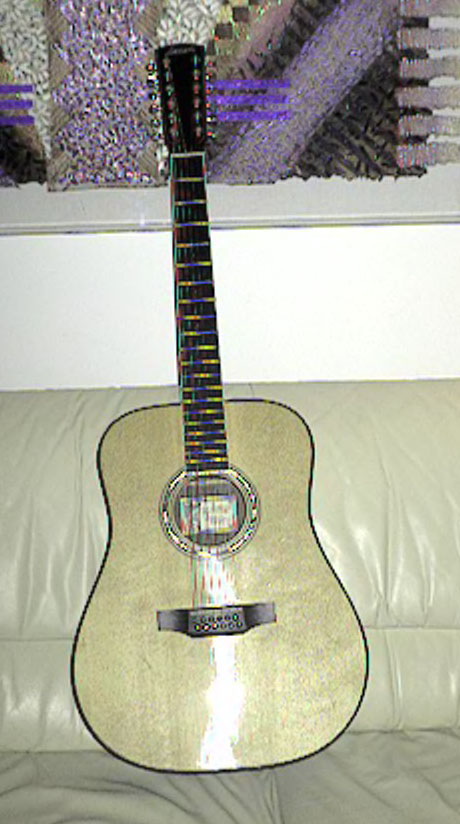
This is another recent guitar. I saw a used Larrivee rosewood 12-string and fell in love. Too bad - it was already spoken for. I visited my good friends at Flynn Brothers and ended up with a brand-new Larrivee L15 12 string. It has a wonderful sound, amazing action, and clear delineation of each note. It sounds like it cost three times as much!
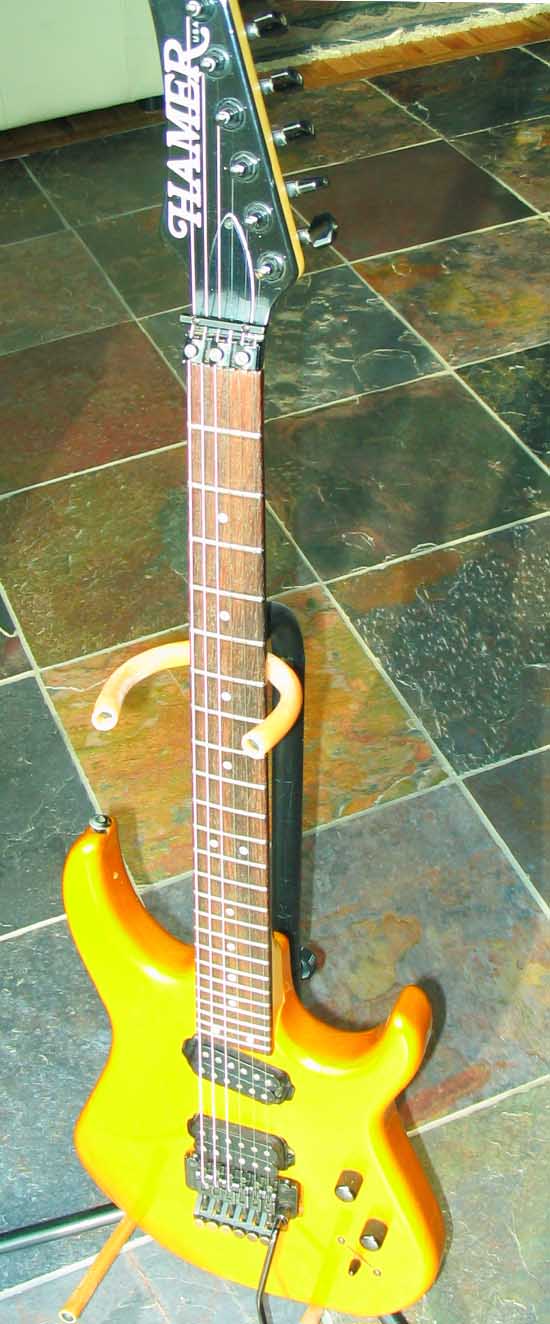
You are looking at a Hamer USA Diablo. It is finished in a honey color that lets the wood grain show through. The guitar is set up with a factory Floyd Rose system. The neck is fast and thin - easy to play. The factory pick-up set up gives this guitar a giant sound.
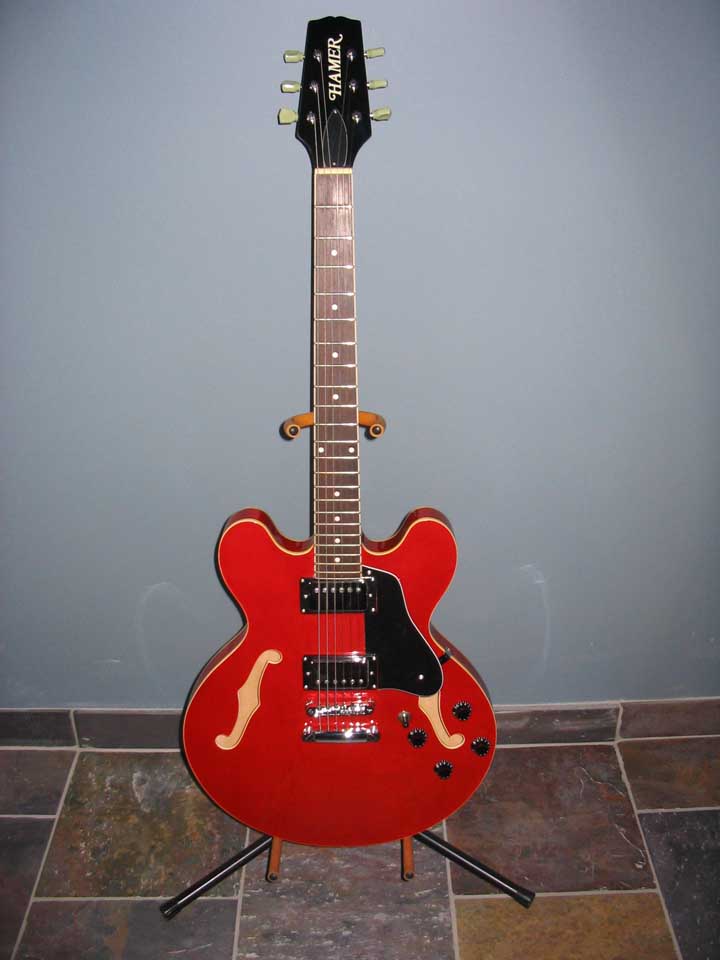
This is a Hamer Echotone. It is similar to the popular Gibson 335. I was looking for a good blues guitar with a 335 sound but at a lower price. I was shocked to find out that this instrument performed so well at such a modest cost. It is of Korean manufacture. With a little set up help from Pete at Flynn Guitars, this is a terrific performer.
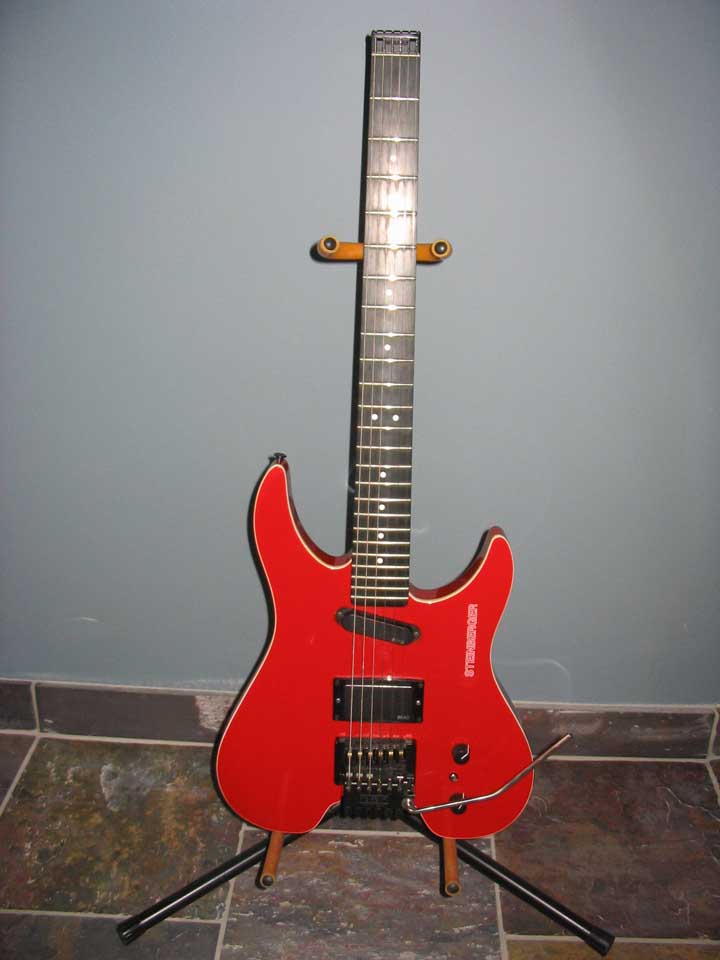
This is a Steinberger GM5TARD. I contacted Gibson's guitar archivist, Debbie Orsland, I was surprised to find out that before this instrument left the factory it was loaned to Warren Cuccurullo of Duran Duran for a video shoot. Wow - I owned a star guitar.
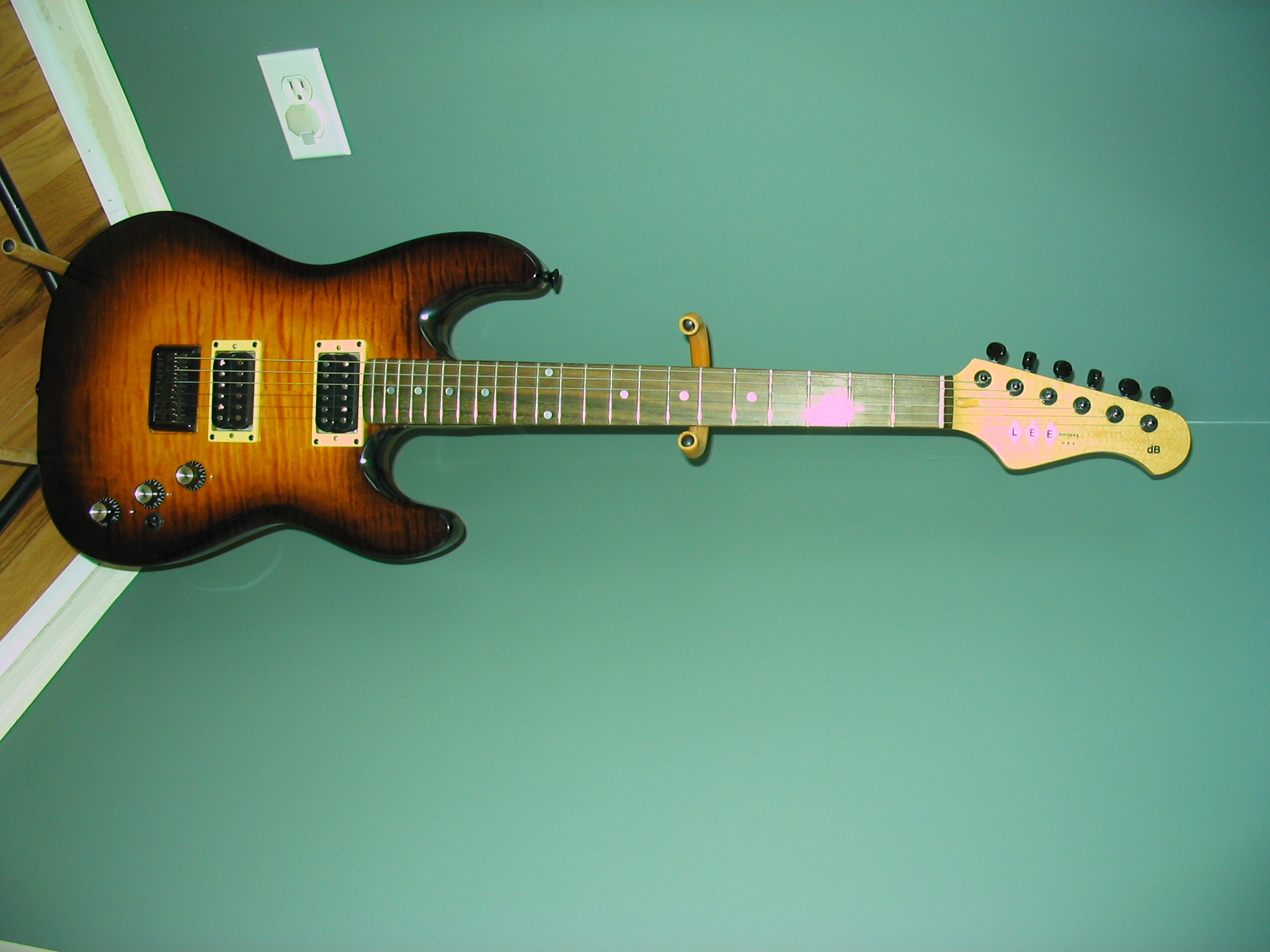
This is a Lee Model dB. Scott Olson is the luthier and owner at Lee Guitar Werks and is responsible for the remarkable dB design. He custom builds these to order. This dB has a curly maple top and a walnut back. It has a hand formed neck and body - he shapes the necks using a rasp. The pickups are wired for split coil operation and the sounds from this instrument are very nice. From the coolest strat sounds to big full sounds you might expect from a very different style guitar. It is a fovorite of mine.
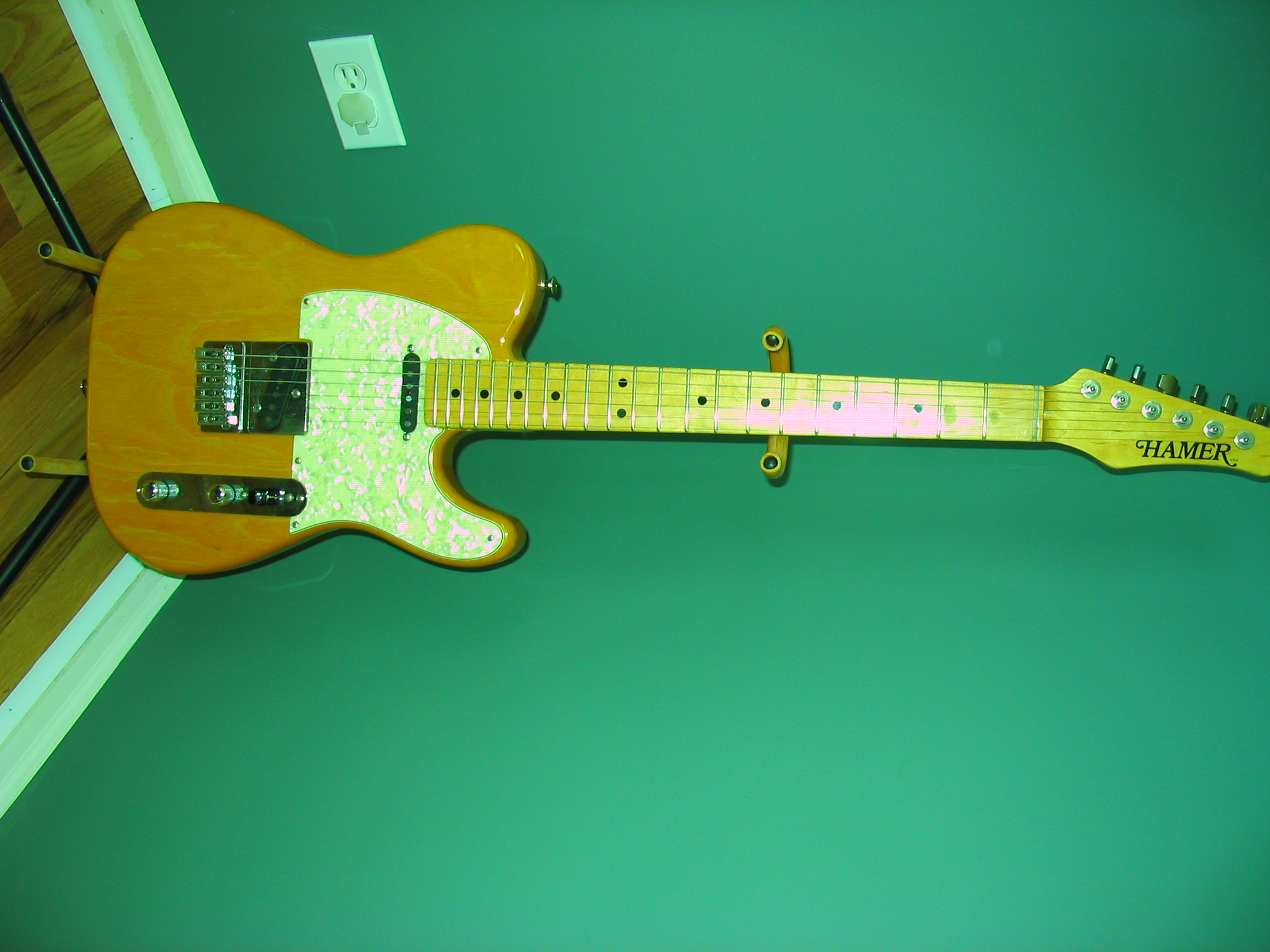
This is a Hamer USA T51. This particular one is swamp ash and is fairly hefty. It is huge on sound. It shimmers and sparkles on notes. It includes spertzel locking tuners.
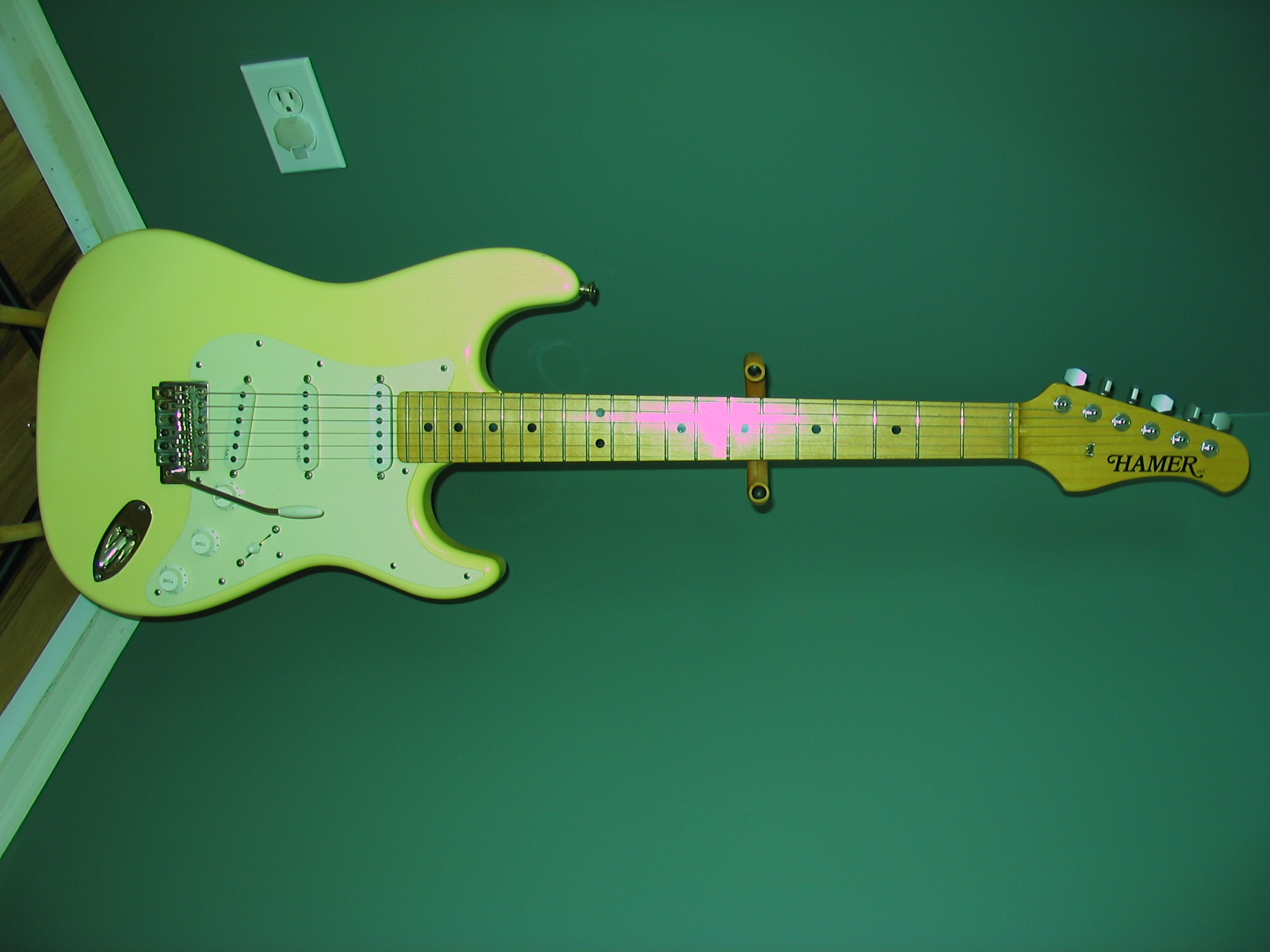
This is a Hamer USA Daytona. This particular one looks amazingly like an old Strat olympic white that has creamed yellow and faded. It has stock EMG pickups and Spertzel tuners. It has all of the traditional Strat sounds with ease and had significant output.
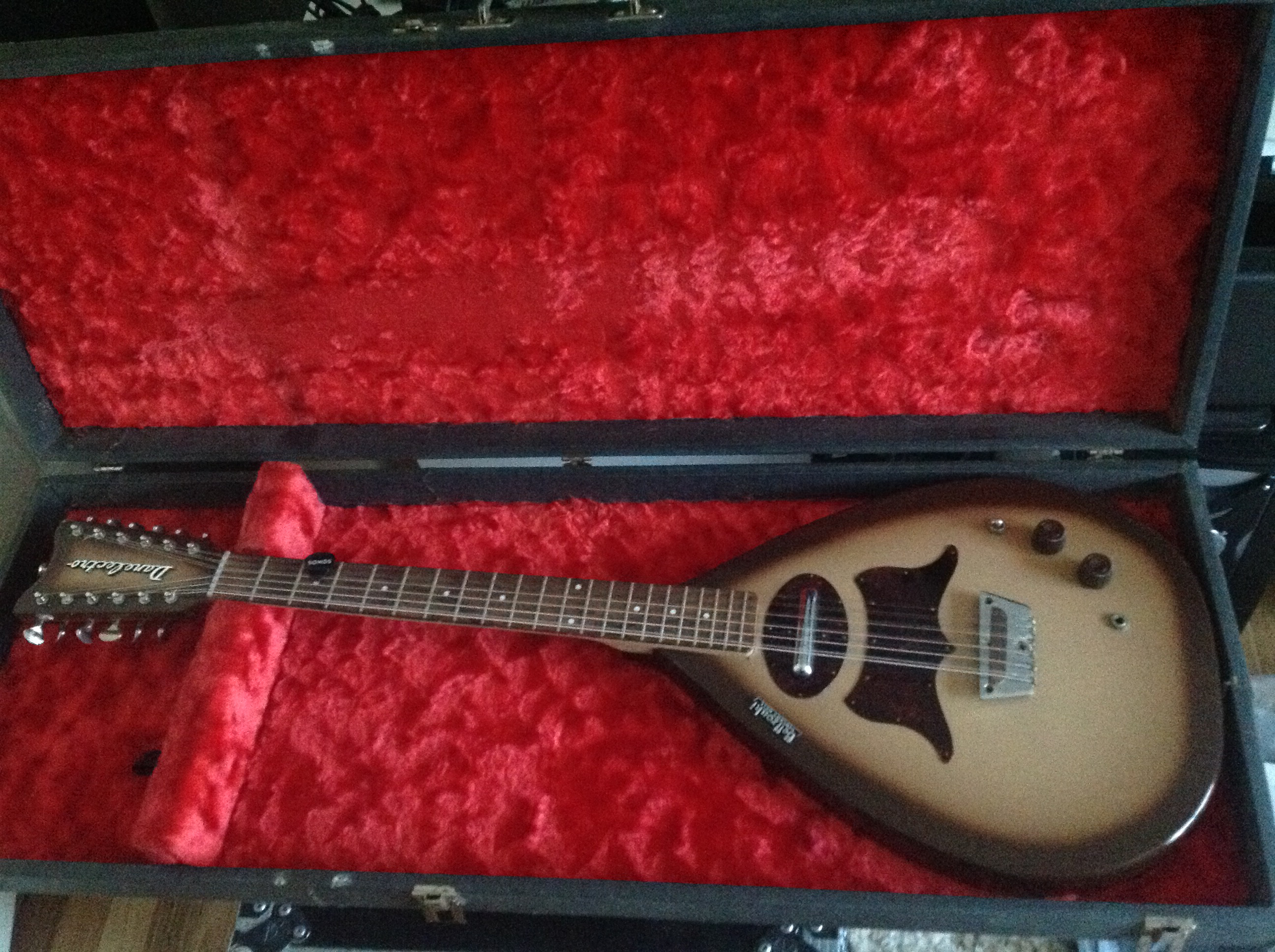
This is a Danelectro 7010 Bellzouki 12-string guitar. It's wonderful tone and playability was preferred by many artists including it's designer/endorser, Vinne Bell.
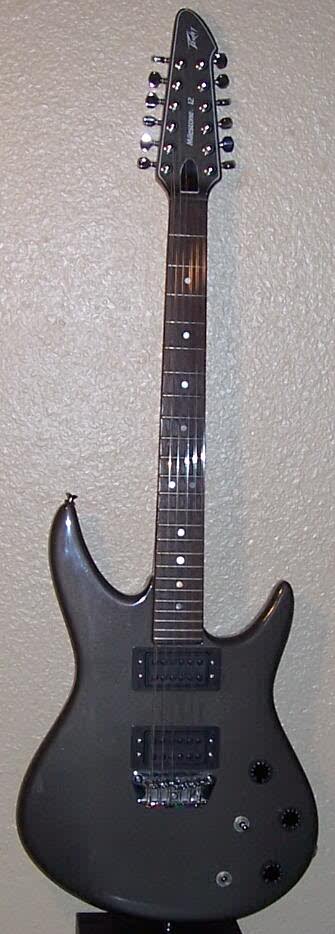
This is a Peavey Milestone 12-string. It is a very playable and wornderful sounding instrument . It is a US made instrument as well!
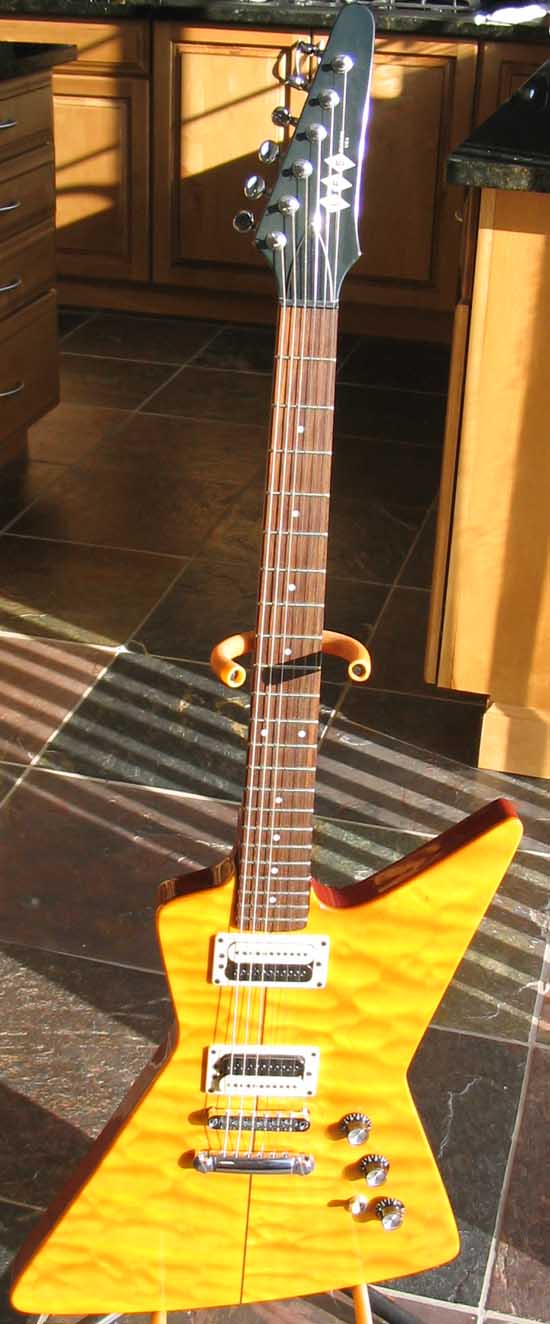
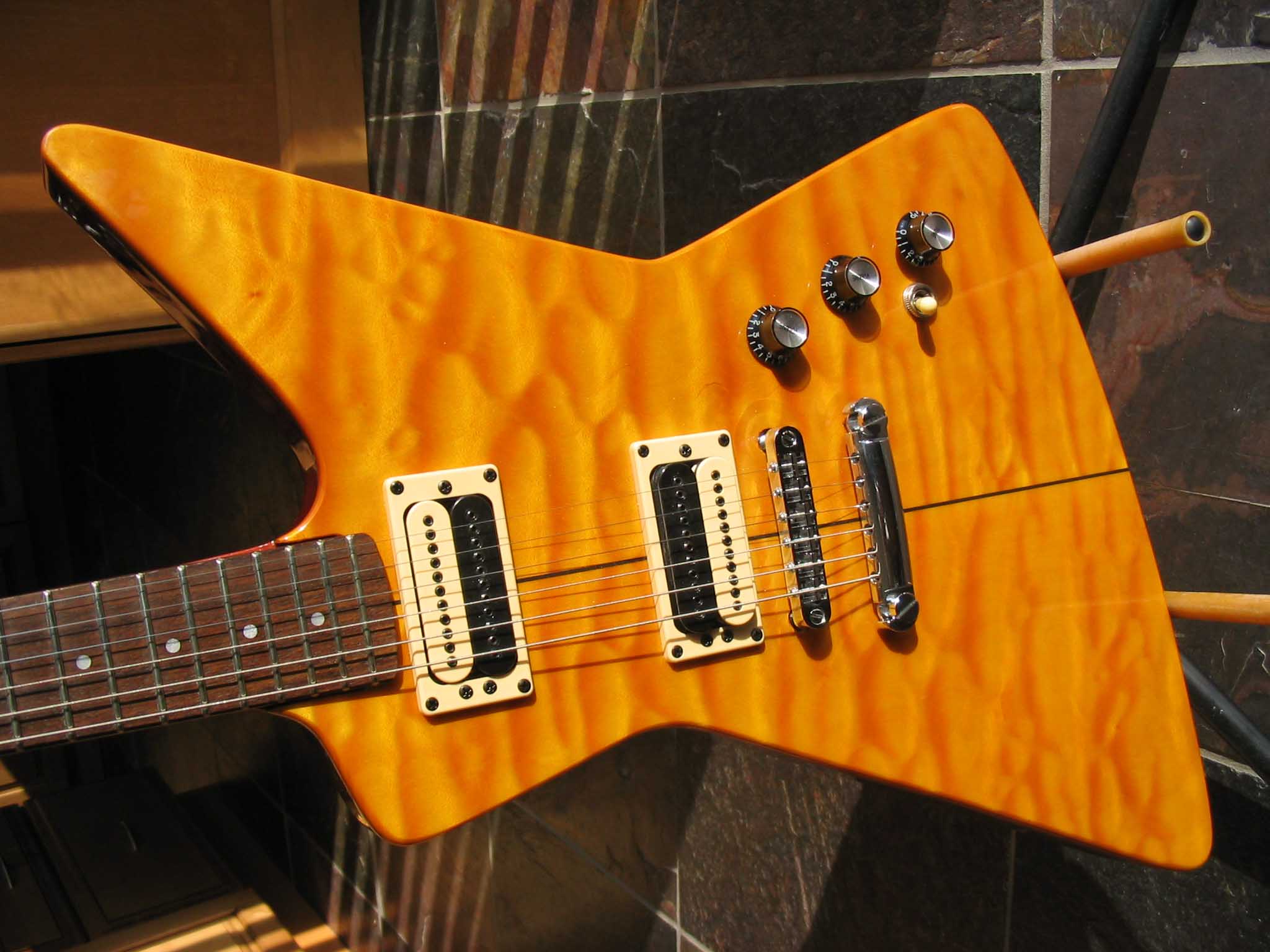
This is A Lee RX. The top is a beautiful quilted maple and is separated from the mahogany back with a layer of ebony. The guitar sounds like a Gibson with more tone capability. The RX features split coil Carvin 22 pickups which allows a beautiful single coil and humbucker sound.

This is a Rumley Baritone. This luthier is based out of Denver, CO and specializes in bass and baritone instruments. This unique green sunburst guitar has a book matched poplar body and a single coil pickup. It plays easily and twangs with thunder.
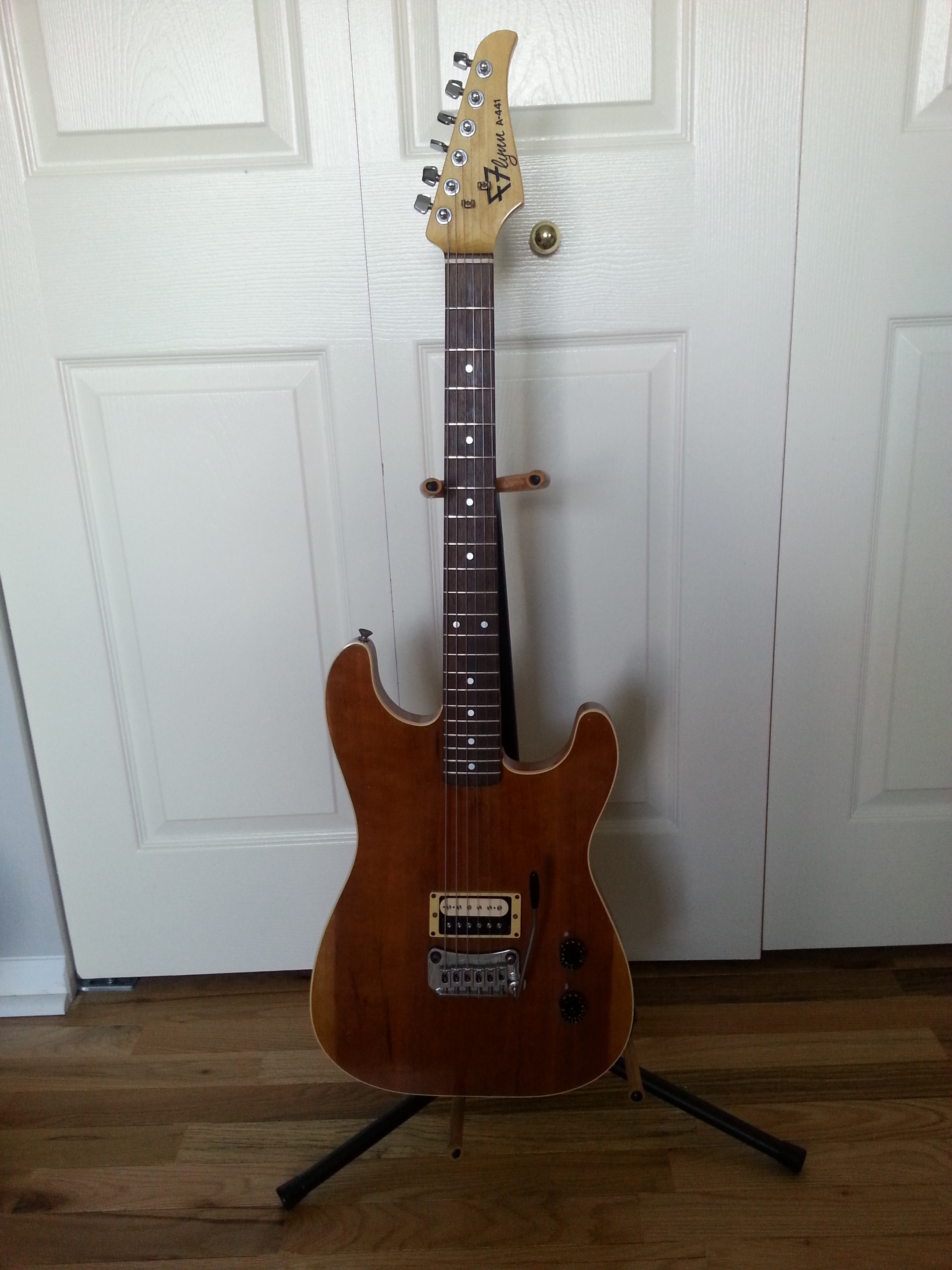
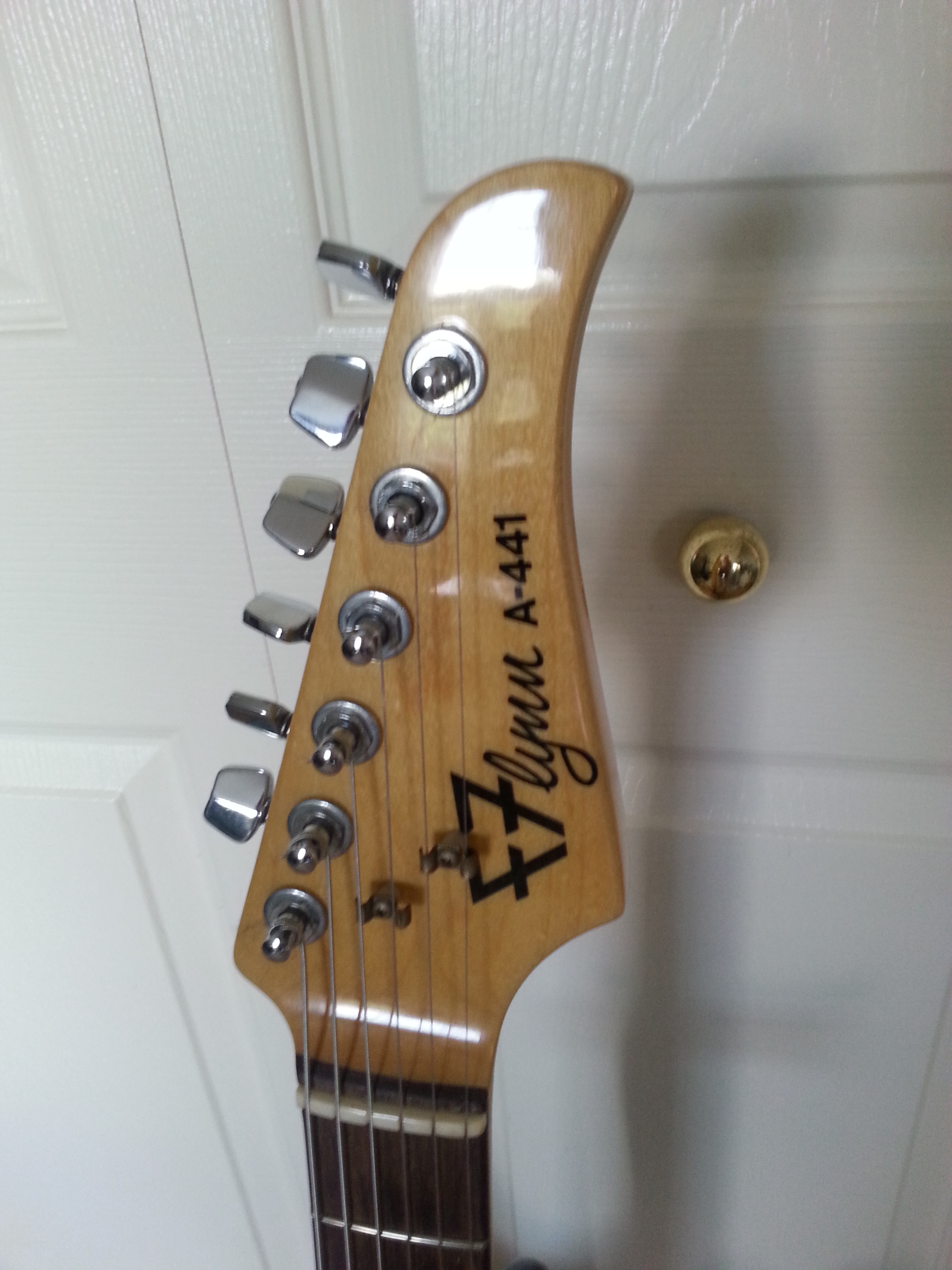
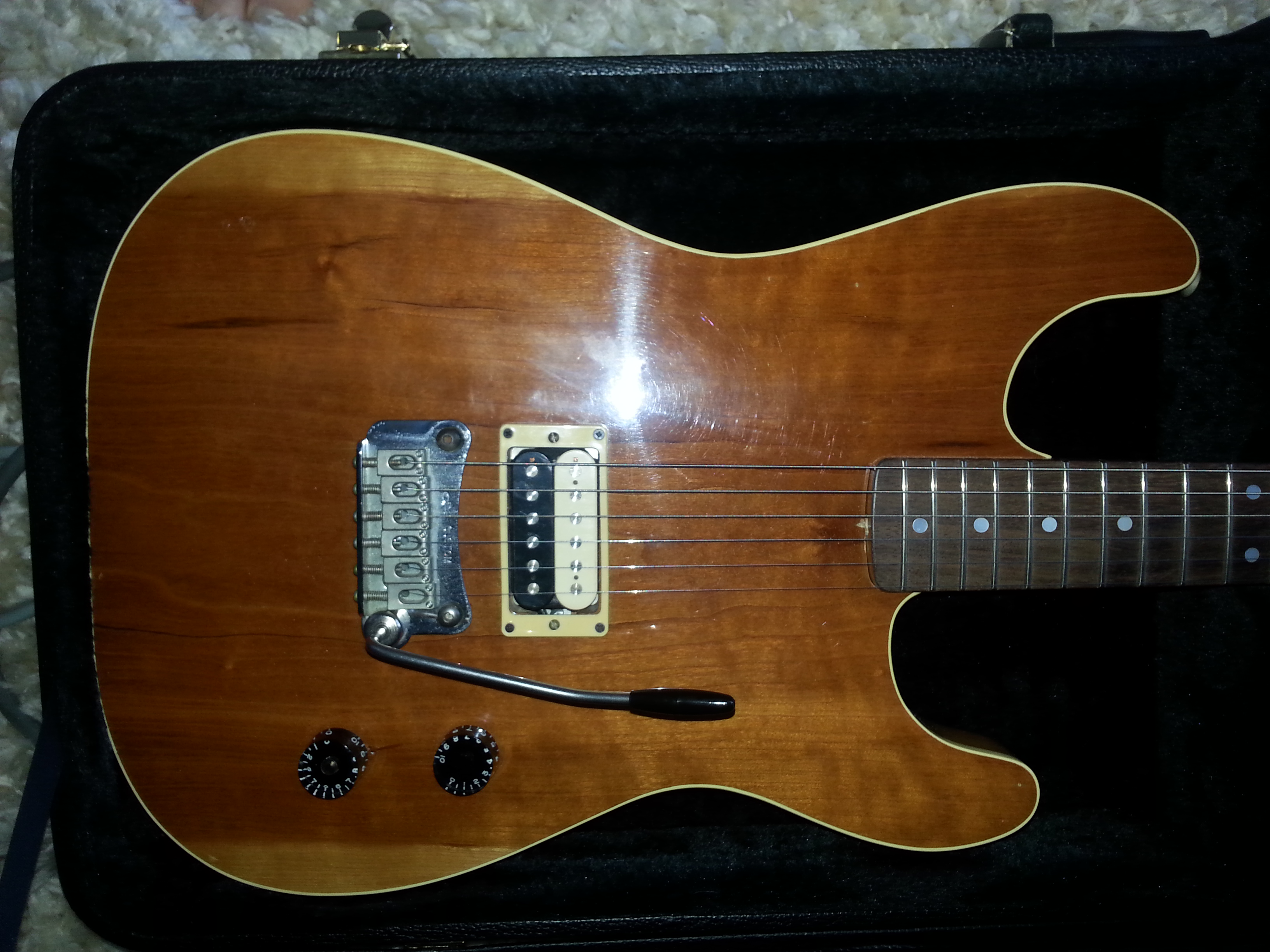
This is a Flynn A-441. Flynn Guitars were based out of Evanston IL and were custom handmade very high quality instruments. This particular Flynn was one of a kind and made with a single solid slab of cherry wood. The pickup was a custom wind by Seymour Duncan to perfectly emulate a vintage PAF. The bridge is a prototype G&L bridge given to Pete Flynn by Leo Fender. The pickup can be split to offer vintage humbucking PAF sound or single coil bite. It is a versatile and prized instrument.
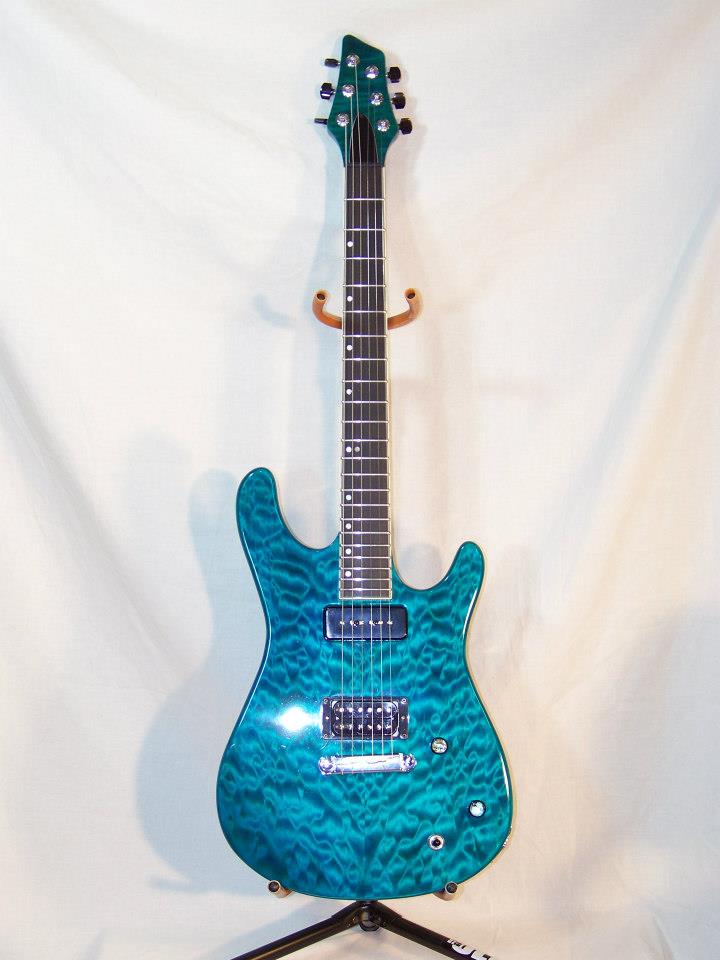
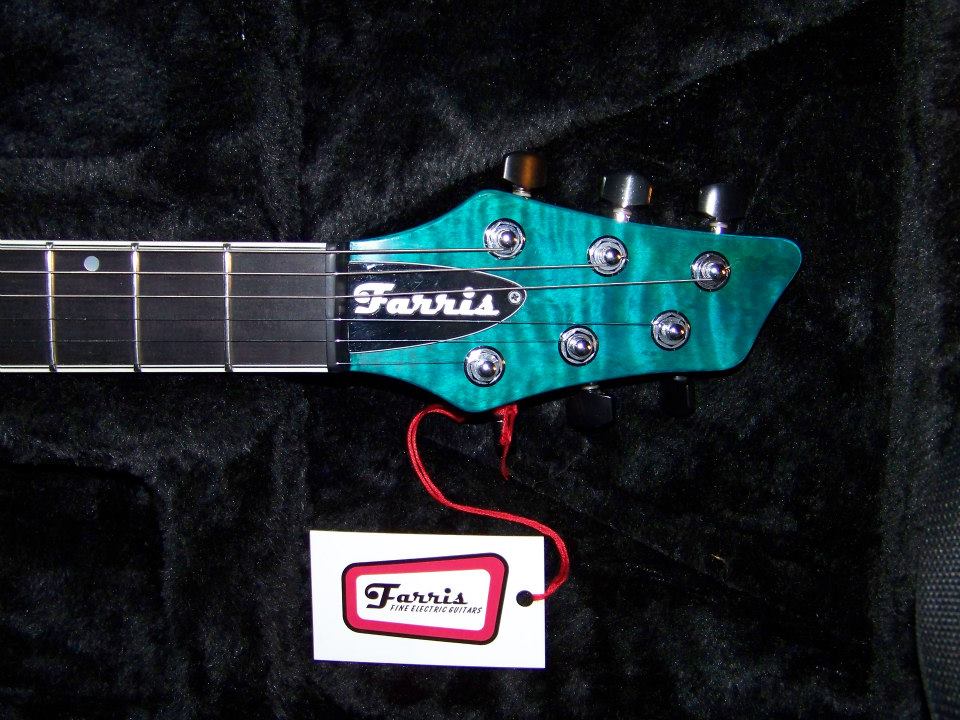
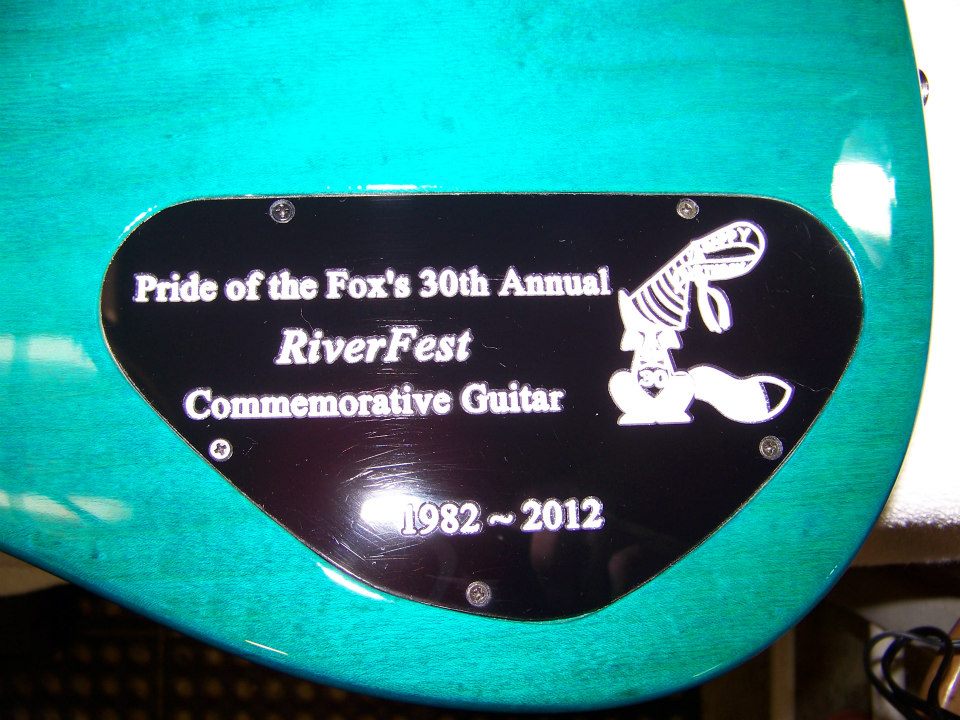
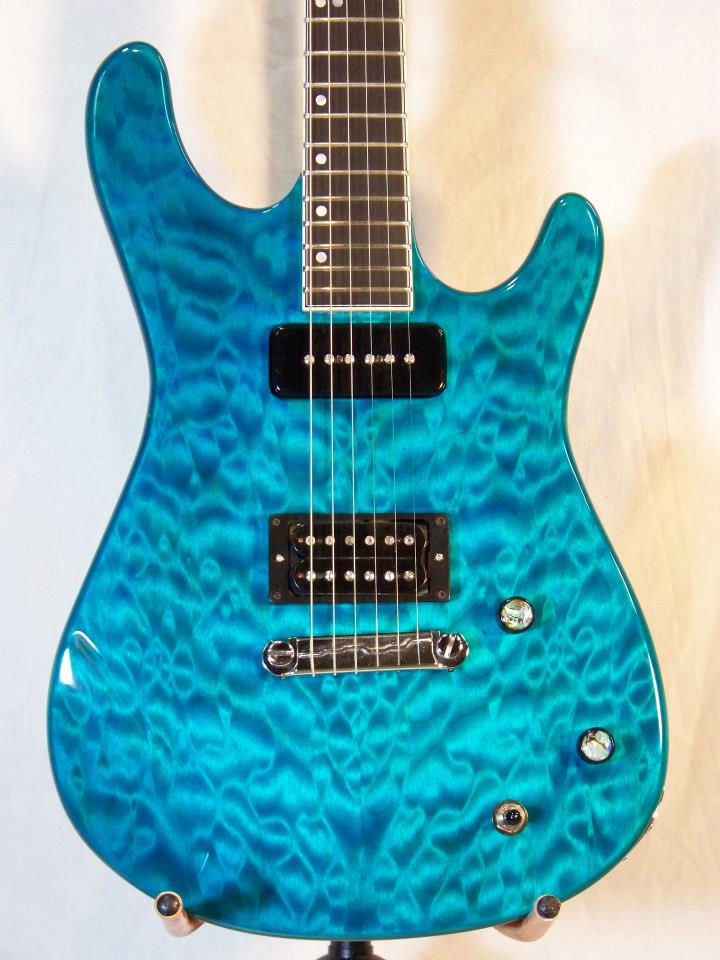
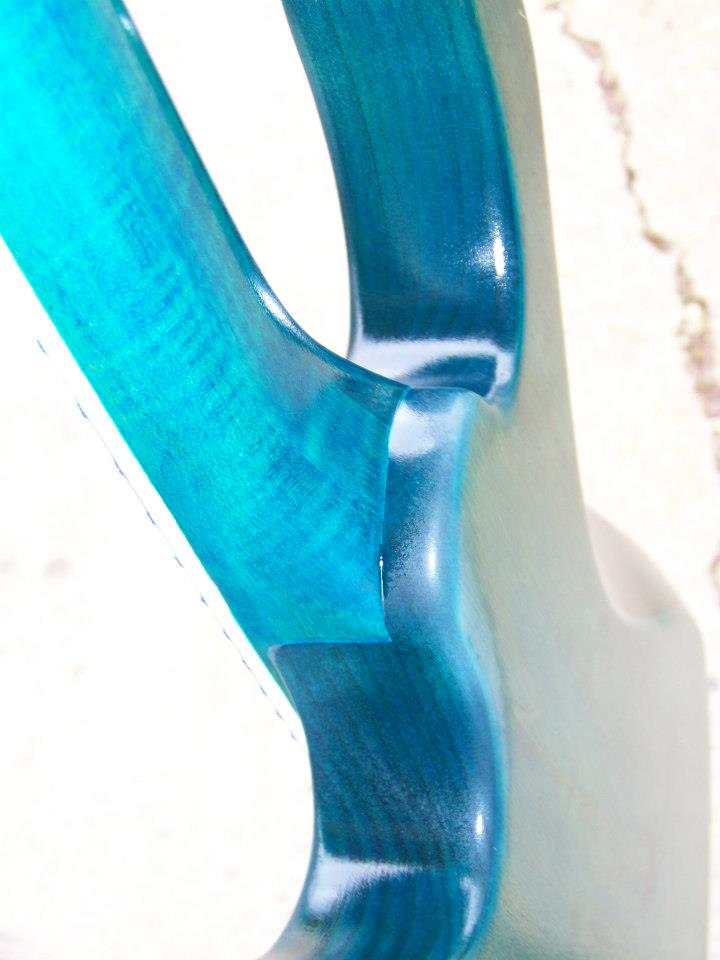
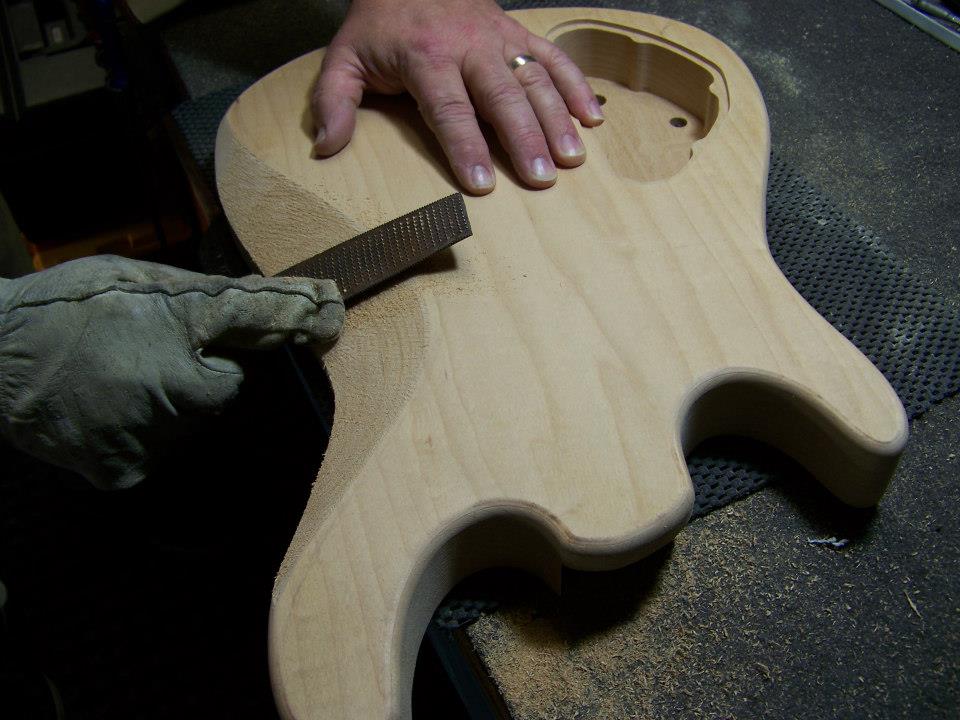
This is a one of a kind - Greg Farris Blue Dragon guitar. Greg Farris is a master guitar builder and has been a custom shop builder for Hamer, Charvel and Washburn. This Farris was made in 2012 for the city of St. Charles IL as a commemorative instrument to celebrate the annual River Festival. Greg's wife headed up the event and the guitar was placed as a prize in a raffle. It passed through two owners to my hands. The guitar features a lightweight alder body with a highly figured quilted maple top slab and a curly maple neck with an ebony fretboard. The neck pickup is a P90 while the bridge is a humbucker. The neck and body were hand-carved. Thanks for constructing this beautiful instrument Greg!
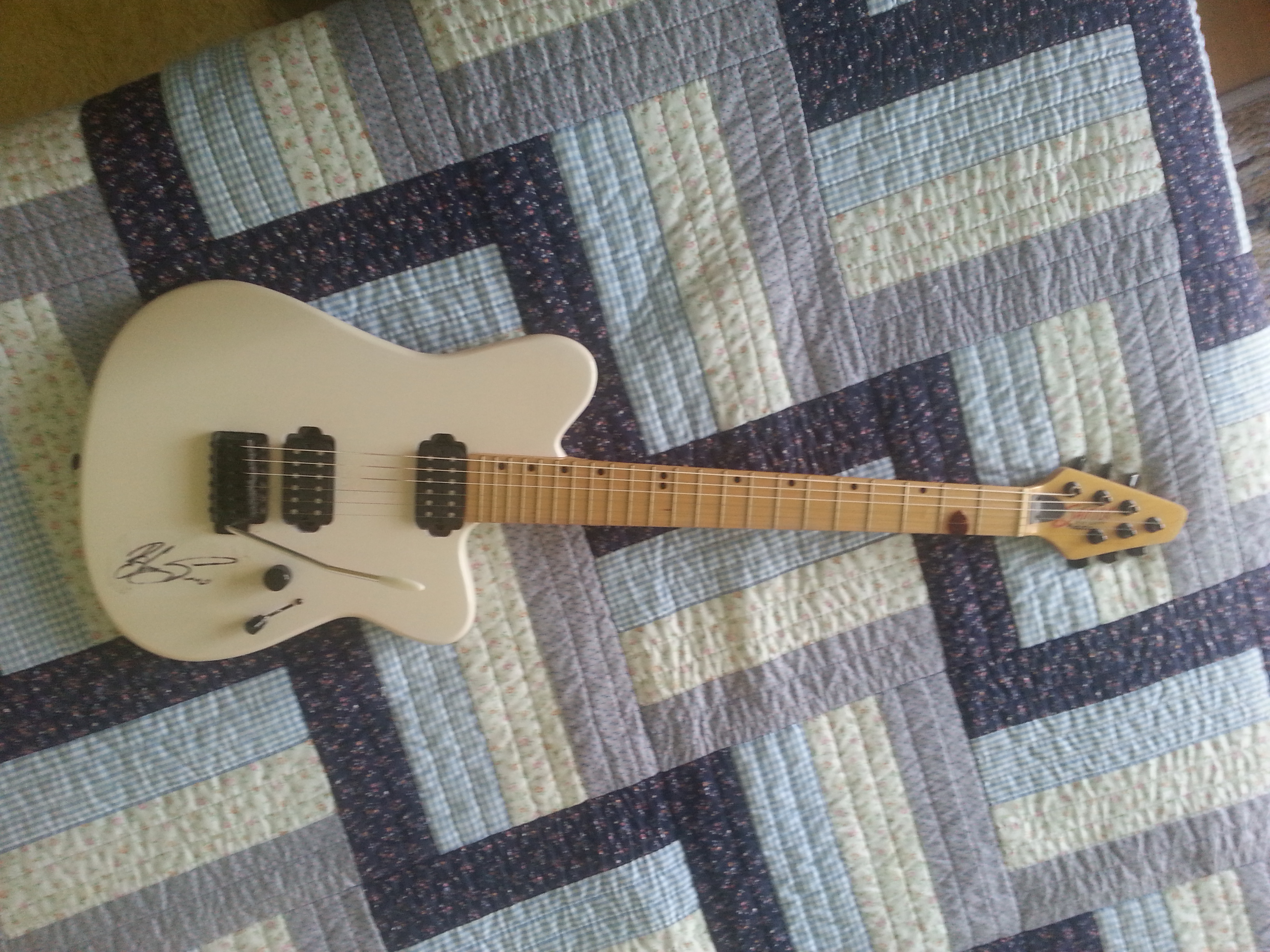
For those of you who are familiar with the guitarist, Blues Saraceno, you know he has four solo instrumental albums that show the remarkable skill he has. Samick made two signature instruments for Blues, the TV20 and the Radio 10. This Radio 10 is finished in white and has a very nice maple neck. The body holds two humbuckers with a volume control and a a 3-way pick up selector. a tremelo is included. It is a fat sounding instrument with excellent playability. This white one is in great shape!
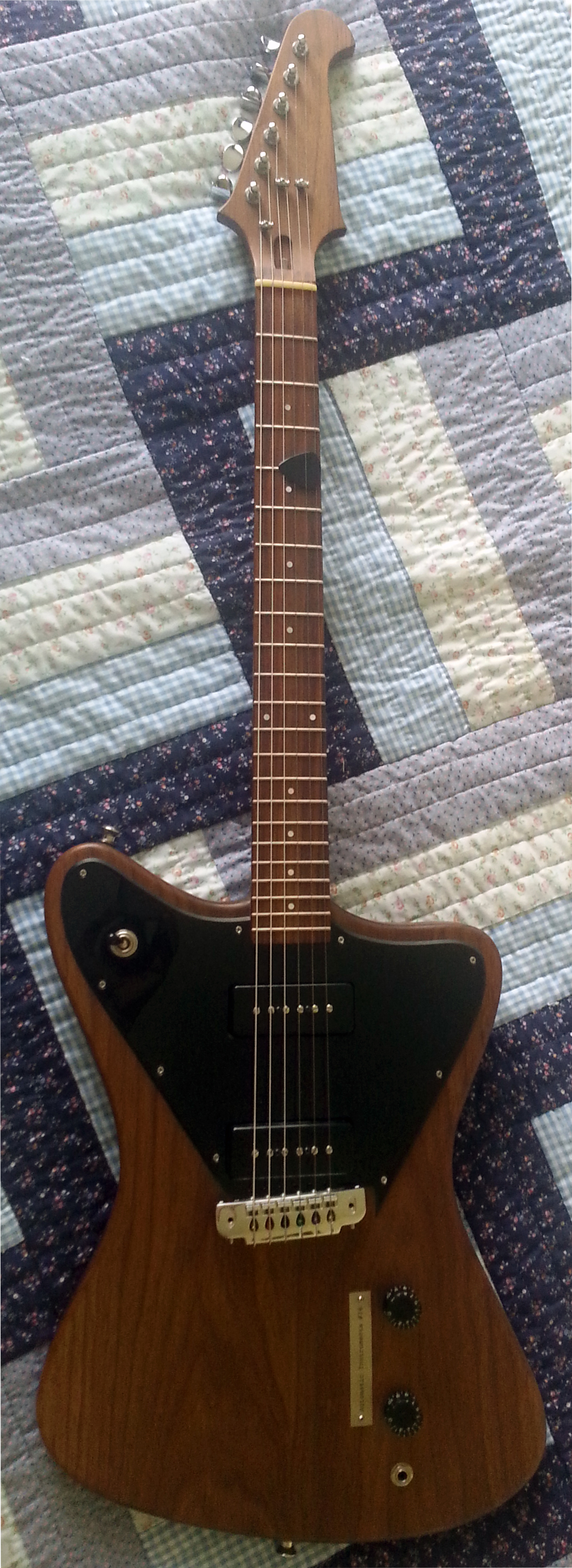
This instrument is very reminicent of a Firebird shape but with a number of unique attributes. It was made by Automatic Instruments, luthier David Wells, in Chicago IL. The instrument is entirely constructed out of walnut and is finished with gun stock oil instead of traditional lacquer or polyester finishes. The pickups are hand-wound using a scatter wind method. Sustain is held for a long time in this instrument. Despite its heavier wood compliment, it is stronger wood and built with a thinner profile keeping the weight in line with traditional guitars. Beautiful!
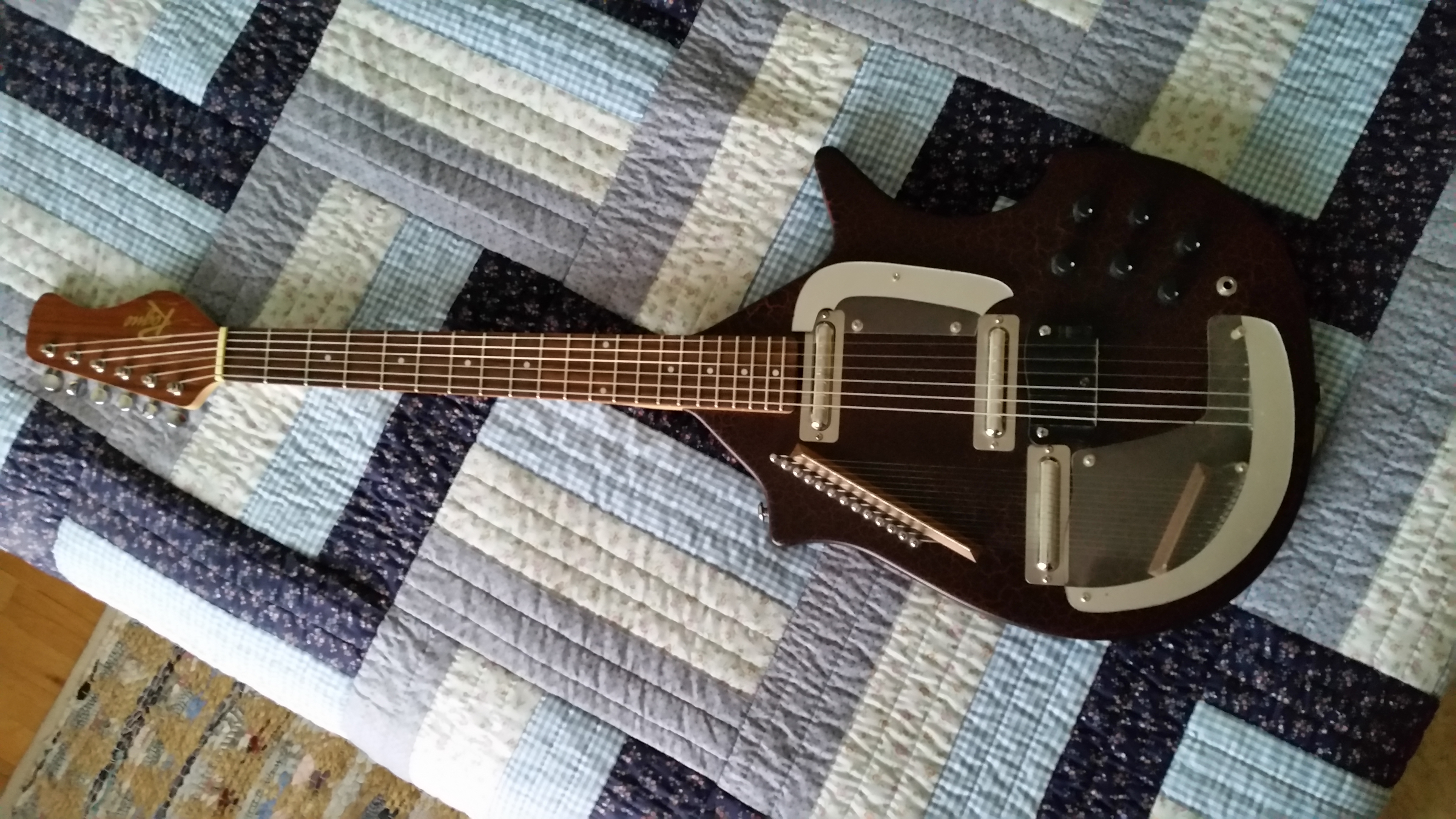
This is a Rogue Electric Sitar which is a replica of the 1960's Coral/Danelectro electric sitar. The sound is unique and the faithfulness to the replica is remarkable.
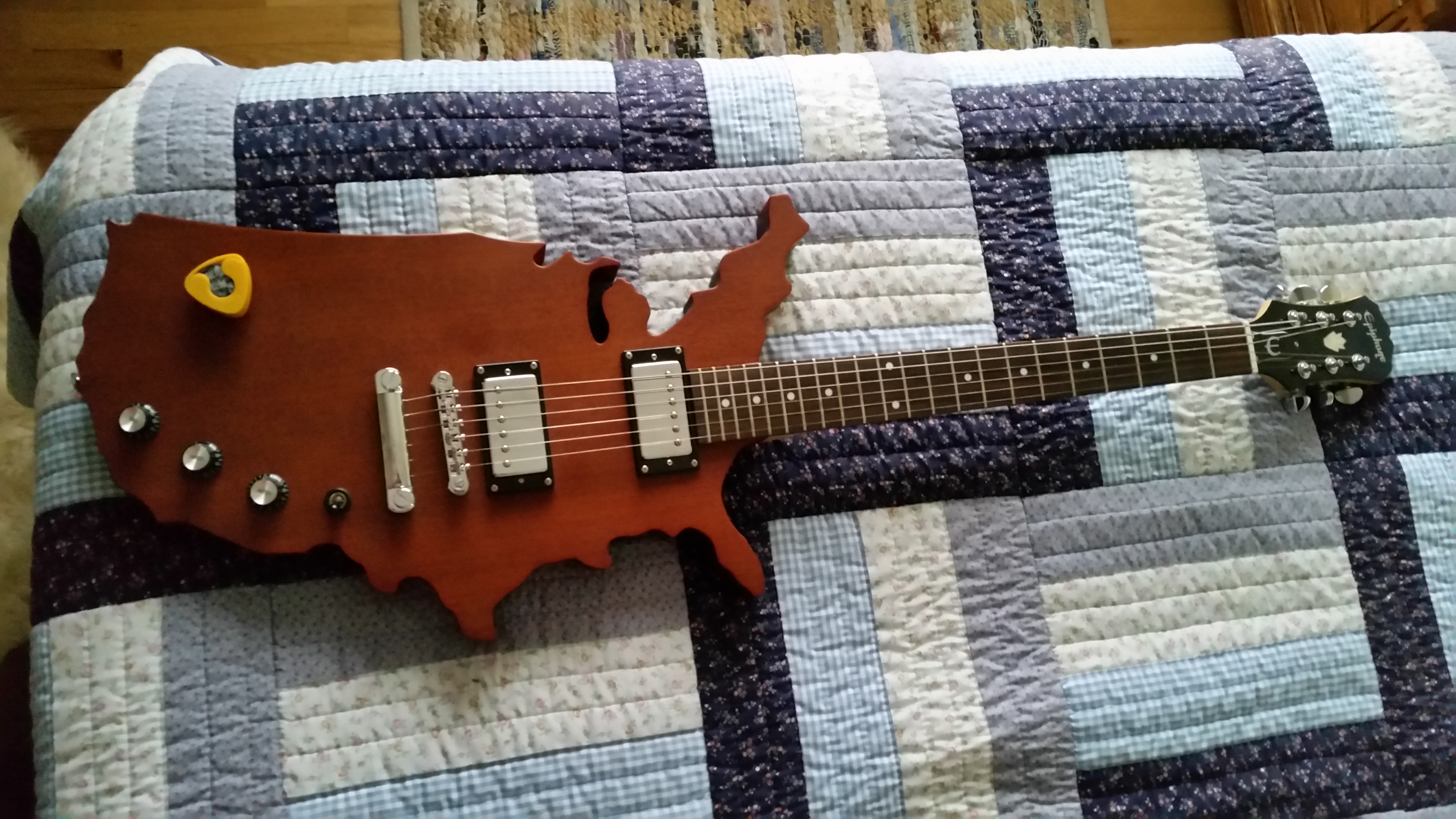
This is an Epiphone Map guitar which is a limited edition replica of the 1982 version. This solid slab of mahogany sounds remarkable with the stock Epiphone pickups. The shape is attention grabbing and fun to play.
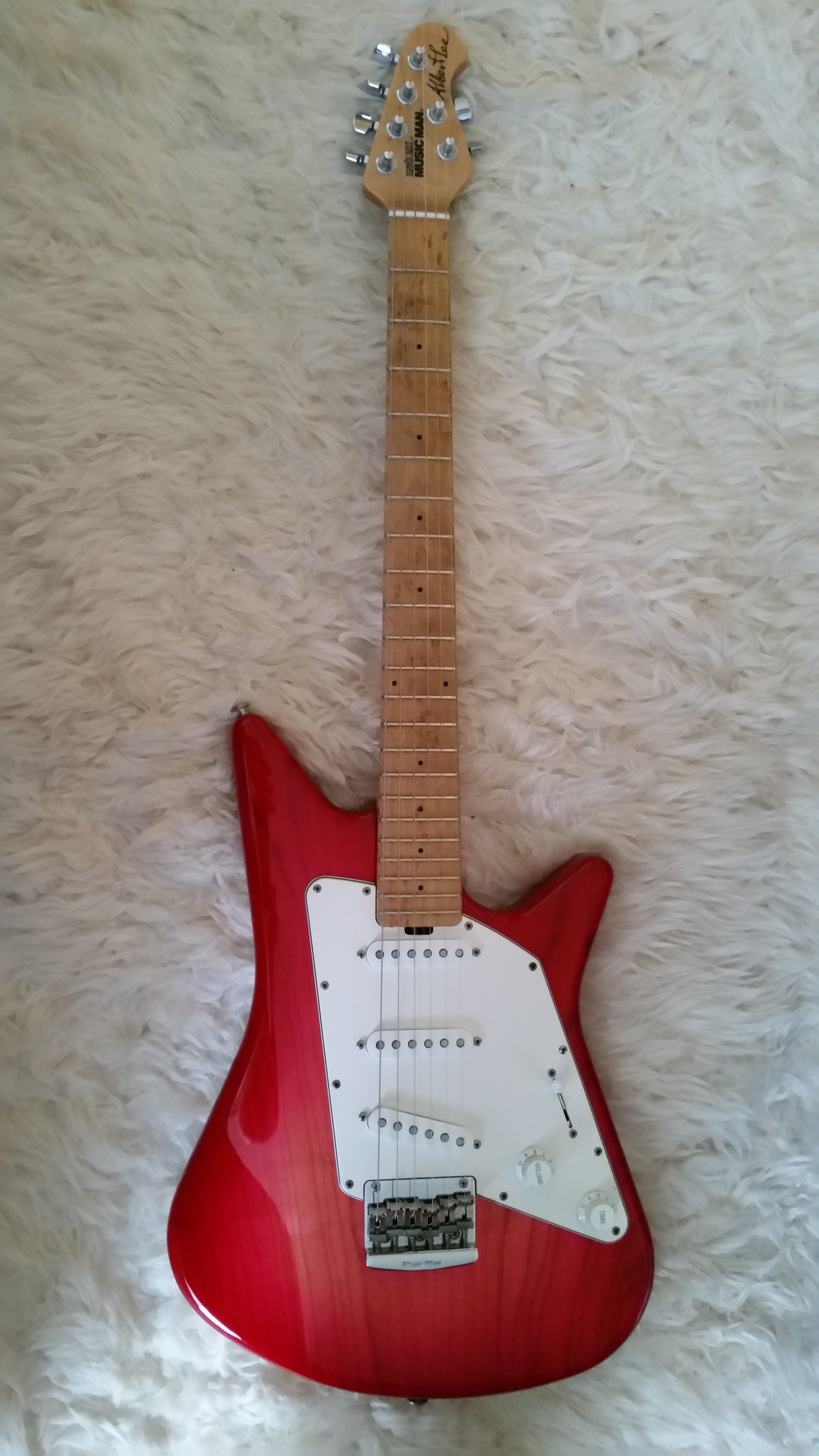
This is a Music Man Albert Lee in PinkBurst. This particular one is very early, 1993, and has a beautiful ash body with its grain aligned to follow the shape of the instrument. It sports 3 single coils and a hard tail bridge. The neck is highly figured maple and is so easy to play. A wide variety of sounds are available from the 5-way pickup selector switch. It looks like the day it was made!
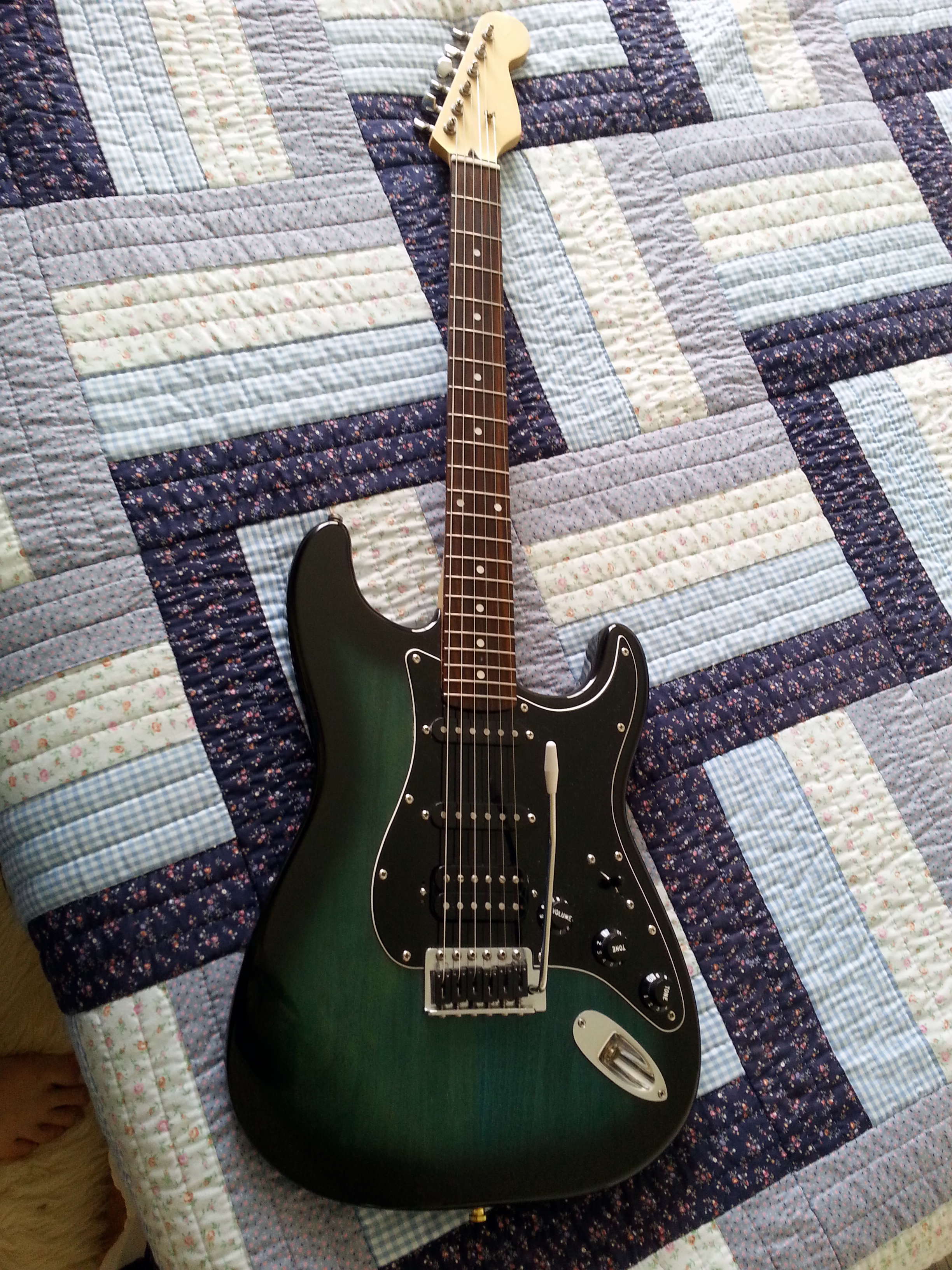
This is a really well made and thought out partscaster with a Fender Licensed Mighty Mite Body swamp ash transparent green to black sunburst finish, two single coil Mighty Mite pickups and a Mighty Mite humbucker. The PU's are able to be switched with a 5-way so you have the out-of-phase options as well as a unique control switch designed into the middle tone knob providing the ability to play the bridge pickup as the front single coil, the rear single coil or both together as a humbucker. The bridge has been hot-rodded with graphite string guides as well as a bone nut at the top of the neck. It is a pleasure to play this partscaster!
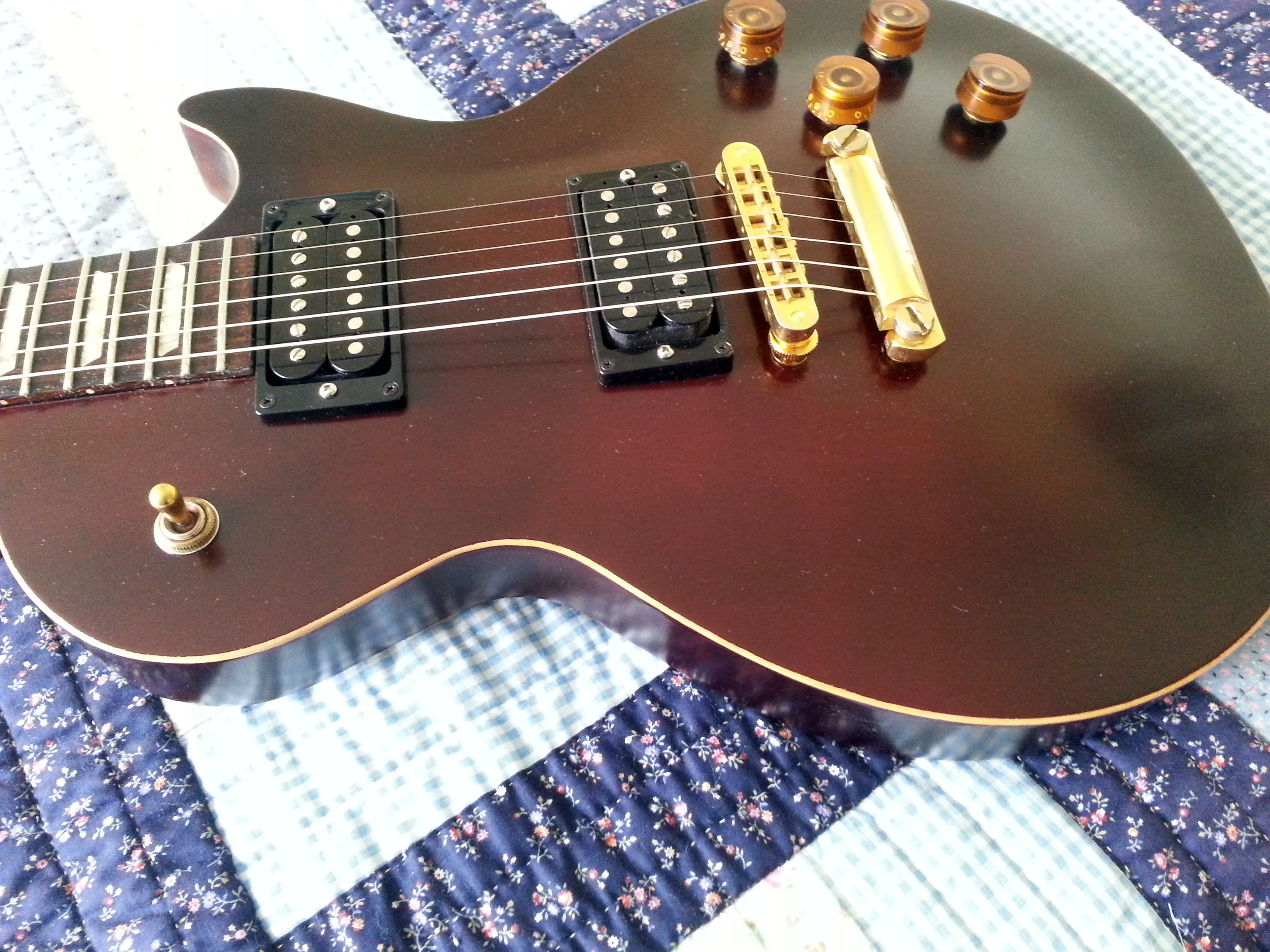
I purchased this Gibson Les Paul, it had been painted with a brush in a swirl of colors. The attempt to create an oject of art had failed and it was in sad shape. My luthier friend, Pete Flynn, carefully restored this to its original beauty and beyond adding a satin wine finish, Dean Humbuckers, and a sharp thin pinstripe bonding to the top edge. It sounds fabulous and looks even better!
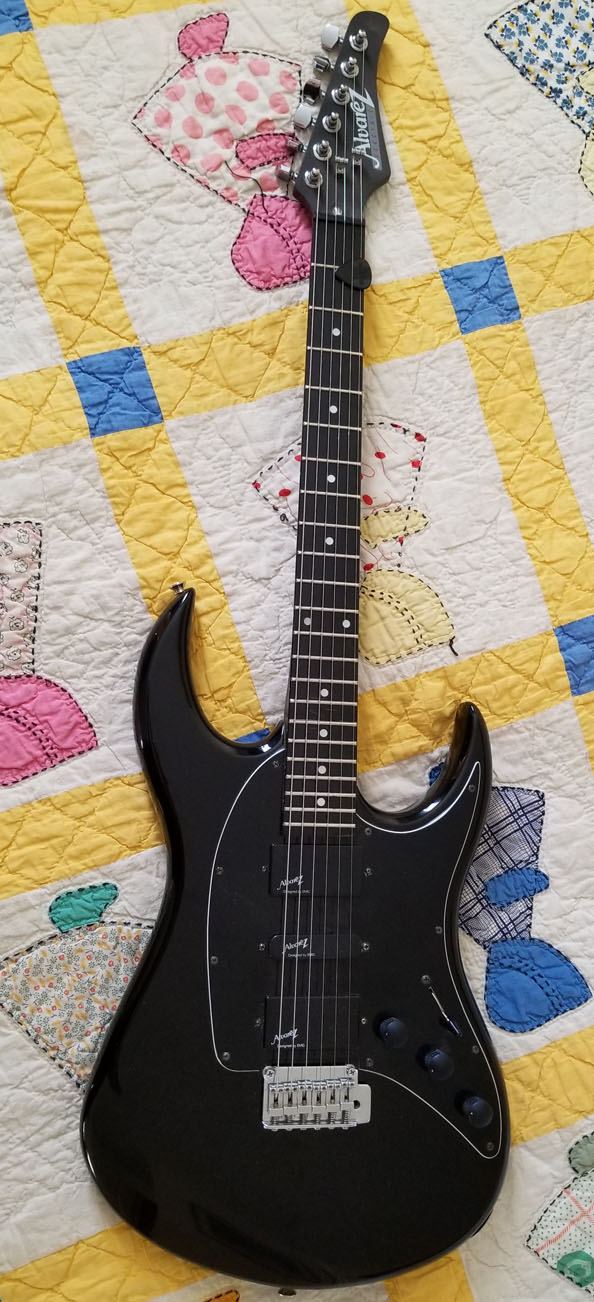
This is an Alvarez Regulator Deluxe with a Modulus Graphite neck. The neck feels terrific and plays very much like a wood neck but is super stable. The all black look is completed with a tremelo bridge, two single coil Seymour Duncan Pickups and one humbucker.
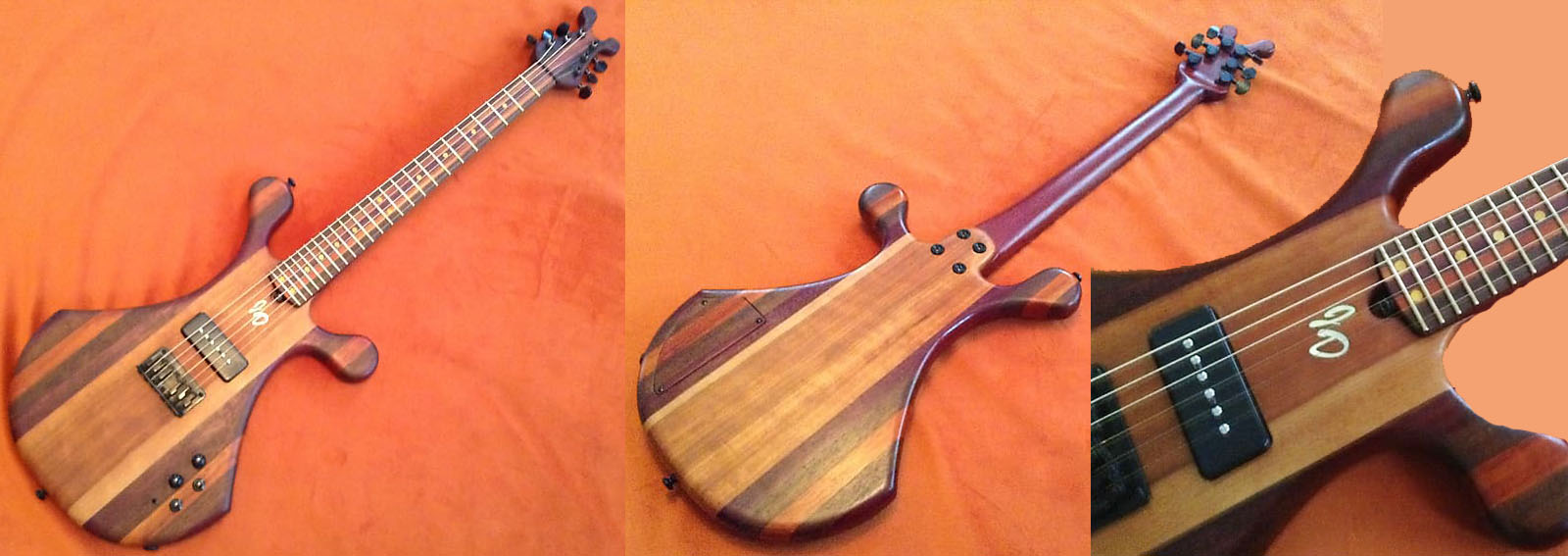
This colorful creation is a JD Guitars Shrek Killswitch-2 and the innovative mind and hands of luthier Jeff DiPaoli. Jeff is an avid builder and is in his shop 6 days a week producing 1-2 instruments a month. He builds for the passion and the handwork of the builds. He says his most difficult part is letting go of his finished work - he wants to keep them all. Jeff hails from Medway, MA and sells his guitars on Reverb at this page.
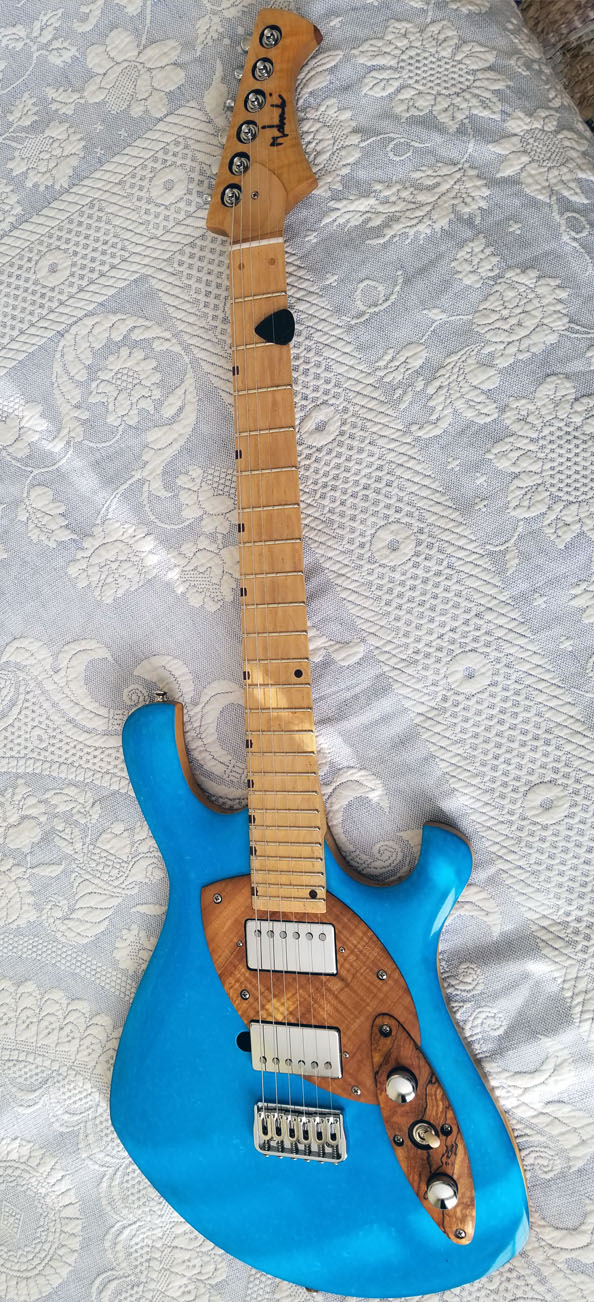
Peter Malinoski brings new shapes to the guitar builder world as well as unique wood-working construction elements in designs. This Cosmic model features a curf constructed neck, tow custom humbuckers and a Piezo pickup in the bridge area. Pulling up on the volume control splits the humbucker coils while the same selection on the tone control adds/subtacts the piezo from mixing with the bridge humbucker. The woods are stunning as is the bright blue finish.
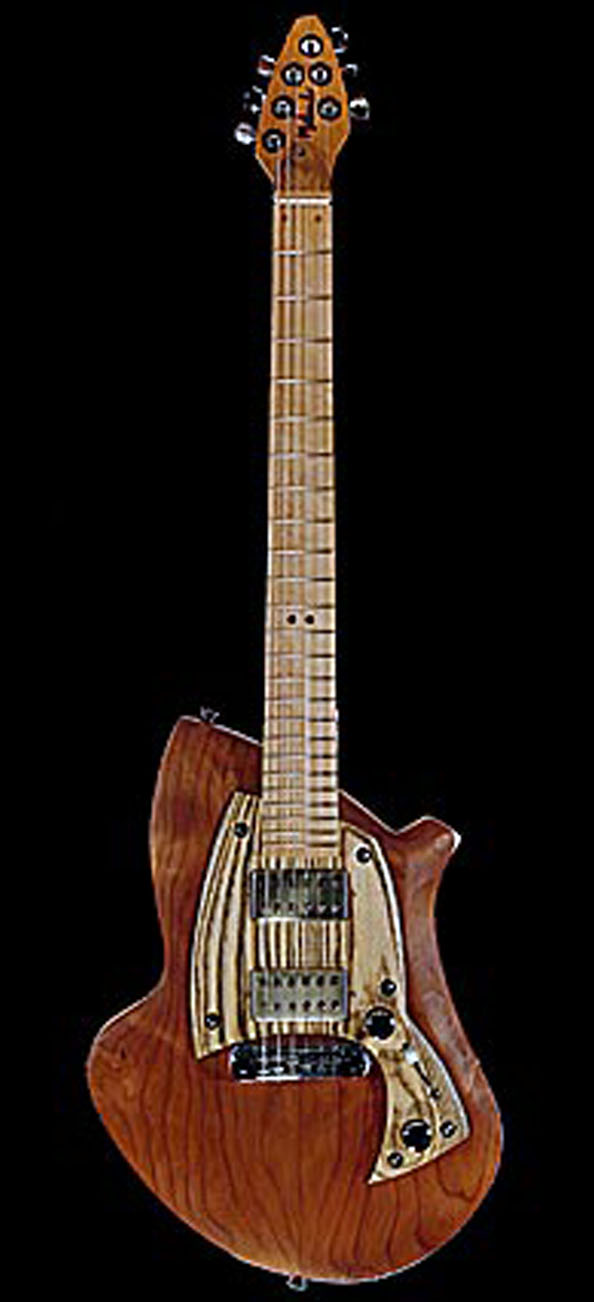
The Malonoski Rodeo is a complex guitar build with multiple finishes and woods. The pickups are treated with wood veneers and the bridge is a tremelo type. Like most Malinoski guitars the hardware for the bridge and tuners are Hipshot and it is an exciting instrument to see and play. The neck is a perfect fit to the hand!
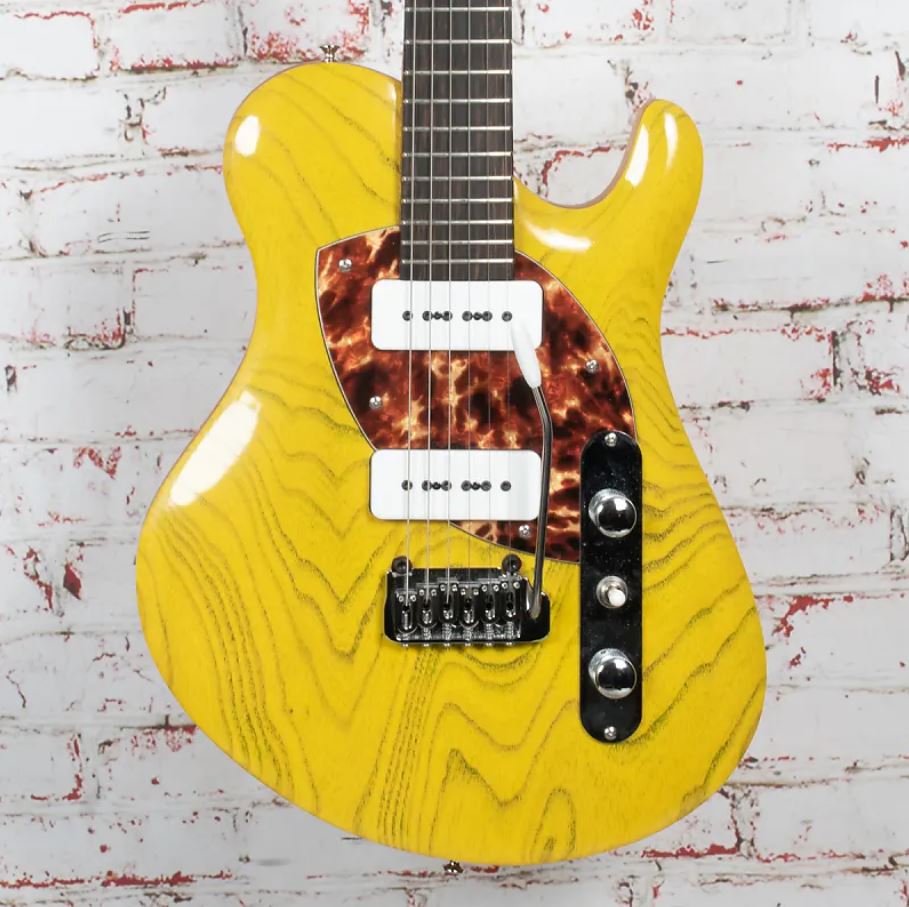
This Malonoski Rodeo startles viewers with its striking transparent yellow top. The body is swamp ash while neck is oiled maple with a Wenge fretboard, the tuners are Hipshot locking. The pickups are Malinoski P-90SC's. The bridge is a Hipshot US Contour Tremolo. The electronics pots and switches are Volume, Tone, and a 3-Way Toggle. This Rodeo weighs in at 6lbs 14oz,
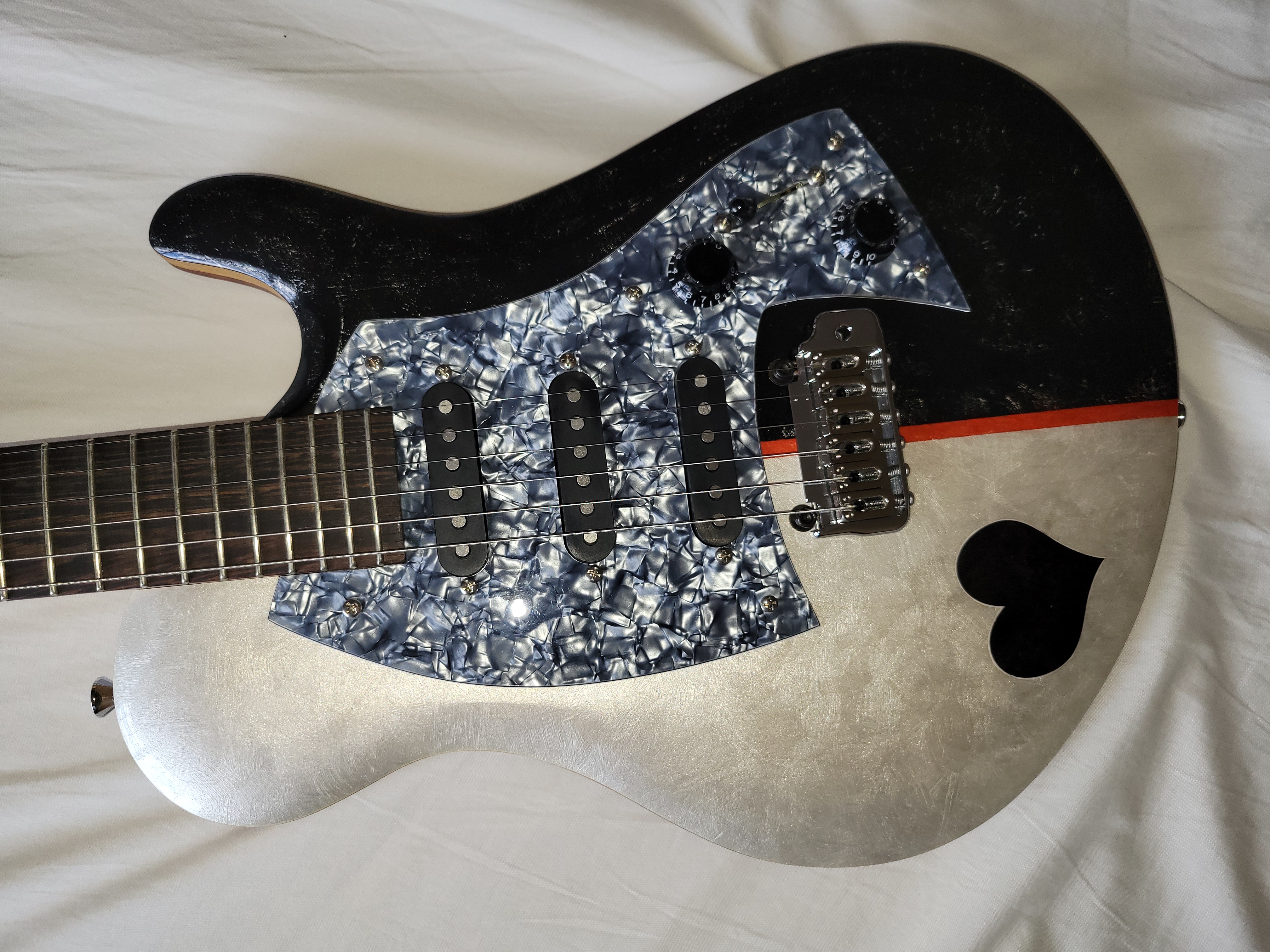
This Malinoski Rodeo employs some of Peter's art in its top finish complete with a heart. This Malinoski Rodeo has an oiled Maple and Cherry neck with a Wenge fretboard. It's acrylic painted top is maple and the body structure is oiled Spanish Cedar and a Pine rear control plate. It has Peter's Type2 SC pick-ups and Hipshot tremolo.
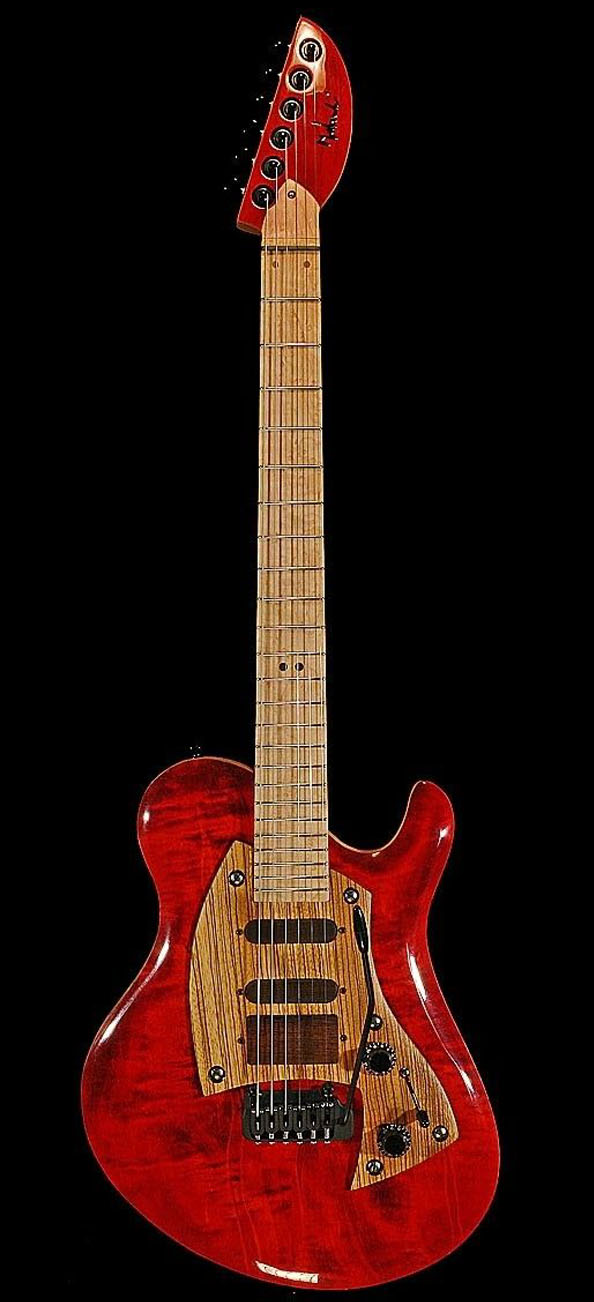
The Comet by Malinoski is an oil finished selection of beautiful woods. It features a redwood, flame maple, and quilted maple body, a white ash control plate, birdseye maple fretboard, birdseye maple and alpo mahogany neck, with a cherry headstock. The volume control when pulled up splits the custom humbuckers and the same control is provided on the tone pot to add/subtract the piezo pickup under the bridge. It is absolutely georgeous and plays well as great as it looks.

This unique guitar is a Peter Malinoski Hondo. It is a lightweight creation with a figured redwood top and a reclaimed Douglas fir back. It has a Malinoski humbucker that coil splits and a piezo bridge pickup with all combinations applied. You can visit Malinoski Guitars here. .
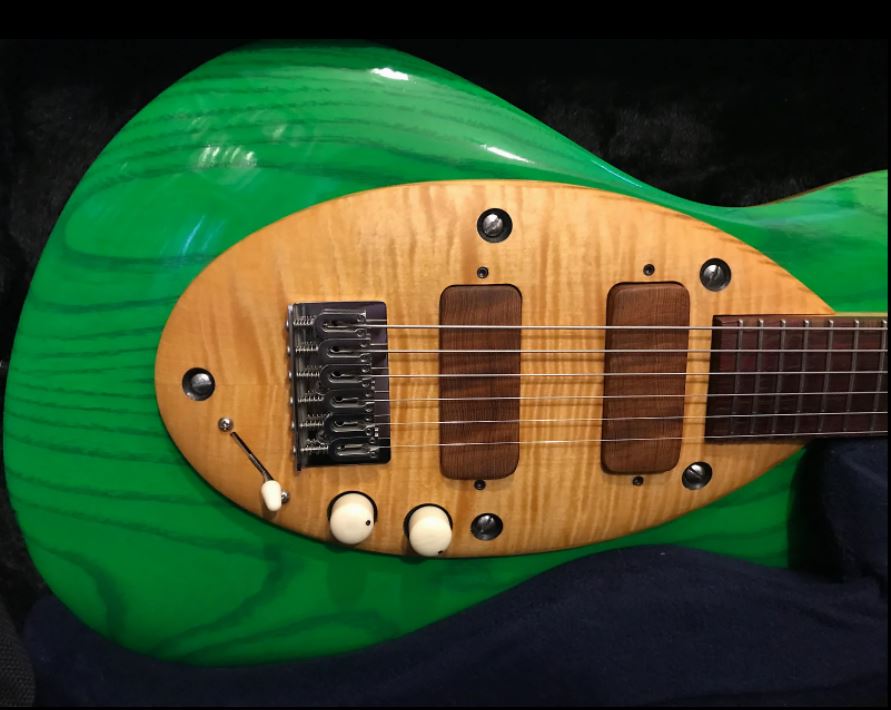
Here is another Peter Malinoski Hondo. It has a white ash body stained and lacquered green. The pickup plate is curly maple and douglas fir. The neck is maple with a paduck fingerboard. The headstock is ambrosia maple. The pickup covers are figured red wood. The neck pickup is a Malinoski HB Type 2 and the bridge pickup is a Type 4. There is a push/pull configuration on the volume control that splits the coils on these. There is a piezo pickup under the bridge. The tone control is push/pull to add or remove the piezo. The 5-way switch has neck, neck/bridge parallel, neck/bridge series, neck/bridge series phase revered, and bridge pickup alone.The bridge is a Hipshot and the tuners are Spertzel. You can visit Malinoski Guitars here. .
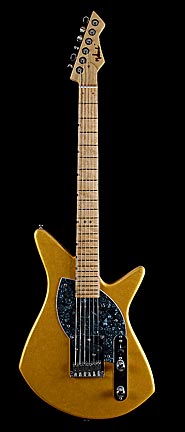
You are viewing a Peter Malinoski Rocket. The photo doesn't do the top finish justice, it is an acrylic gold top with a clear coat. The top is a maple car with a douglas fir back with an oil finish. The neck is maple and the fretboard is curly maple. It has two Malinoski single coil pickups. You can visit Malinoski Guitars here. .
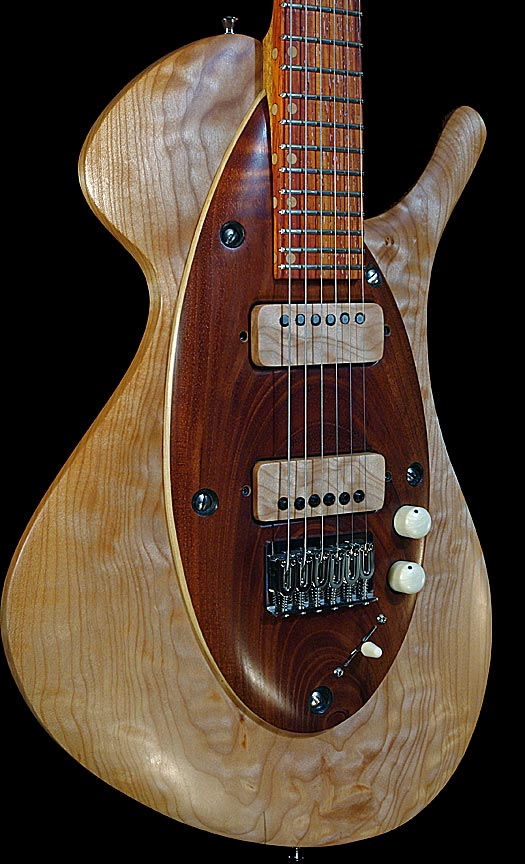
This Malinoski Saga has an oiled Mahogany and Ambrosia Maple neck with a Padauk fretboard, oiled Quilted Maple body with an oiled Spanish Cedar & Poplar pickup plate and oil stained Quilted Maple pickup covers. Type2 HB neck & Type4 HB bridge pick-ups with bridge transducer. You can visit Malinoski Guitars here. .
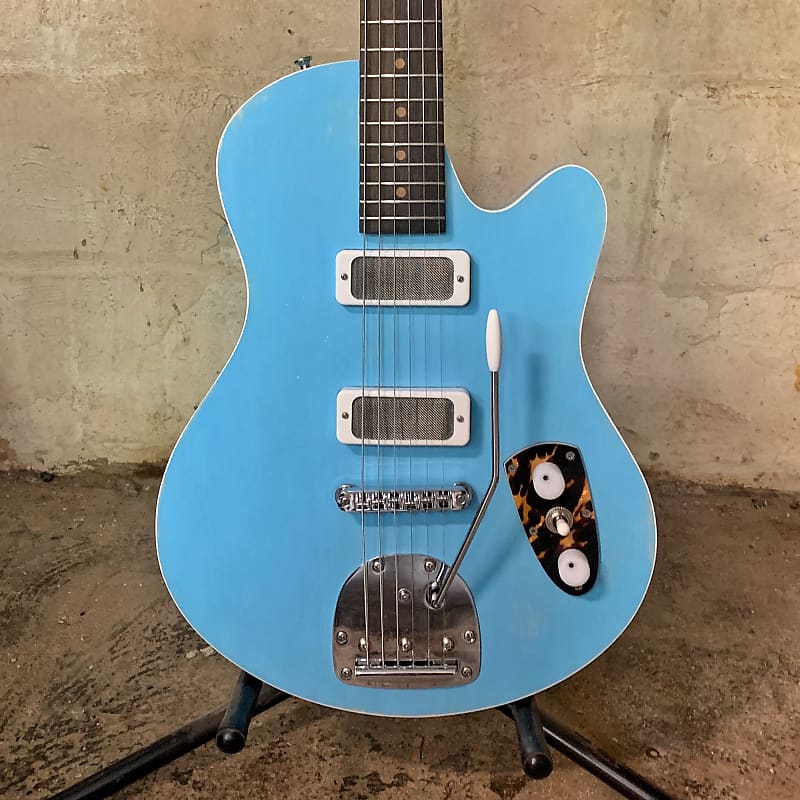
Peter Malinoski was fascinated by the old Harmony Stratotone guitars. He decided to do his take on their original design and the result is the Malinoski Saturn 419P prototype. This is the first Saturn in a series. This hollow body is made of birch laminate with a block under the bridge. The pickups are Peter's handwound Type13SC single coils, which are authentic to the DeArmond- Rowe pickups. The finish is a slightly distressed blue acrylic finish. You can visit Malinoski Guitars here. .
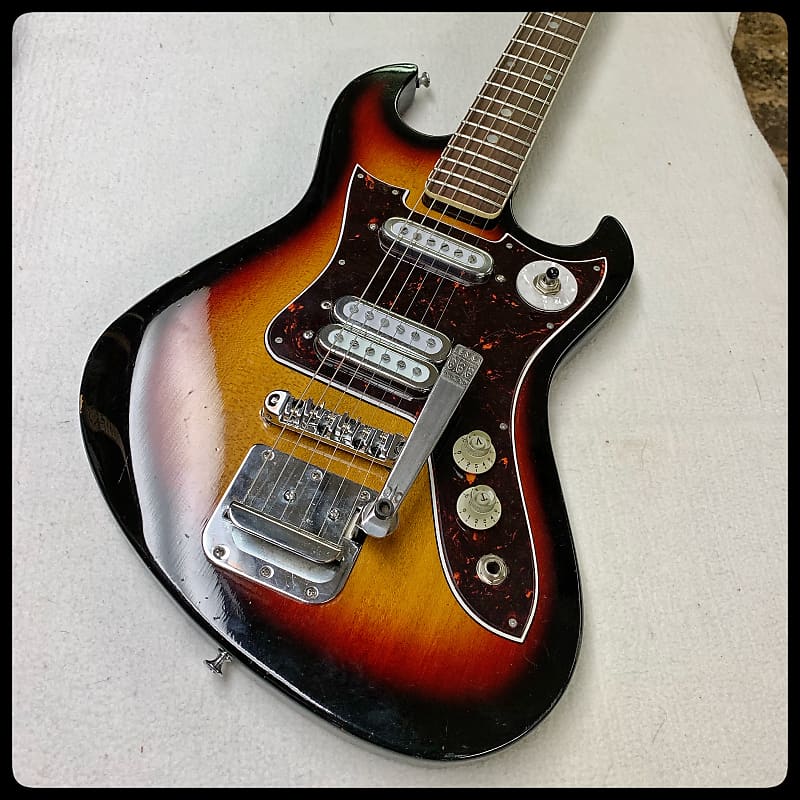
This guitar is a Pater Malinoski Rat Rod modified Rythmnline solid body from the 60's most likely out of the same factory as Tiesco. Peter re-radius the neck to 12" and added new frets. He took the original two pickups and made a bridge humbucker out of them. He added another pickup that he had salvaged that matched and made a rewound neck pickup fron it. He added a new bridge, repaired the trem and added a butter knife for a trem bar. You can visit Malinoski Guitars here. .
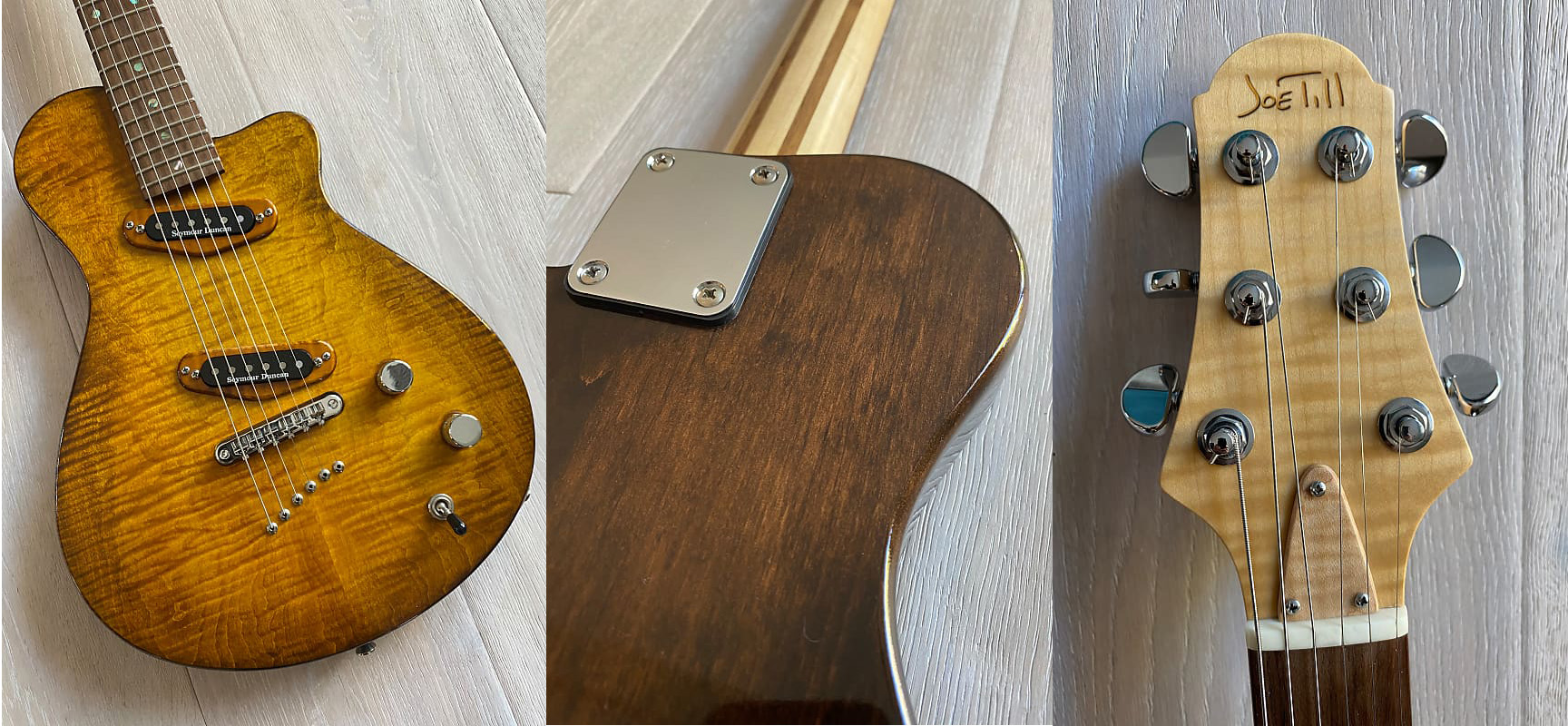
The Joe Till "Shorty Joe" guitar is a compact handmade guitar created with the highest quality materials and parts that my be a very limited version with its string-through-body design. Joe said there are very few of these out in teh hands of musicians. The top is beautiful curly maple, the body is alder, the neck is comprised of 3 pieces of curly maple and two of walnut. The pickups are Seymour Duncan, the hardware all schaller with Grover tuners. It is all hand-carved - no CNC. You can find Joe Till here..
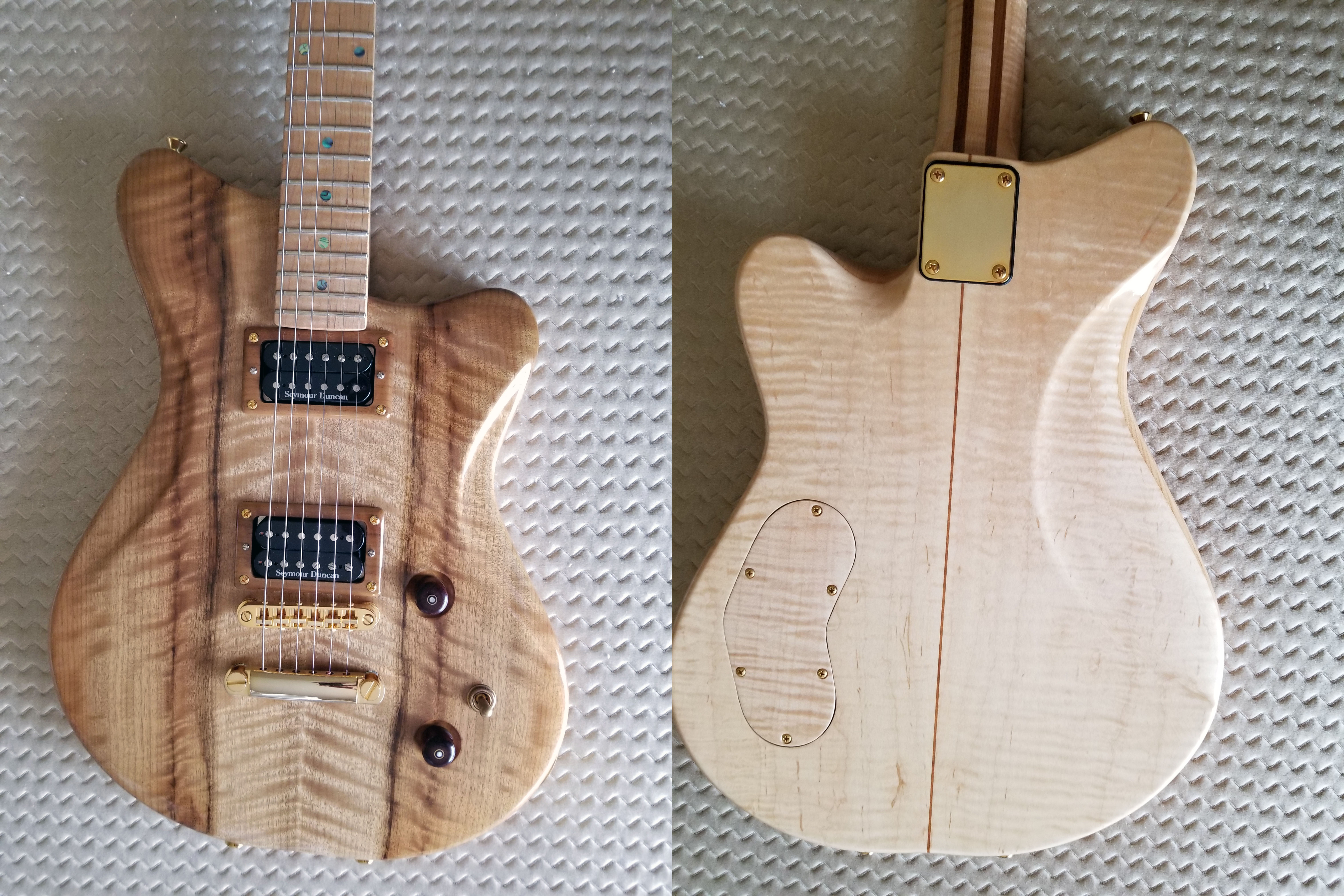
The Joe Till "Lady On The Beach" TG-250 guitar is a unique handmade guitar using the highest quality materials and parts. The top is crafted of myrtle wood, the back of flamed maple, the core is chambered - semi-hollow alder wood. The neck is comprised of 3 pieces of curly maple and two of walnut. The pickups are Seymour Duncan, the hardware all gold schaller. Joe meticulously crafts each of his guitars from scratch with all hand carving - no CNC. Then he plays each one to assure its quality to his ear and hands. You can find Joe Till here..
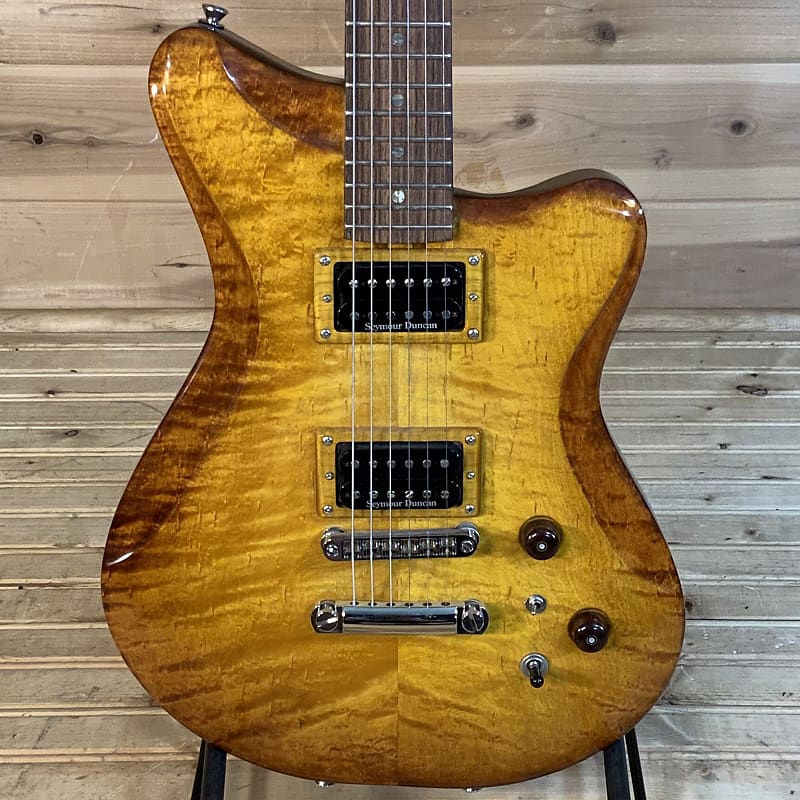
This Joe Till "Lady On The Beach" TG-250 guitar is unusual in that it is the only solid body TG250 Joe has ever made. The body is basswood and finished with caps of curly maple. The neck is comprised of 3 pieces of curly maple and two of walnut. The pickups are Seymour Duncan and wired for humbucker and split coil operation. The bridge hardware is TonePros and the tuners are Grover Rotomatic. If you would like to learn more about Joe Till you can visit him here..
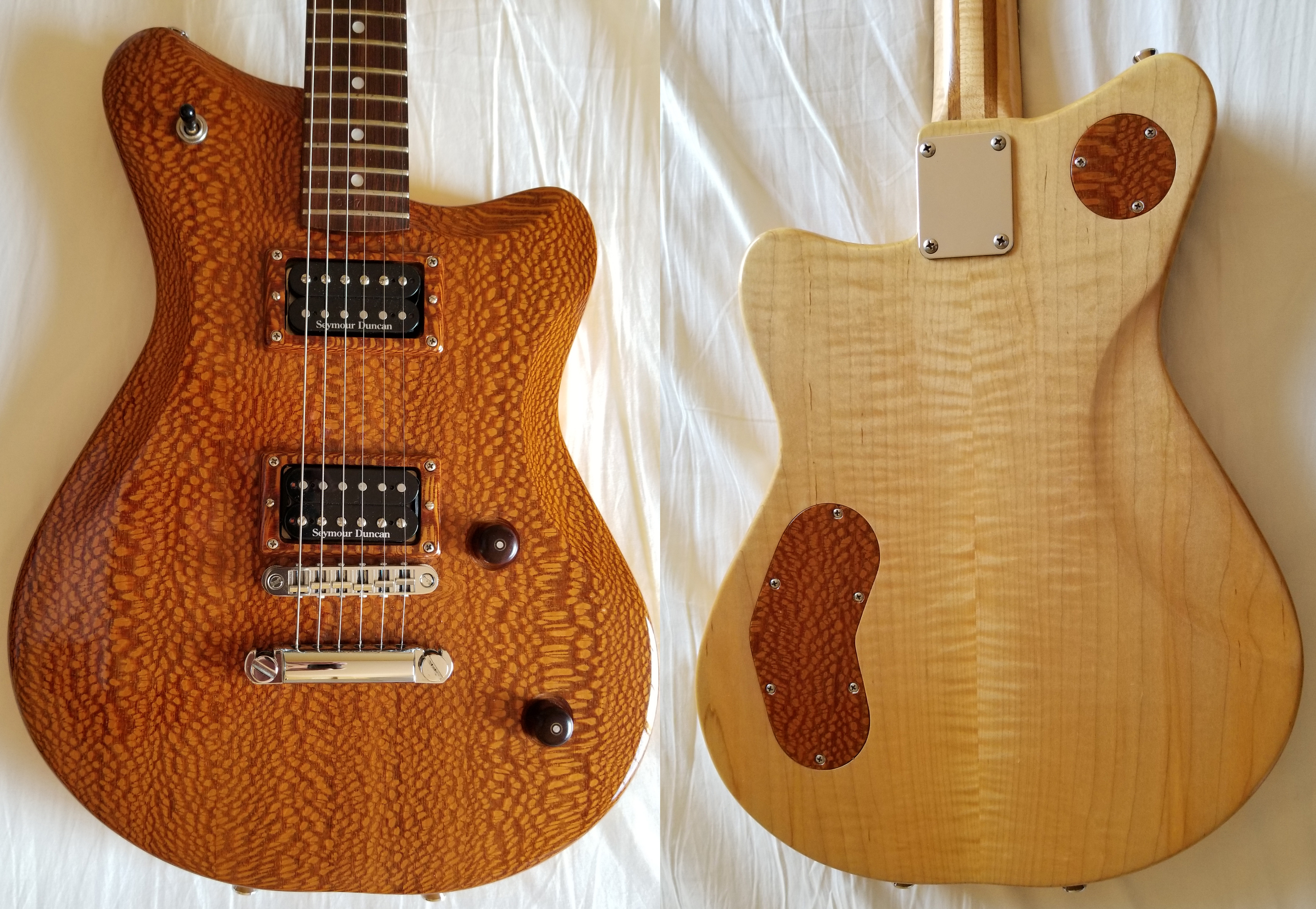
This Joe Till "Lady On The Beach" TG-250 guitar is crafted of beautiful lacewood for the top and the back is from flamed maple. The core is chambered. The neck is comprised of 3 pieces of curly maple and two of walnut. The pickups are Seymour Duncan, the hardware all gold schaller. Joe informed me that this particular instrument was played by both David Hidalgo and Cesar Rosas, Johnny Winter [he thought it was too heavy for him] and Jackson Brown. As you can imagine I was quite surprised. If you would like to learn more about Joe Till you can visit him here..
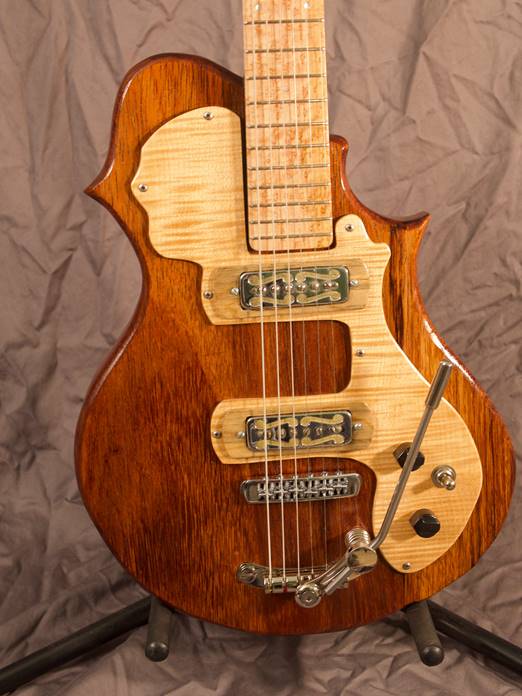
The "Cay Craft" is a one of one build by Robert S. Randall. His is an instrument builder and artist in Portland WA. The Cay Craft was inspired by Stromberg Voisinet/Kay Kraft models that Robert owned. The artfully designed instrument features reclaimed wood from an Ecuadorian hotel door from 100 years ago. The neck is made of a particularly colorful piece tulip poplar topped with a birdseye maple fretboard with mother of pearl markers. The pickup rings and cheeks of the headstock are Beetle-kill blue pine which Robert adds to most of his instruments as a signature. The bridge is schaller and the tremelo is made by Goldo out of Germany. The tuners are Grover Sta-tites and the knobs are off an old Danelectro amp. The pickups are mustache Dearmond/Rowe pickups which he is very fond of using in his builds. You can find Robert Randall here..
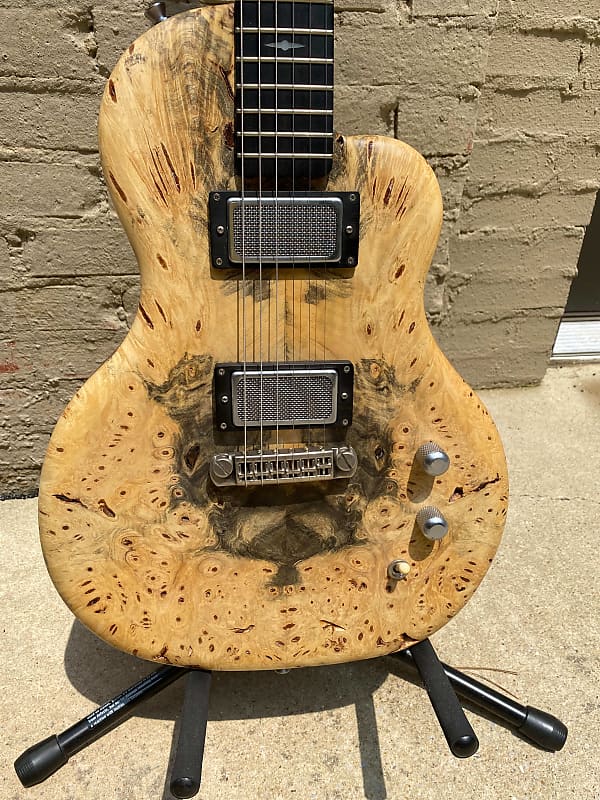
Sam Evans, designer and builder of Cardinal Instruments creates unique, inspiring, and beautifully hand crafted guitars, basses and lapsteels. Cardinal instruments are made from locally harvested woods, locally made custom hardware and are finished using eco-friendly processes. The Cardinal Magpie is a unique guitar that is created with one-off details. This one was built in 2013 and has a highly figured burled buckeye top, a black walnut body, a Honduran mahogany neck capped with an ebony finterboard and Evo jumbo frets. It has a wrap around bridge and twin Malinoski Gold Foil pickups. You can find Cardinal Guitars here..
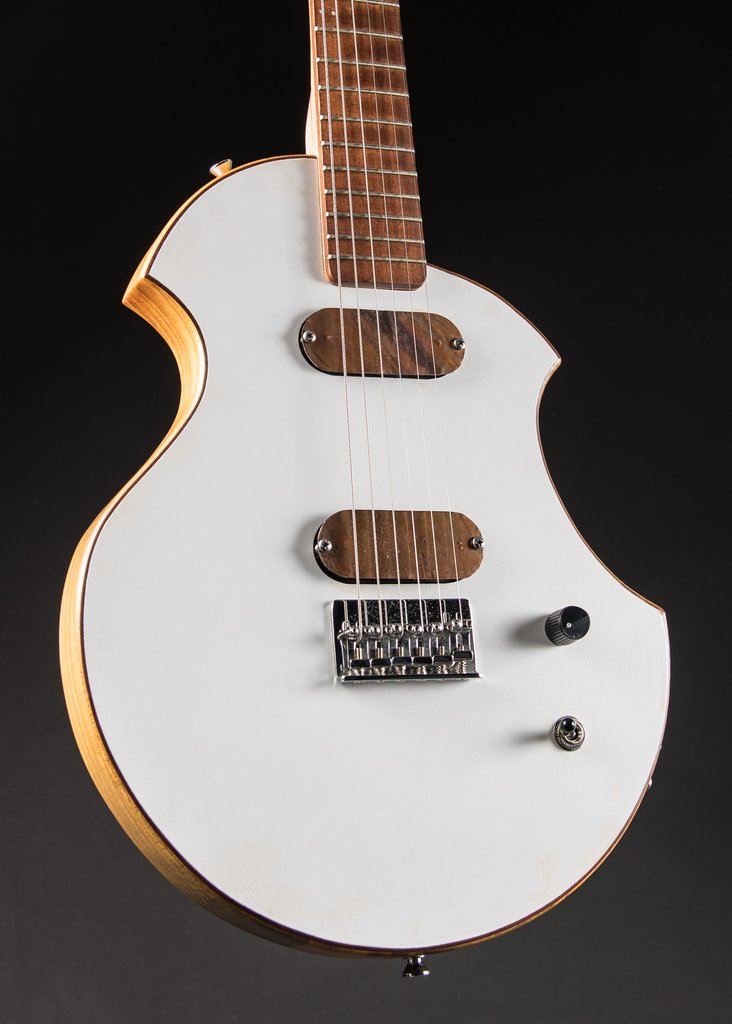
This is a Cardinal East - it was also designed and built by Sam Evans the owner of Cardinal Instruments. The East features a mahogany body and neck capped with a rosewood fingerboard. Its design stemming from early 20th-century stringed instrument from the East whose shapes work seamlessly as modern electric guitars. Vintage tuners, a bone nut, Cardinal pickups and a wrap around Cardinal bridge complete the design. You can find Cardinal Guitars here..
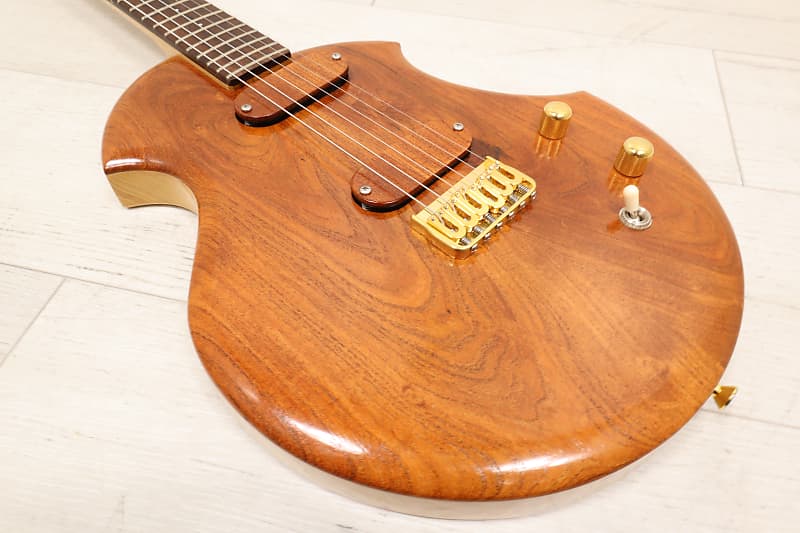
This is a Cardinal West - it was also designed and built by Sam Evans the owner of Cardinal Instruments. The West features a chambered Elm body capped with book match mesquite. The neck is pecan with a rosewood fingerboard. It employs two Cardinal Original single coils, Mesquite Veneered, a macarda nut, Cardinal pickups, Gold Hipshot Bridge & Gold Gotoh mini tuners. You can find Cardinal Guitars here..
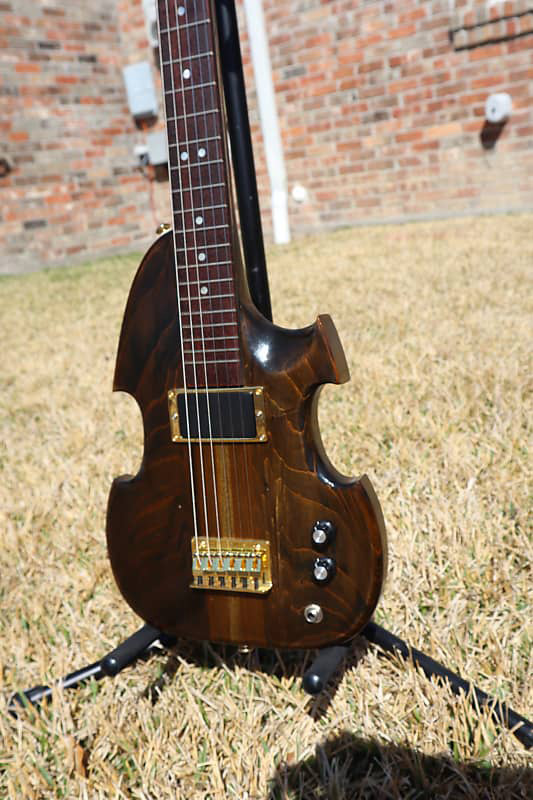
This is a one of a kind GSM "Green Swamp Mojo" handcrafted guitar by Gregory Monroe. It features a neck-through 3-piece bookmatch laminated poplar maple core neck with a cherry wood fingerboard. The Body is Chinaberry. The finish is his special "Darkwater" shellac blend with a minwax poly acrylic topcoat. The pickup is a vintage Ibanez. It was made around early 2018. You can find Gregory Monroe's GSM instruments here..
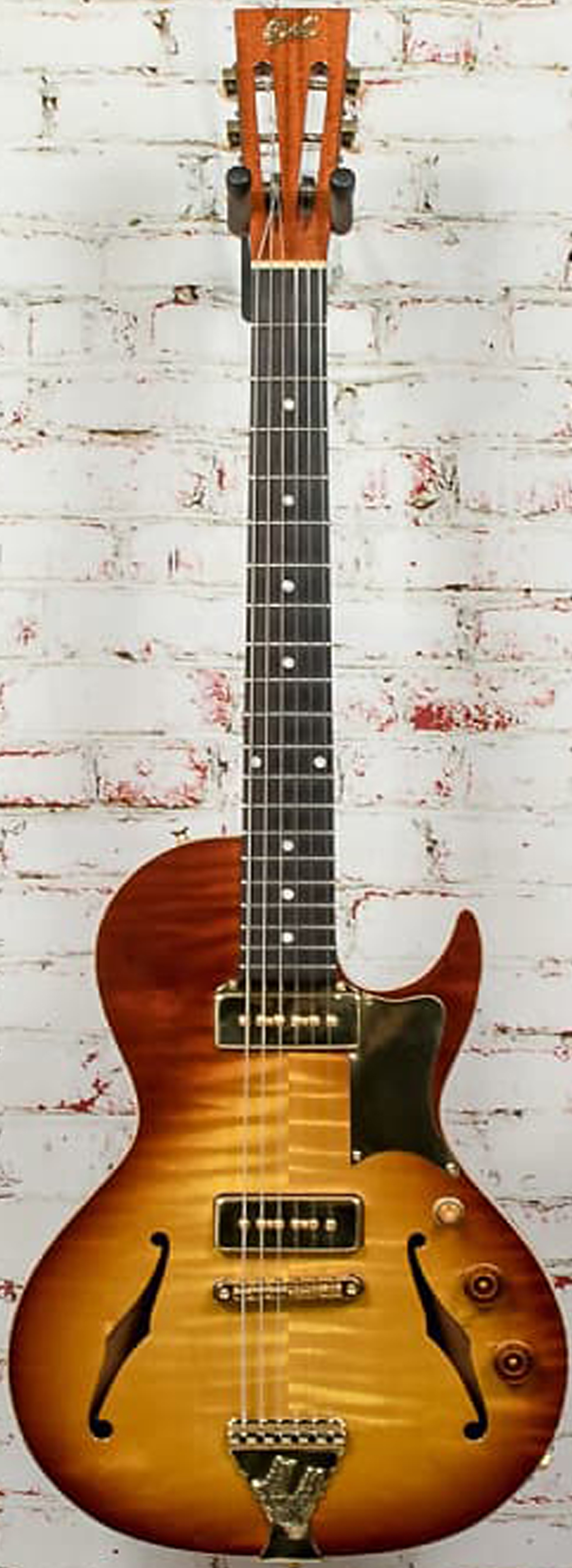
This is a B&G Little Sister Private Build. This B&G was made in Israel all by hand. It features a one piece mahogany body that is hollowed out and then capped with a fugured maple cap resulting in a chambered hollow body. Proprietary parts are used including tuners, bridge, tail piece, and highly sensitive hand-would single coil P-90 style pickups. The B&G Private Build production is limited to 16 guitars per month to assure quality. You can visit B&G here..
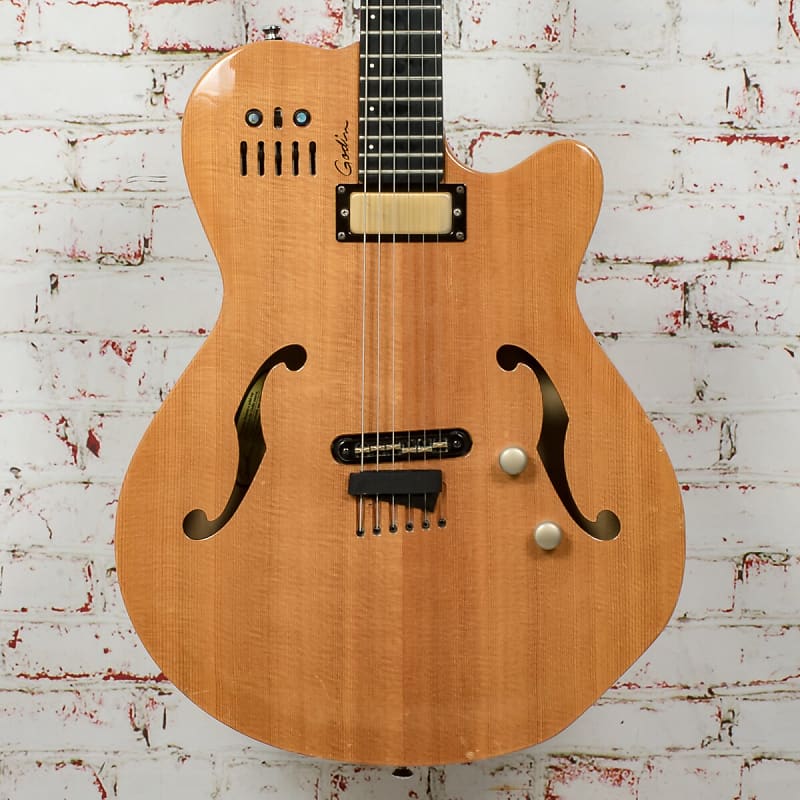
This unusual thin hollow body guitar is by Godin. The model is a Multiac SA Jazz. It features a mini humbucker at the neck position and an active transducers under each string on the bridge with flexible controls. Between the two you can use as much of either as you wish for just the sound you like. The neck is maple with an ebony fretboard. The top is AAA spruce and the body is mahogany. You can visit Godin here..
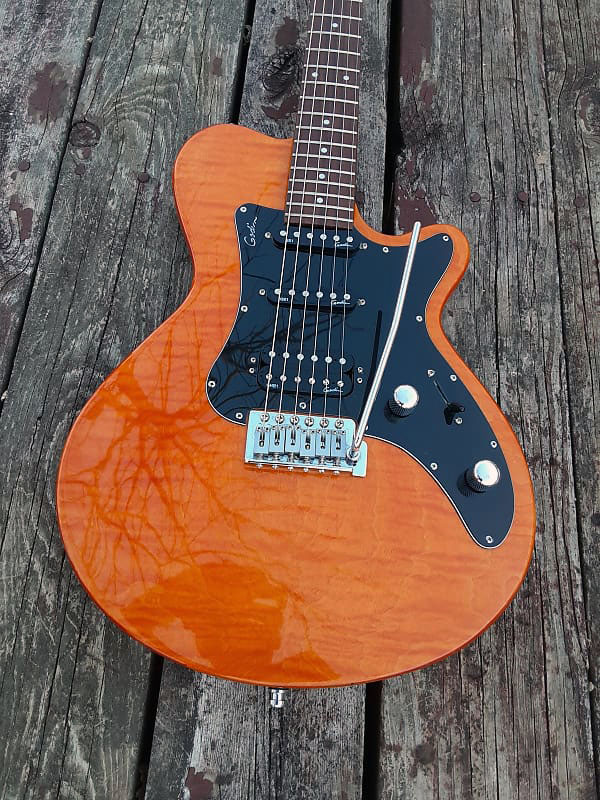
This is a Godin SD-22. It has a maple body with a curly top all beautifully finished in a deep amber. It features two single coil Godin pickups neck and middle and a Godin humbucker at the bridge. The neck is maple with a rosewood fretboard. Bridge section is equipped with a standard non-locking tremolo bridge. You can visit Godin here..
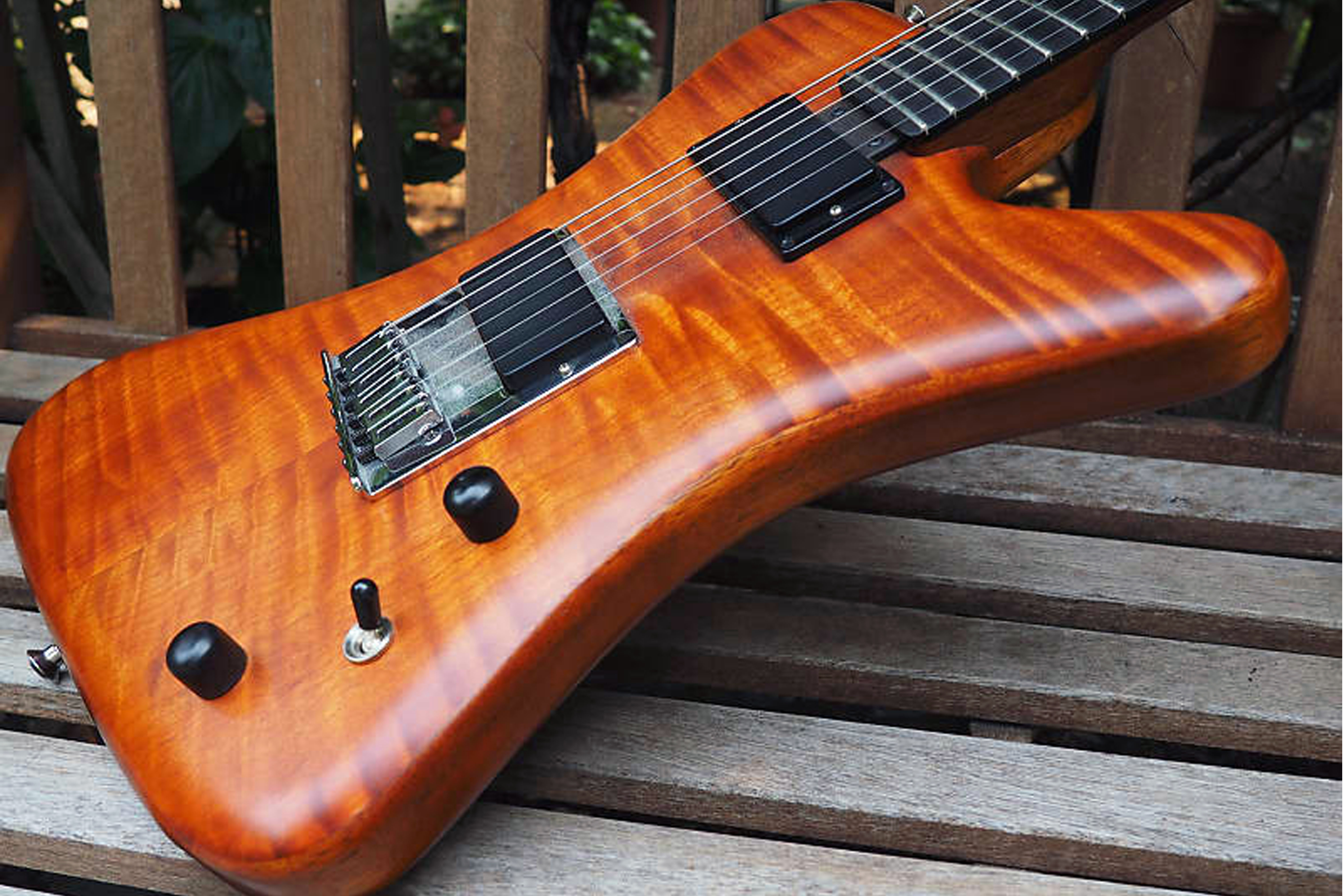
This sleek guitar is a Citron CF1. It sports a Honduran Mahogany body with figured Maple top. The neck is also mahogany with an ebony fretboard. Builder, Harvey Citron, loved the shape of Gibson's firebird but felt it was off balance and uncomfortable. He decided to do his own take on it. It sports Citron custom blended humbuckers. You can visit Citron here..
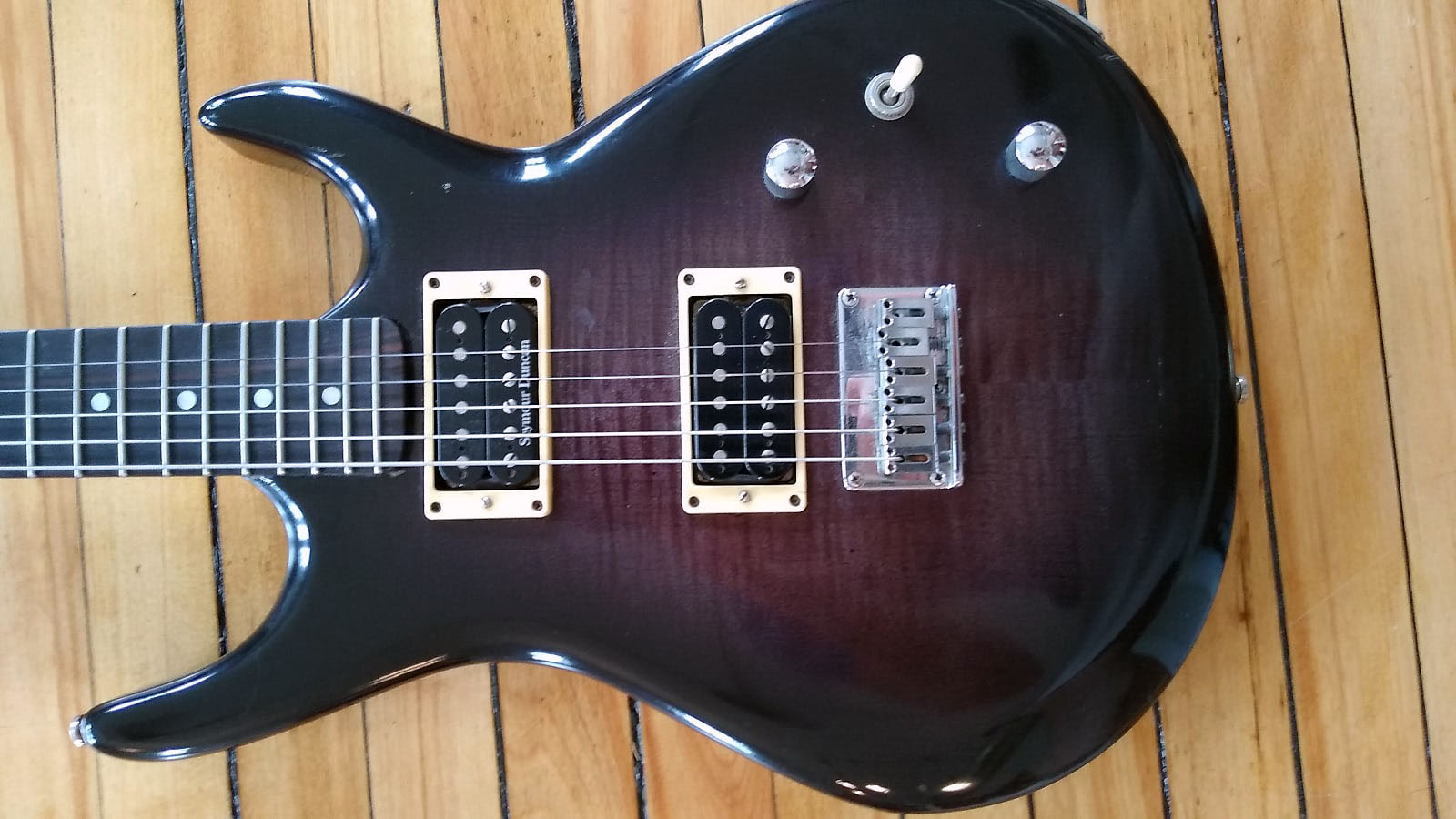
You are looking at a Kurt Wilson Standard #13. This beautiful hand crafted guitar features a rich curly maple cap with a purple burst on a mahogany body and neck finished in a black solid color all finished with nitrocellulose lacquer . It's fixed neck is made with 3 pieces of mahogany and the fretboard is rosewood. The back of the neck is also purple burst finished. Electronics are alnico 2 Seymour Duncan humbuckers. Tuners and bridge components are by Gotoh. You can visit Kurt Wilson Guitars here..
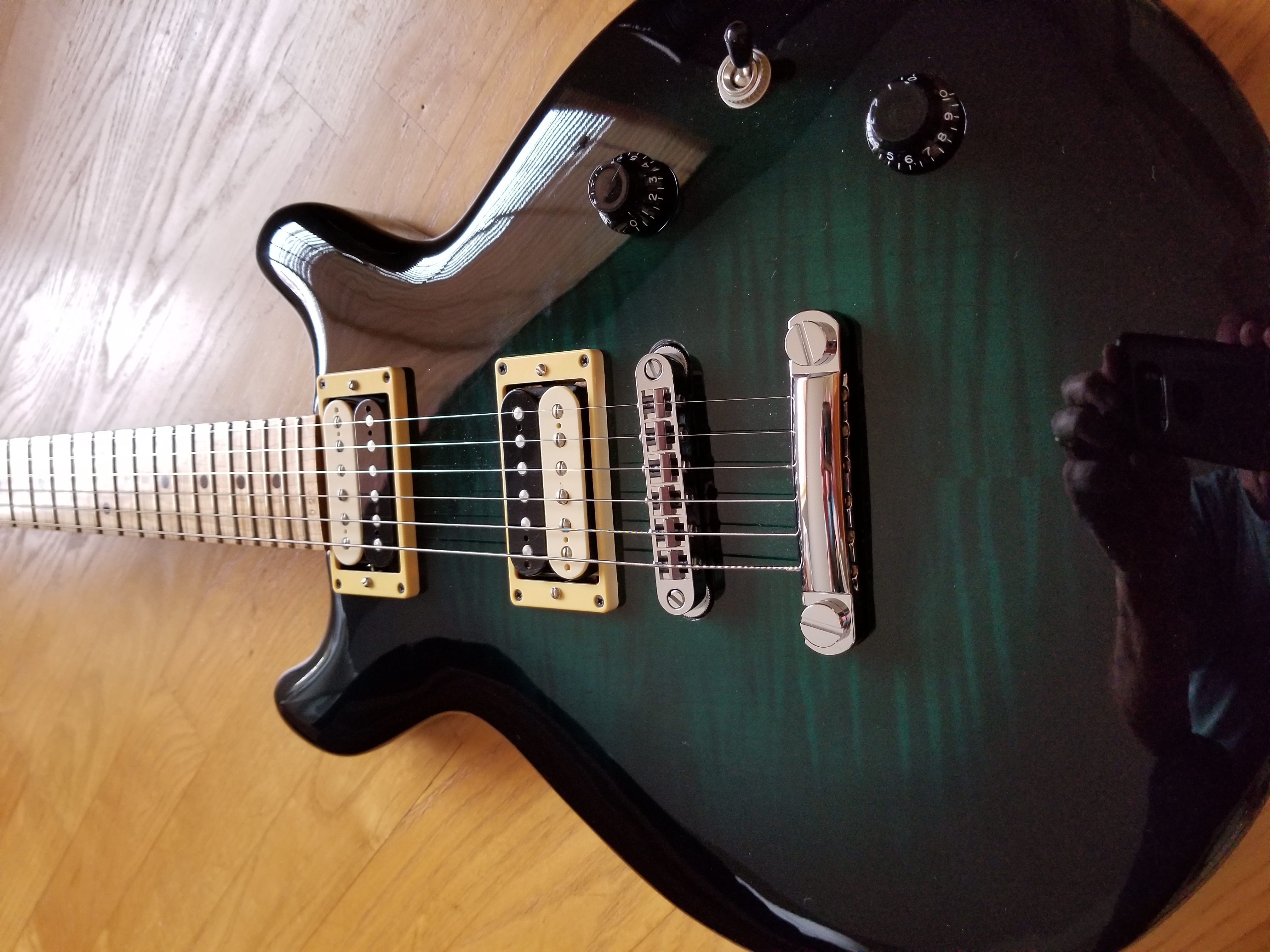
You are looking at a Kurt Wilson Standard Custom from 2010. This wonderfully crafted guitar features a beautiful curly maple cap with a deep green to black burst on a mahogany body and neck finished in a blue black solid color all finished with nitrocellulose lacquer . It's fixed neck is made with 3 pieces of mahogany and the fretboard is maple. Electronics are alnico 2 Seymour Duncan humbuckers with coil tapping at the push/pull volume control with a choice of caps for the push/pull tone control allowing a variety of sounds. Tuners and bridge components are by Gotoh. You can visit Kurt Wilson Guitars here..
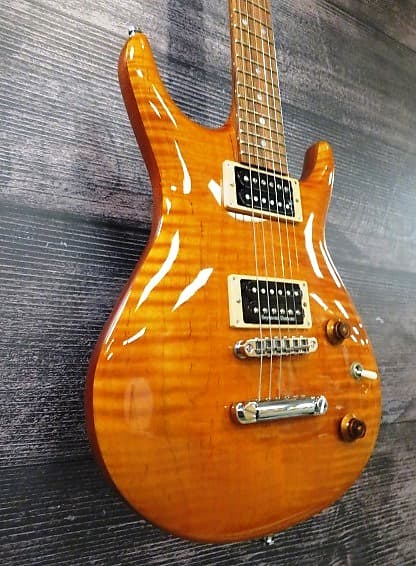
You are looking at a beautiful Kurt Wilson Standard Custom from 2002 and Kust told me it is #4. This wonderfully crafted guitar features a beautiful curly maple cap on a mahogany body all finished with nitrocellulose lacquer. It has a fixed neck made with 3 pieces of mahogany and the fretboard is Pao Ferro. Electronics are alnico Seymour Duncan humbuckers with coil tapping at the tone control allowing a variety of sounds. Tuners and bridge components are by Gotoh. You can visit Kurt Wilson Guitars here..
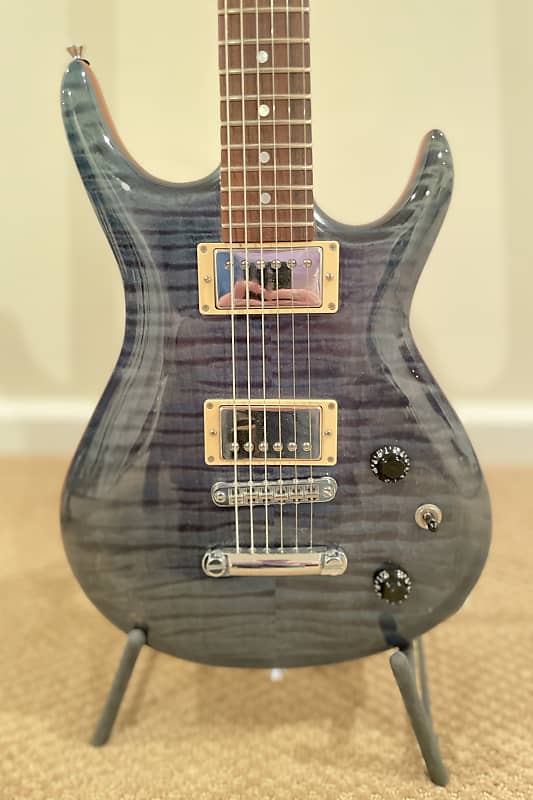
You are looking at a beautiful Kurt Wilson Standard Custom. This fine crafted guitar has a beautiful gray tinted curly maple cap on a mahogany body all finished with nitrocellulose lacquer. It has a set neck of mahogany and the fretboard is rosewood. Pickups are alnico WCR at the neck and a McCarty at the bridge. Tuners and bridge components are by Gotoh. You can visit Kurt Wilson Guitars here..
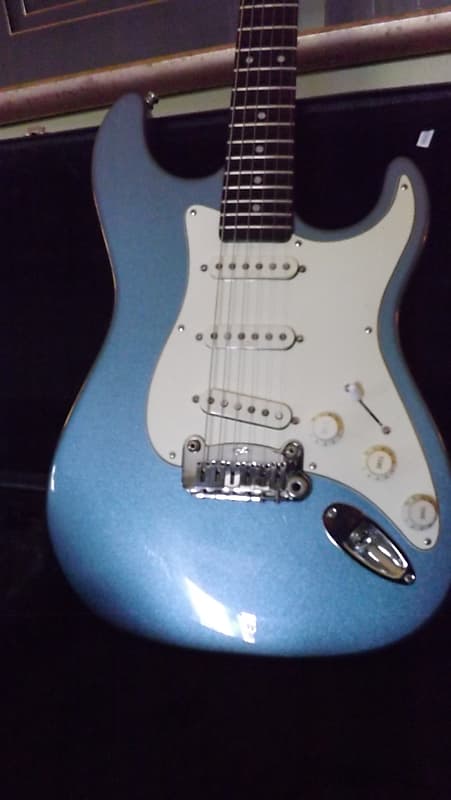
This stunning G&L Legacy is a beautiful instrument designed by Leo Fender. It features an alder body, maple neck and a rosewood fingerboard. The body is capped of with a beautiful blue sparkle finish. The patented G&L bridge/trem system completes the body..
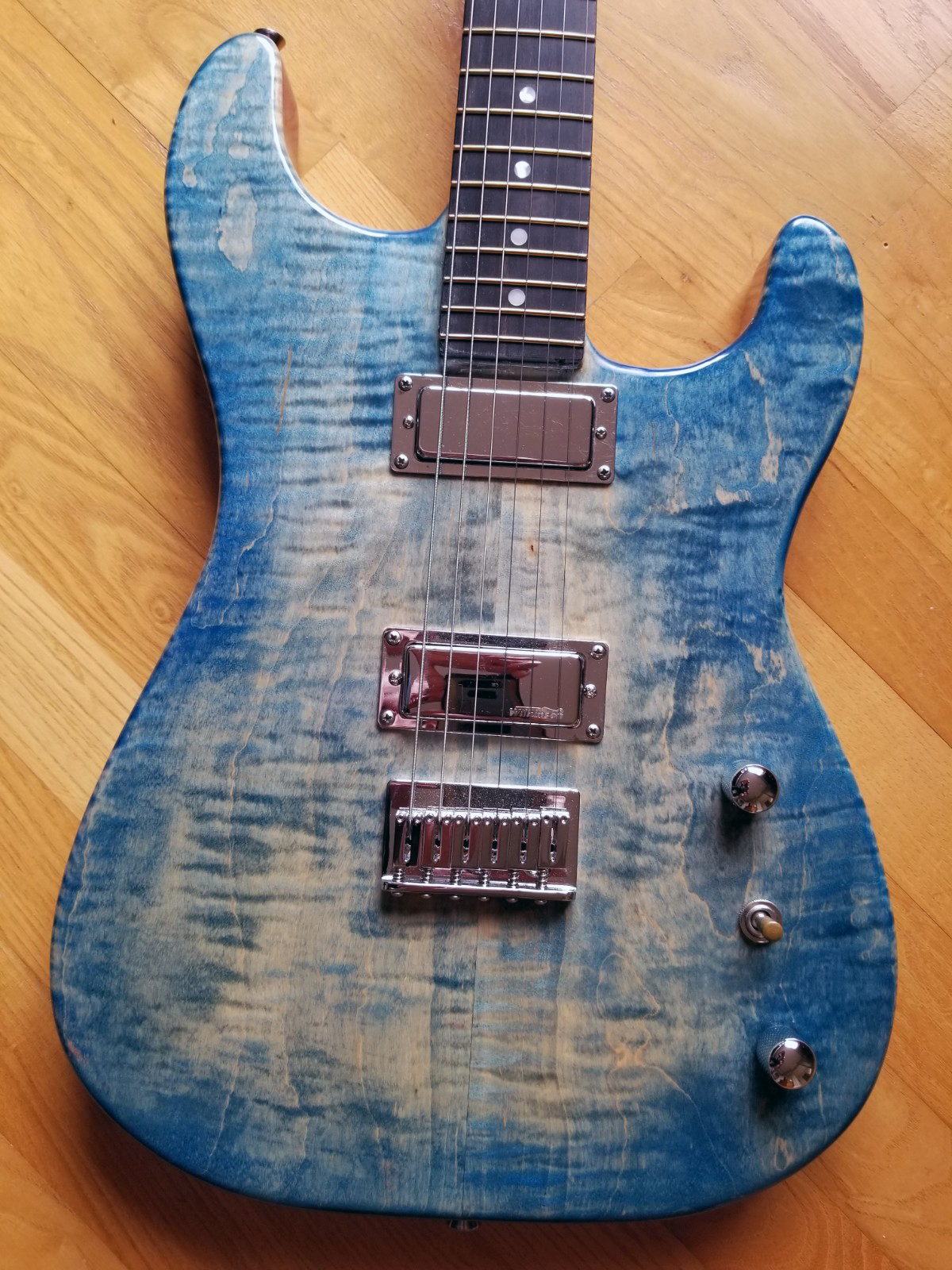
This is a custom one-off build by Hedrick in California. It is an HH strat style with a curly maple top over a mahogany body. The top is finished in a blue jean semi-transparent finish that amplifies the curly maple. It is a set-neck of mahogany with an ebony fretboard and gold evo fretwire. It has locking tuners. It has two mini-buckers, one gibson [neck] and one Wilkerson [bridge]. .
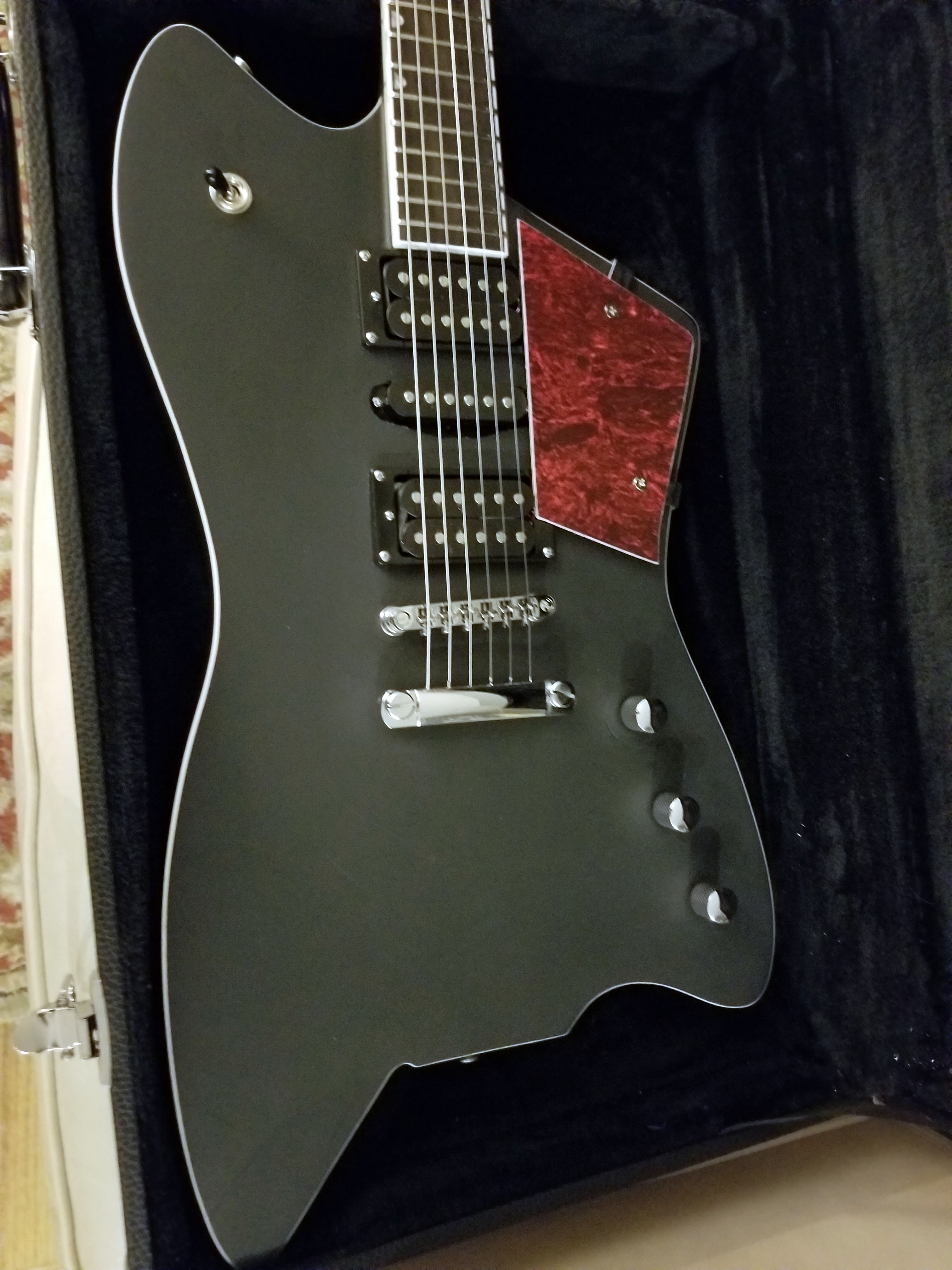
The unique shark fin Bo Diddley-like shape of this custom build guitar stands out. It features an HSH pick-up array and a nice beefy neck. It has a gray-green finish and good balance. It was custom ordered by the previous owner. .
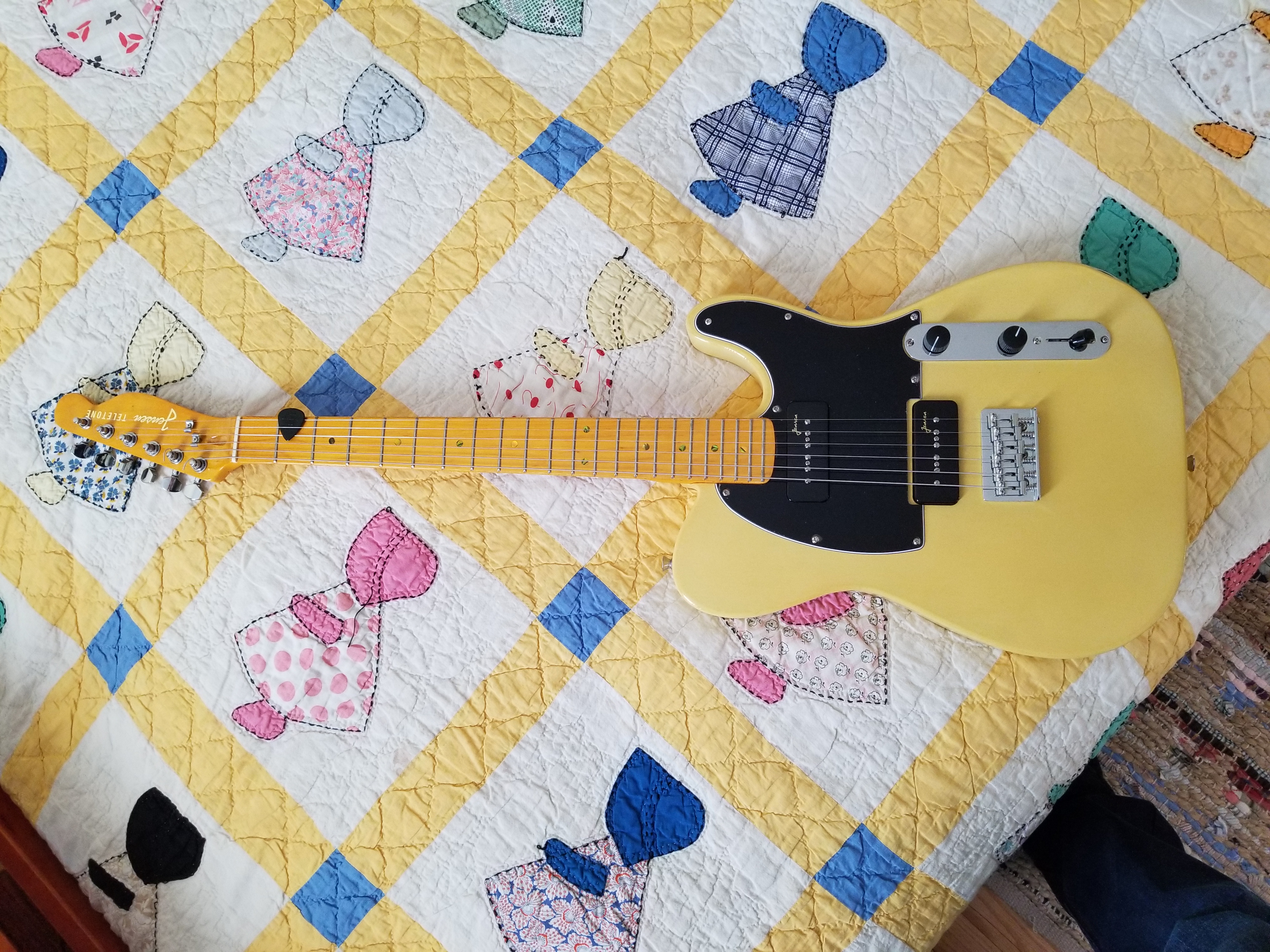
Vance Jensen guitars are often 1-off's and this one is subtle but unique. It features a maple neck and fretboard, Jensen custom wound P90 style pickups, a oil finished neck with a canary yellow body. His unique layout for volume, tone and pick-up switch works quite well. You can visit Jensen Custom Guitars here. .
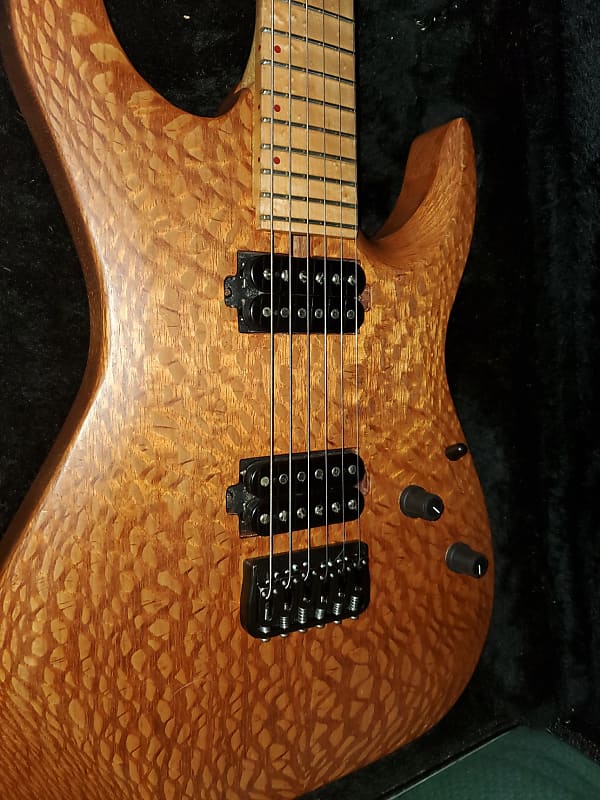
This highly figured all lacewood guitar was made by U.S. Masters. This US Masters Lacewood Series model has two Seymour Duncan pickups with coil tapping. The tuners are locking, the neck is curly maple and is very engaging to play.. .
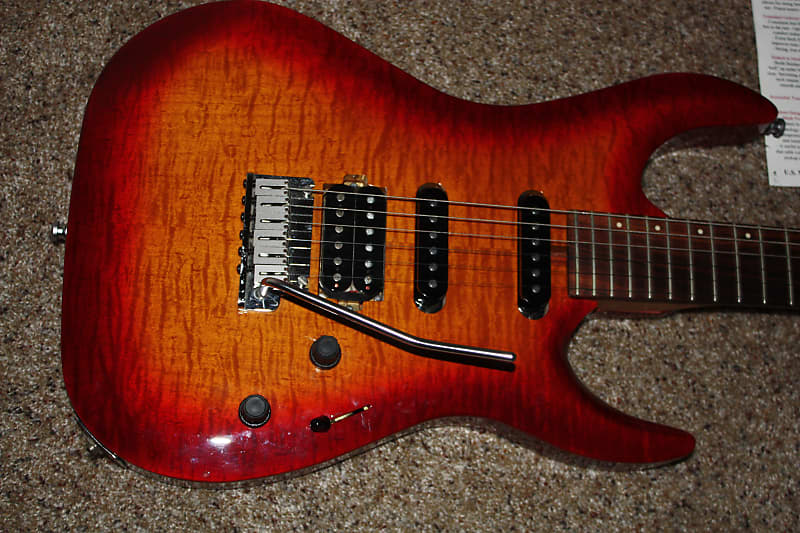
This is a U.S. Masters Vector with a cherry burst curly maple cap on top of mahogany back, a curly maple neck, SSH custom Seymour Duncan pickups, coil tapping wiring, a vibrato bridge and locking tuners. .
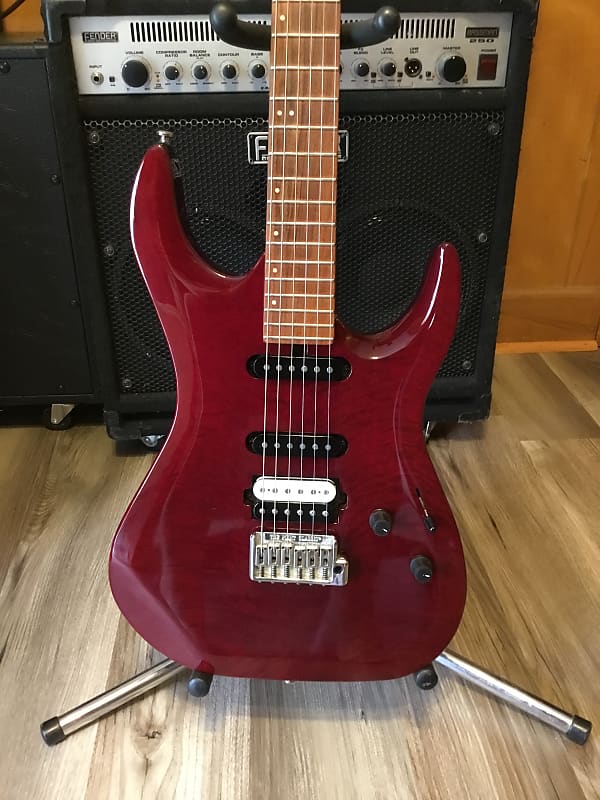
This is a U.S. Masters Vector with a deep red finish on a mahogany body, a curly maple neck, SSH custom Seymour Duncan pickups, vibrato bridge and locking tuners. .
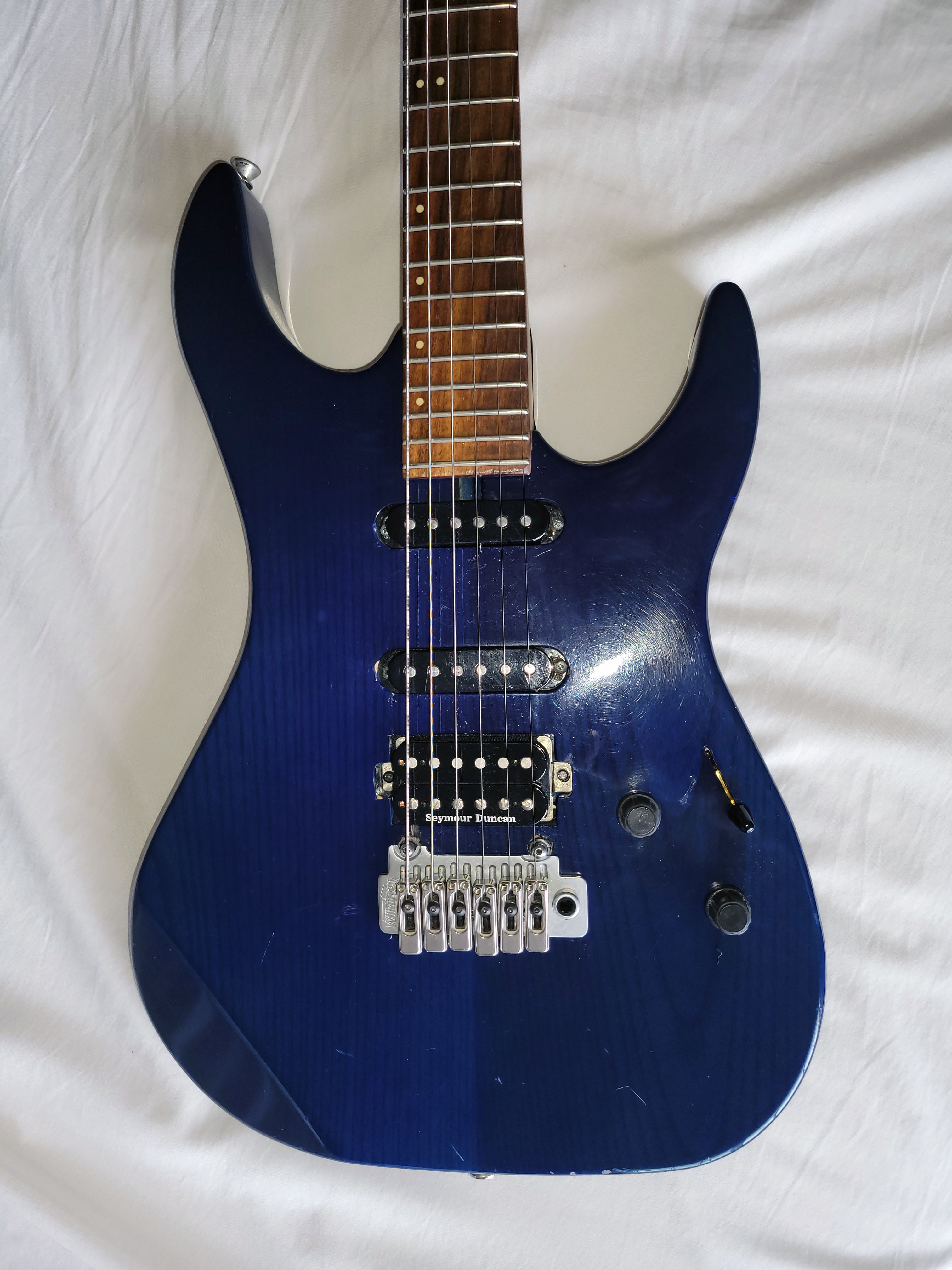
This US Masters Vector is a deep slightly transparent blue. It has a mahogany body and a curly maple neck. The hardware is Spertzel locking tuners, US Masters pick ups SSH, five way switch, volume and tone pots, and a Hipshot vibrato bridge. It plays well.
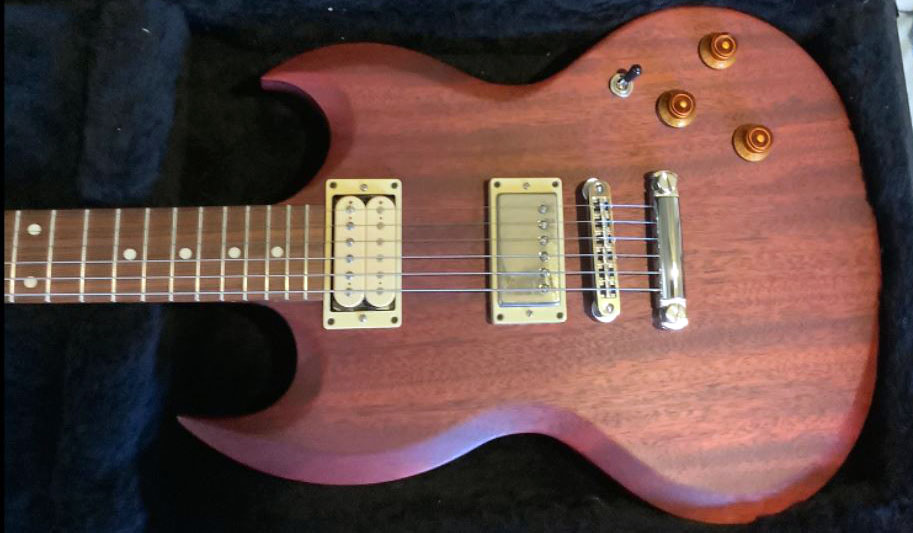
This US Masters Hornet in transparent satin red. It has a mahogany body and a mahagony set neck. The hardware is Spertzel tuners, Dimarzio PAF at the neck, Dimarzio Air Zone pickup at the bridge, 3-way switch, volume and tone pots, and a Tone Pros bridge.
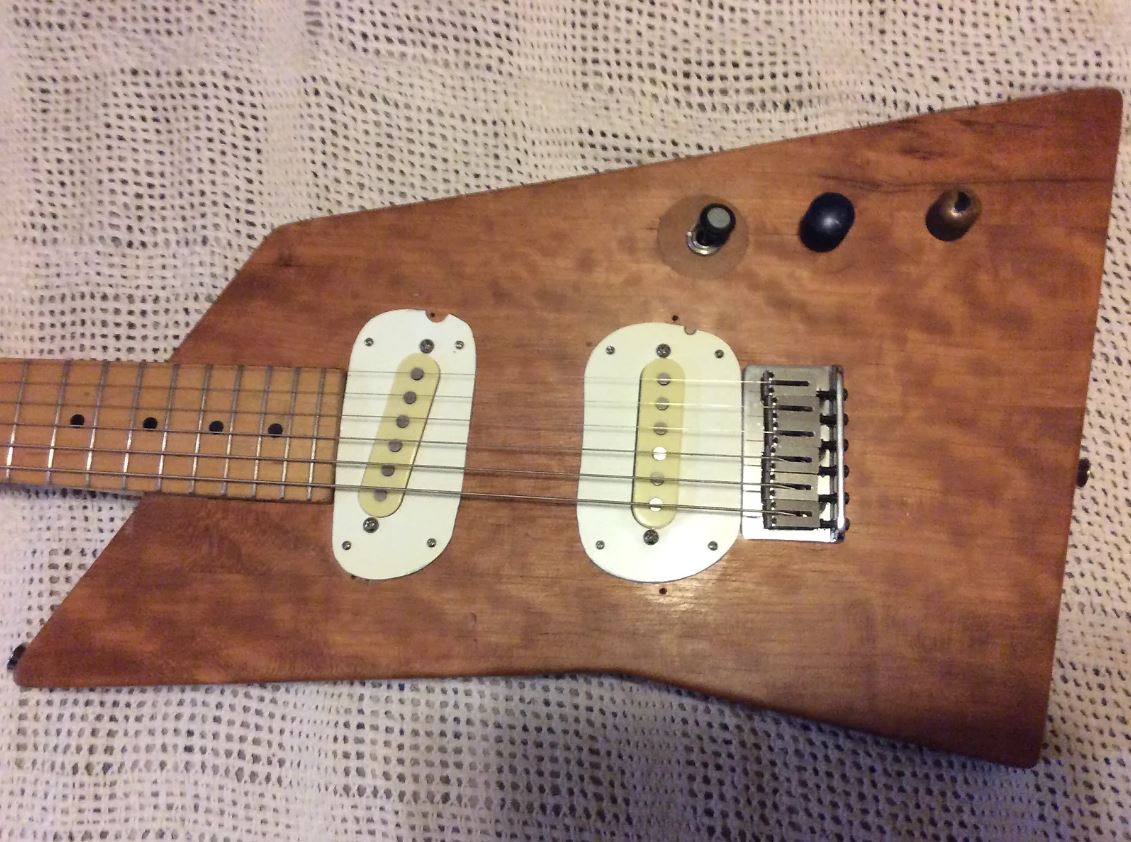
This is a handmade body with and Ibanez neck. It has two great Benson single coil pickups and some interesting switches and knobs for the usual functions. It plays very nicely. I do not know who origitally made it. .
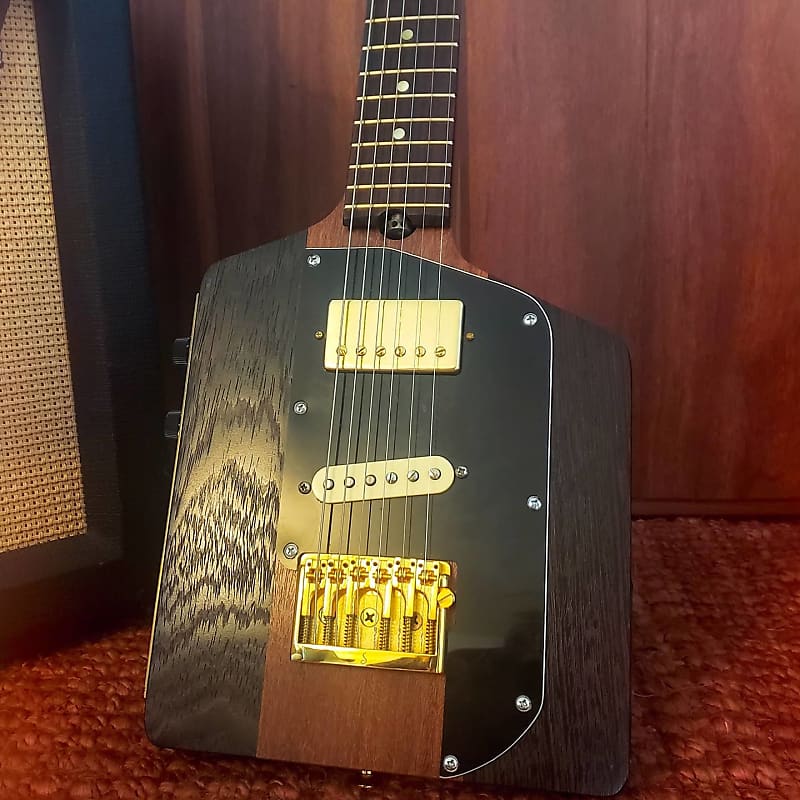
Prototype custom by Trenchtown guitars based out of Oakely CA - their unique cigar box design. The CB1 features a neck through design, cumaru neck with wenge wings. Gold evo fret wire on rosewood fretboard, with gold abalone inlays. locking tuners, and a front loading Schaller bridge. The pickups are Stew Mac Golden Age Humbucker on the neck, and a Fender Texas special single coil on bridge. A 5 way switch with coil splitting on the humbucker delivers diverse tones. .

This instrument is a square neck resonator by Wechter Guitars using Tim Scheerhorn's design. It is an unusual instrument and one of six. The body and neck were built in Vietnam. The atmospheric conditions prevented the construction of these instruments in Vietnam because they would arrive in the USA with clouded finishes because of the lack of controlled humidity in the factory of origin. Current models are manufactured in China and are almost identical in appearance. Abe's shop refinished the initial samples and sold them outside of normal distribution, The Vietnamese mahogany is particularly warm sounding. I love this instrument.
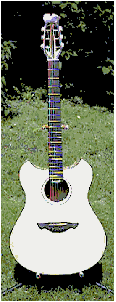
This is a remarkable one of a kind guitar. Click on the image to find out more about this unique hand carved curly maple Wechter.
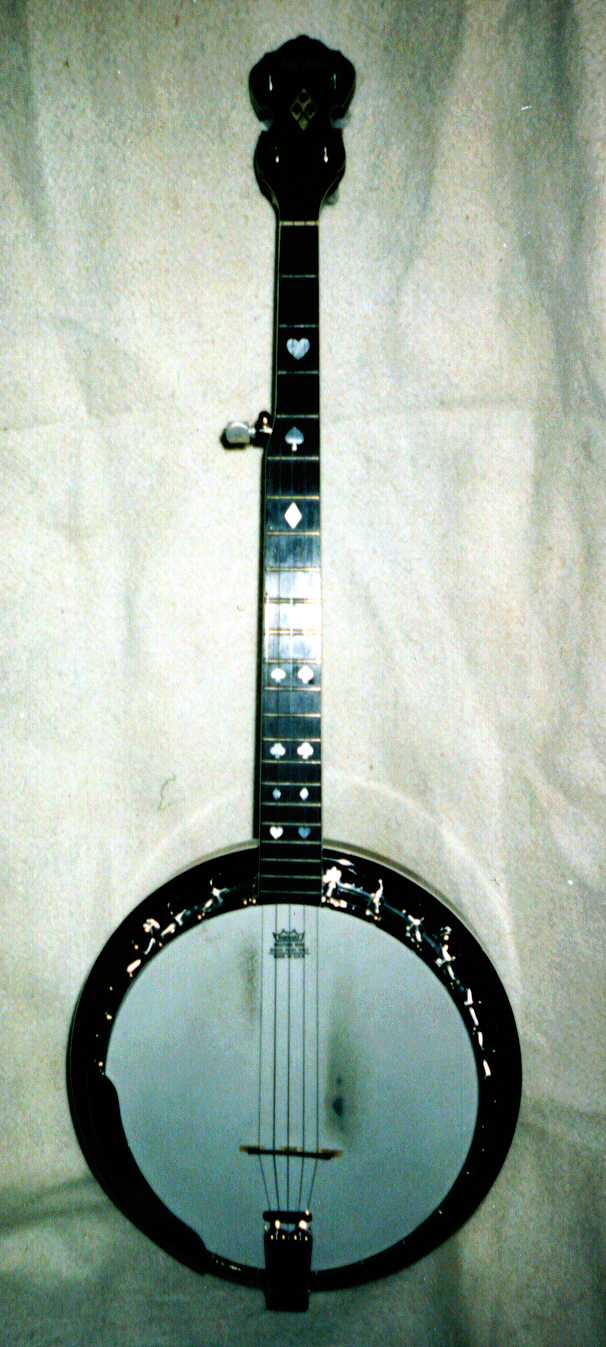
I know, this is a guitar page, but I did get my start on a banjo! This is a ShoBud banjo from the mid-70's. It has a deck of cards motif and a nice crisp tone. I have never seen another one. If you have any information on this one, let me know. I suspect it was built for them by Ibanez but I am not certain.
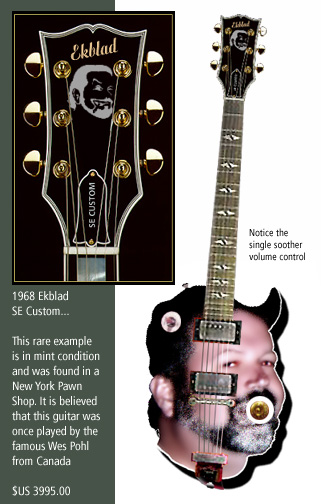
Wes Pohl, a friendly visitor to this page, contributed a guitar I had never seen before, yet seemed to be somehow familiar. Now it has become the most illusive instrument I have seen. Take a look if you dare.....
One of the most frustrating things about collecting guitars is finding a professional guitar shop to buy from that really cares about you, the condition of their guitars, and provides the expertise and care necessary to restore and maintain your vintage instrument. I use Pete Flynn for all of my set up work and repairs and to check out possible purchases or trades.
 Pete Flynn also produces some of the best pickups in the world. You can contact him through his website at http://pickupsbypeteaflynn.com where you can also order his pickup sets or order a custom set.